Klosterneuburg
Historic monastery town north of Vienna with wine culture
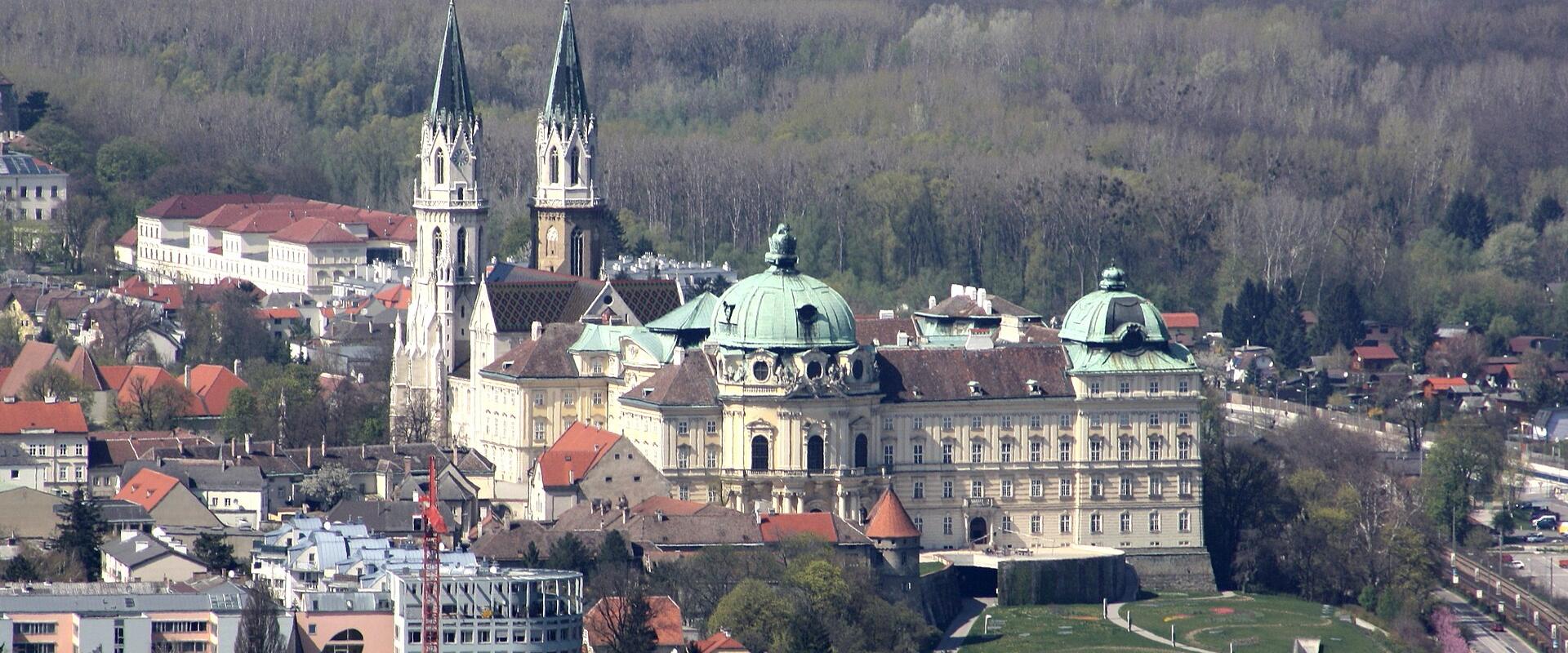
Klosterneuburg lies on the Danube just beyond Vienna's northern boundary, at the foot of the Leopoldsberg and Kahlenberg hills. The name means new monastery castle, and the town's identity rests on the monastery on its hill above the river. The Margrave of Austria, Leopold III, founded it in 1114, and the legend of the veil recounts how he found his wife's veil, lost for years, hanging on an elder bush on the site, taking it as a sign to build. Leopold was later canonised and became the patron saint of Austria.
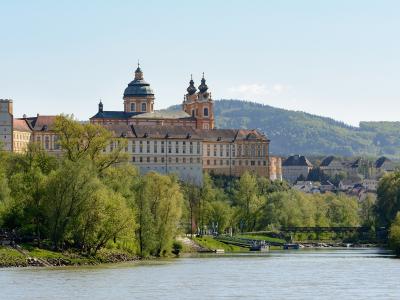
Klosterneuburg Monastery, the Stift, is a vast complex, often called Klosterneuburg Abbey, whose canons follow the Augustinian rule. The church dates in its main parts to the twelfth century, with Gothic and Baroque additions, and the monastery buildings were reshaped in the eighteenth century in a grand Baroque plan that was never completed. The abbey church is richly decorated, with frescoes, altars and stucco. The great treasure is the Verdun Altar, an altarpiece of enamel panels made in 1181 by Nicholas of Verdun, showing scenes from the Old and New Testaments in parallel. It is one of the most important works of medieval goldsmith art in Europe and is displayed in the Leopold Chapel. The museum, the art collections and the treasury can be visited on guided tours. The complex also includes a crypt and a cloister.
Wine is a second pillar. The abbey has produced wine since the Middle Ages and owns many vineyards on the surrounding slopes, and it is one of the oldest wine estates in Austria. Its cellars hold tastings, and the Stiftskeller restaurant serves traditional food. A school of viticulture and fruit growing, founded in 1860, makes Klosterneuburg a centre of wine education. Heuriger taverns in the town and nearby villages pour new wine, mostly white varieties such as Grüner Veltliner and Riesling.
The old town, below the abbey, has a pedestrian zone with shops, cafes and houses from the Baroque and Gothic eras. The Rathausplatz and the surrounding streets are pleasant for a short stroll, and the Danube promenade gives a view over the river. Beyond the town, a castle, Kreuzenstein Castle, Burg Kreuzenstein, stands on a hilltop to the north and is visible from the river, and boats and bicycles run along the Danube River.
The Kahlenberg and Leopoldsberg, the hills above the town, offer walks through woods and vineyards, and viewing terraces and restaurants look over Vienna and the river. A road and walking trails lead to the top, and the area is part of the Vienna Woods biosphere reserve. The Danube Cycle Path runs through the town, and a bicycle is an easy way to reach Vienna or the villages of the Tulln basin.
A very different attraction is the Art Brut Center Gugging, in the village of Gugging at the edge of town. Located in a former psychiatric clinic, the Haus der Künstler housed patients who created art in the 1970s and 1980s, which became internationally known as art brut. The museum and gallery show their work, and the center offers a unique and moving experience.
The town's food is Viennese and Lower Austrian: schnitzel, roast pork, dumplings, strudel and the wines of the surrounding slopes.
The best time to visit is from mid-June to early September for cycling and terraces at the wine taverns, though spring and autumn are quieter, and August is the warmest month. The Weinviertel wine region to the north suits a longer trip. Winters are cool, but the abbey remains open, and the Advent market is pleasant.
Getting to Klosterneuburg is simple. The S-Bahn links the town with Vienna's city centre in about 20 to 30 minutes, with frequent service, and regular buses and boats connect with the capital. By car, the S5 and other roads reach the town from Vienna's northern edge, and parking near the abbey is limited.
Best Time to Visit
Visit from mid-June to early September for warm weather ideal for wine tasting and outdoor activities.
Plan Your Visit to Klosterneuburg
Essential travel tips and information for your trip to Klosterneuburg.
Suggested Itineraries
Discovering Klosterneuburg
1 dayOne-day Klosterneuburg itinerary covering historic sites and vineyards
View ItineraryTravel Tips
Currency
EUR • Cards widely accepted
Language
German • English in tourist areas
WiFi
Free WiFi in cafes and hotels
Explore Klosterneuburg by Interest
Discover attractions and experiences in Klosterneuburg organized by your interests and travel preferences.
All attractions in Klosterneuburg
Sorted by our recommendation score
Quick Facts
Book your stay
Frequently Asked Questions
More destinations in Lower Austria
Explore other amazing places in the Lower Austria region