Wachau
UNESCO World Heritage Danube valley with vineyards and castles
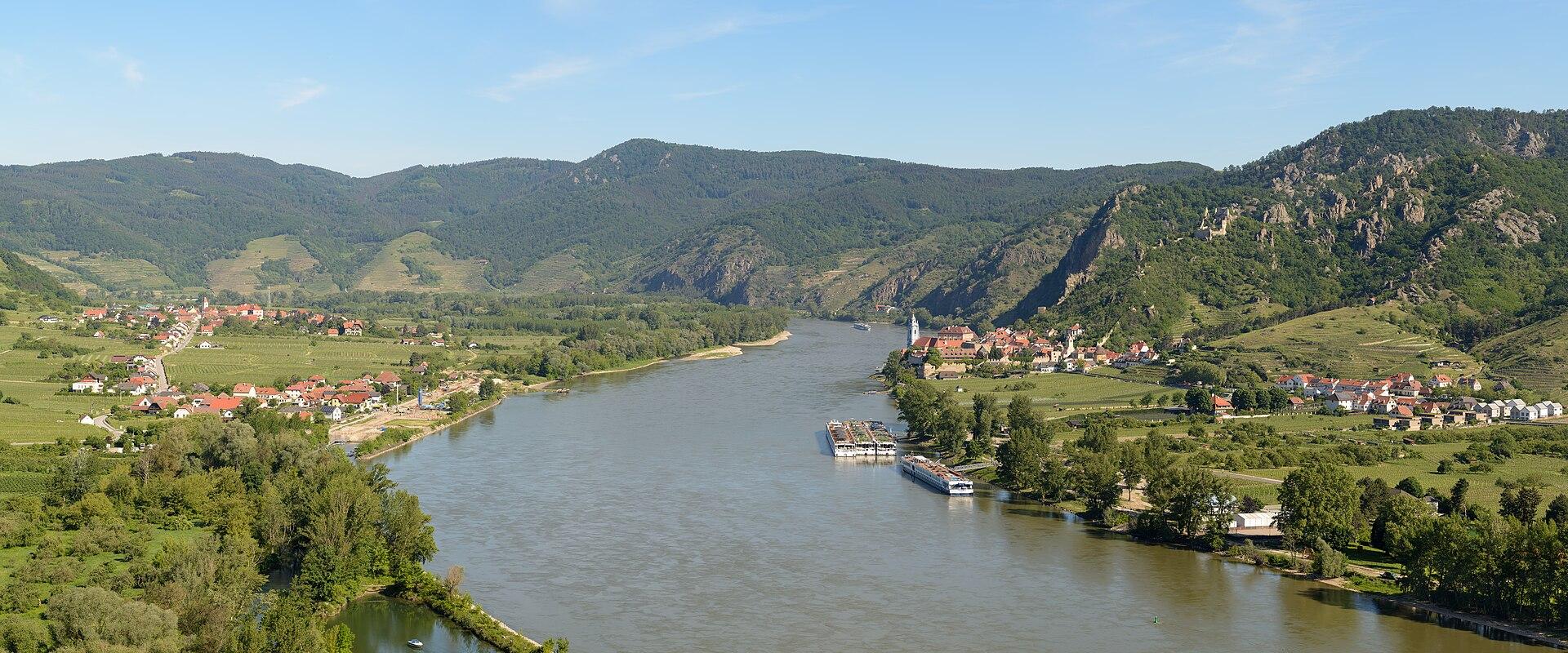
The Austrian Wachau Valley, in Lower Austria, begins where the Danube River leaves the Bohemian Massif and runs for about 36 kilometres between Melk and Krems, passing through a narrow, winding valley with steep walls. On the north bank, terraces of vines climb to a rim of forest, held up by dry-stone walls; on the south bank, orchards and fields lie between the river and the wooded Dunkelsteinerwald. The towns and villages are small, with Spitz, Weissenkirchen, Dürnstein, Mautern and Emmersdorf the main ones, and in between lie old churches, cellars and ferry crossings. In 2000, UNESCO inscribed the cultural landscape as a World Heritage Site.
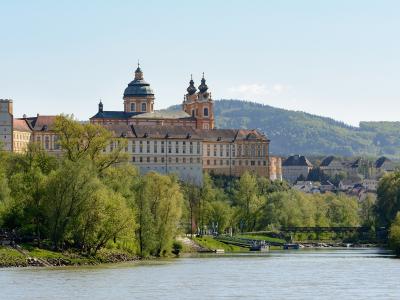
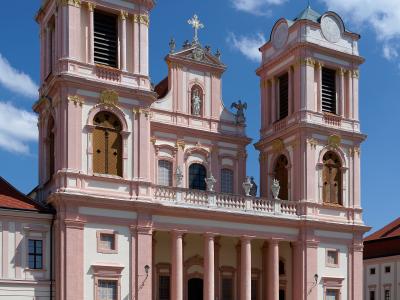
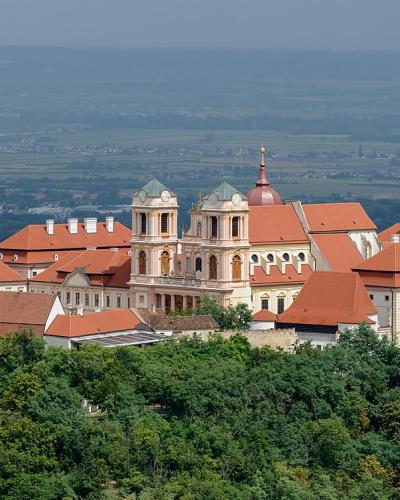
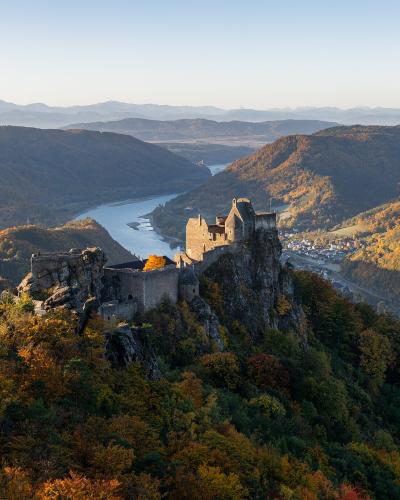
The valley's history goes back far. In 1908, workers found the Venus of Willendorf, a limestone figurine about 29,000 years old, near the village of Willendorf. The Romans guarded the Danube frontier here, and in the Middle Ages the Wachau became a centre of Benedictine monasticism and a strategic trade route along the river. Castle ruins stand on rocks above the water, among them Aggstein, a ruin above the village of Aggsbach that once belonged to robber-baron Kuenringer knights, and Dürnstein, where King Richard the Lionheart, the English king, was imprisoned in 1192 and 1193. The monasteries of Melk Abbey and Göttweig Abbey, both Baroque masterpieces of the Benedictine order, dominate the landscape at each end and have been centres of learning for centuries.
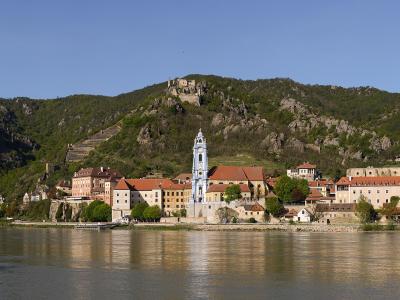
Dürnstein is the best-known village, a compact place of narrow lanes, wine taverns and a Baroque church whose blue and white tower has become the emblem of the Wachau. A steep path leads up to the castle ruins, with a view of the river. Weissenkirchen, with its fortified church and wine houses, and Spitz, with its Gothic parish church and the vineyard slopes of the Tausendeimerberg, are quieter and more rural. Each has cellars where growers pour their wine.
Wine is the main business. The Wachau is known for white wines, especially Grüner Veltliner and Riesling, produced from grapes grown on the terraces, and the local growers' association classifies them by must weight as Steinfeder, Federspiel and Smaragd, from light to rich. The Wachauer Marille, the apricot, is a protected local product, and in the spring, in late March and April, the orchards bloom in white and pink. Heuriger taverns, marked by a green branch hung above the door, serve new wine with cold platters, bread and spreads, and opening days vary. Jams, schnapps and apricot dumplings are sold throughout the valley.
The Danube Cycle Path runs along the river through the valley, one of the best known long-distance routes in Europe, and the Wachau stretch is relatively flat, with ferry crossings between the banks. Cyclists can rent bicycles in Melk, Krems and Spitz, and a typical trip covers the valley in one or two days. Boats of several operators run between Melk, Dürnstein and Krems from spring to autumn, and a river cruise offers a relaxed alternative. Hiking trails, including the Welterbesteig, a long-distance path through the vineyards and forests with viewpoints, link the villages.
The Spring Festival in the Wachau, held in April and May, celebrates the apricot blossom, and a wine festival in Dürnstein and other places in summer and autumn draws visitors. Activities also include visits to the monasteries and castles, wine tasting and walks in the vineyards, and the region is known for its restaurants and gourmet traditions.
The best time to visit is from May to October, with spring for blossom and September for harvest and golden light. July and August are warm, and the most crowded in the villages. In winter, many businesses close, though the abbeys remain open.
Getting there is easy. Trains from Vienna reach Krems and Melk in about an hour, and a local line serves several Wachau stations between Krems and Spitz in season. By car, the A1 motorway and the Danube road provide access, and the drive from Vienna takes about an hour. Buses connect the villages, and boats offer a scenic link. Most visitors combine the Wachau with a stay in Krems or Melk, or take a day trip from Vienna by train and boat.
Best Time to Visit
Visit from May to October for mild weather ideal for wine tasting, cycling, and river cruises.
Did you know?
Interesting, verified facts about Wachau
Richard the Lionheart Was Imprisoned Above Dürnstein
HistoryIn December 1192, King Richard I of England was captured near Vienna while returning from the Third Crusade and imprisoned by Duke Leopold V of Austria in Dürnstein Castle, high above the Wachau's vineyards. He was held there until March 1193, when he was handed over to Emperor Henry VI -- and freed only in February 1194, after a staggering ransom of 150,000 marks of silver was raised. Legend (a story first written down decades later) says his minstrel Blondel found him by singing a verse beneath castle walls until the king sang back. The castle ruin still crowns the hill above Dürnstein today and can be reached on foot.
Source: Lower Austria Official Tourism Board (lower-austria.info)Plan Your Visit to Wachau
Essential travel tips and information for your trip to Wachau.
Suggested Itineraries
Travel Tips
Currency
EUR • Cards widely accepted
Language
German • English in tourist areas
WiFi
Free WiFi in cafes and hotels
Explore Wachau by Interest
Discover attractions and experiences in Wachau organized by your interests and travel preferences.
All attractions in Wachau
Sorted by our recommendation score
Quick Facts
Book your stay
Frequently Asked Questions
More destinations in Lower Austria
Explore other amazing places in the Lower Austria region