Semmering
UNESCO heritage railway and alpine resort in Lo...
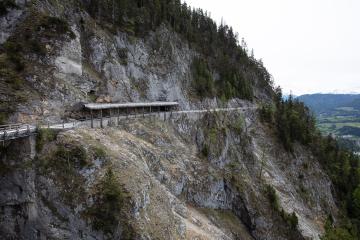
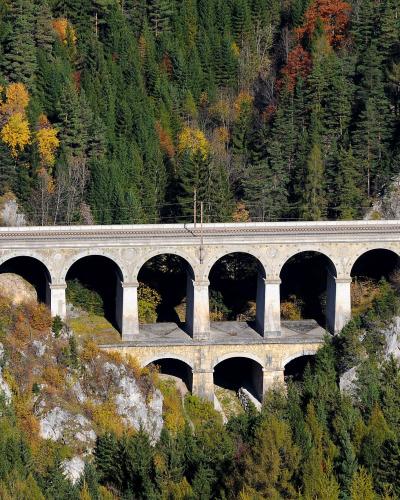
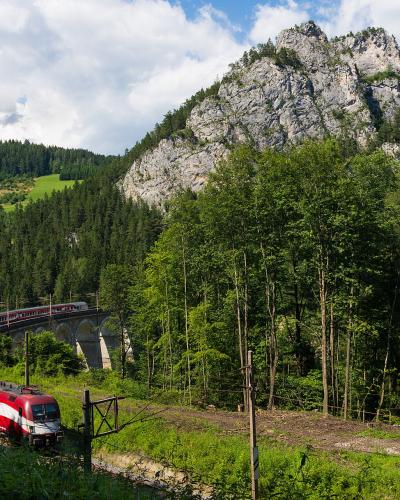
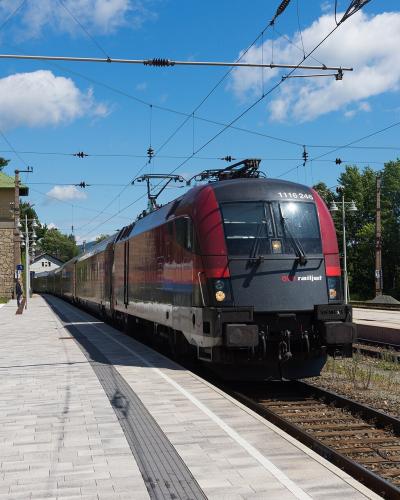
The story of Semmering begins with a transport problem. In the early nineteenth century the Habsburg monarchy wanted a railway from Vienna to the Adriatic port of Trieste, but the Semmering pass lay in the way, and many engineers thought a locomotive could never climb it. Carl Ritter von Ghega proved them wrong. The railway he designed opened in 1854 and runs for about 41 kilometres between Gloggnitz and Mürzzuschlag, using a series of tunnels, viaducts and curved embankments to gain height steadily. UNESCO inscribed the line in 1998, the first railway on the World Heritage list.
The best way to understand it is to travel it. Regional trains from Vienna and Graz still use the line, and the views of stone arches crossing valleys and cliffs are the highlight of the journey. If you prefer to walk, the Semmering railway hiking trail follows the tracks and gives close views of the viaducts, including the double-arched structures that carry the line across ravines. Staff at the tourist office can supply maps, and the walk can be split into short sections using the train.
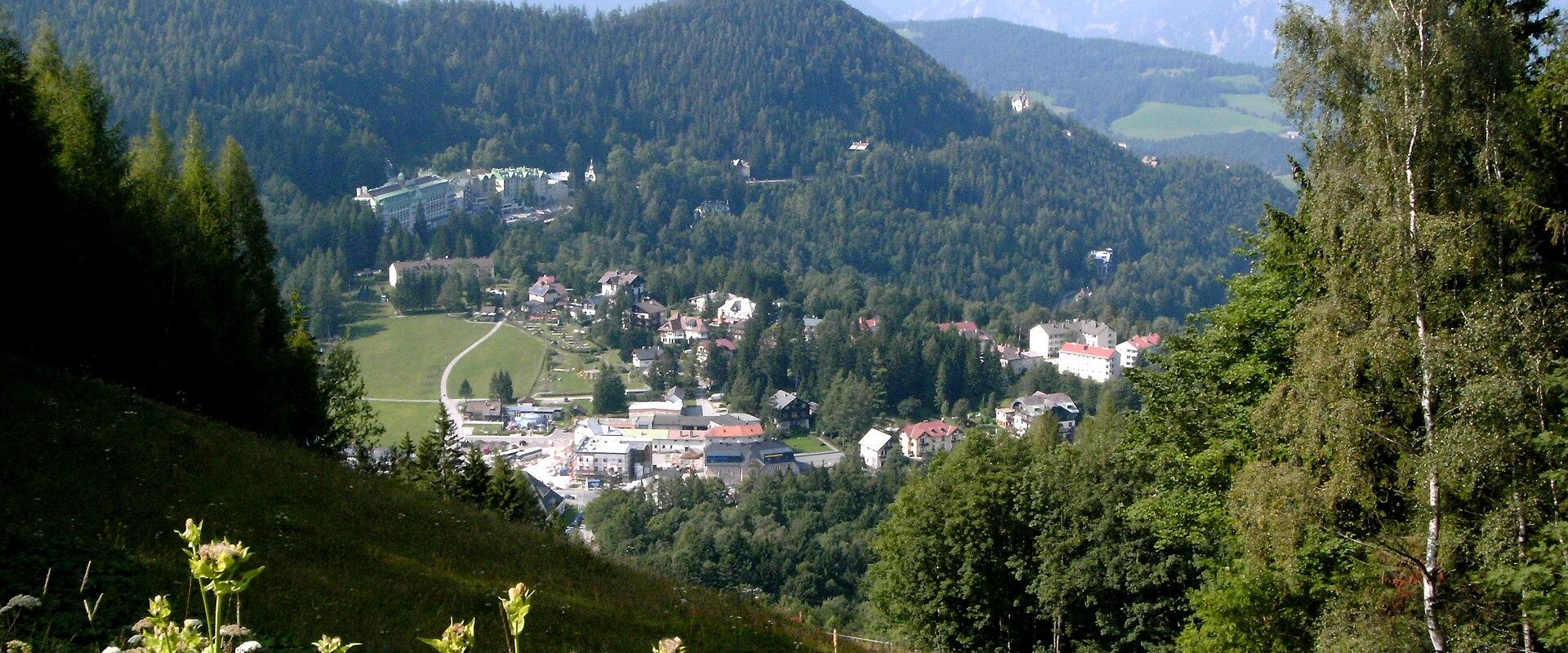
Once the railway arrived, wealthy Viennese discovered Semmering as a summer retreat. Writers, composers and painters came for the clean air, and architects built villas and large hotels along the high road. Some of these buildings have been restored, others are still waiting, and their mix of Historicist, Swiss-chalet and Jugendstil details gives the area an unusual look. A walk along the high road, a flat path with views toward the valley, is the easiest way to see them. The Südbahnhotel complex and the villas around it show how the resort looked at its height.
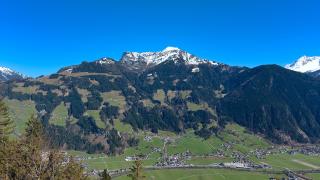
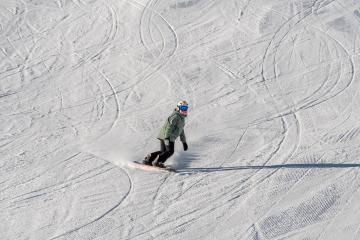
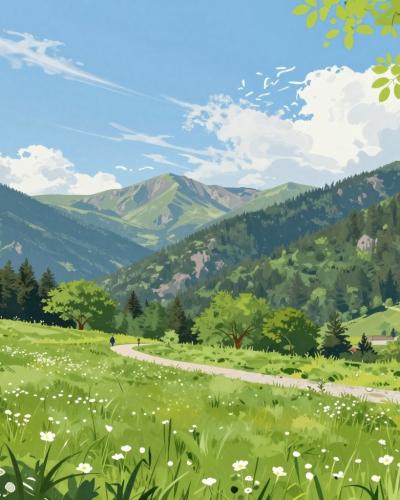
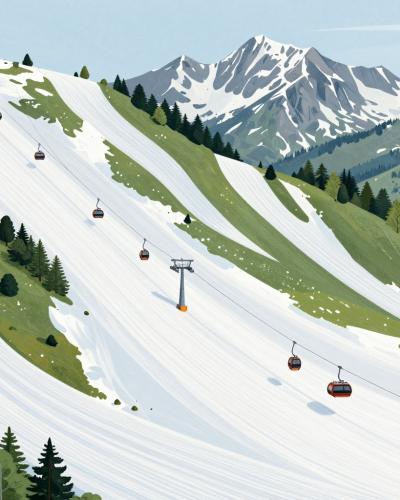
The Hirschenkogel, a wooded mountain of about 1,340 metres behind the village, anchors the outdoor side. In winter it carries the Semmering ski area, a compact and relatively mild resort with runs for beginners and intermediates and night skiing on some evenings. The two lift systems that locals call the Hirschenkogel and the Zauberberg are both parts of the same slopes. In summer, the lifts carry walkers and mountain bikers to the upper station, where trails lead through meadows and forest. The nearby Rax and Schneeberg plateaus offer longer mountain days.
Close to the railway is Schloss Fünffach, a historic building that is part of the railway landscape, and the Semmering Pass itself, at roughly 985 metres, marks the border between Lower Austria and Styria. The pass road has been used for centuries, and viewpoints along it show how the old route and the railway compete for the same narrow terrain. A small alpine lake in the area, listed under the name Gasteiger See, provides a quiet place for a short walk.
The parish church of the Holy Trinity, the Pfarrkirche Heiligste Dreifaltigkeit, is modest but is a reminder that Semmering was a settled community before it became a resort.
Food is Austrian mountain fare. Expect schnitzel, goulash, dumplings, trout and venison on traditional menus, with apple strudel and Kaiserschmarrn for dessert. The cafes and inns tend to be seasonal, so check opening days before travelling, especially outside summer and winter peaks.
The best time to visit depends on interests. Late spring through early autumn is ideal for walking and for riding the train in good light. October offers autumn colour on the slopes. Winter brings skiing and sledging, and in good conditions the snow-covered viaducts look remarkable from the train window. Semmering can be foggy in the shoulder seasons, but the altitude often lifts you above valley cloud.
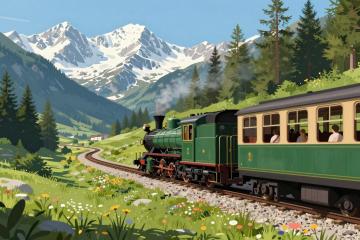
Getting there is easy. Direct regional trains run from Vienna Hauptbahnhof and take roughly an hour and a half, and the station at Semmering sits at the top of the pass. By car, the Semmering Schnellstraße tunnel bypasses the pass, but the old road is the more scenic route. A long base tunnel is planned to carry fast trains underneath, but the historic line will remain open for local services and heritage trains.
Did you know?
Interesting, verified facts about Semmering
Semmering Has UNESCO-Linked Heritage
RecordDesignated a UNESCO World Heritage site, this 19th-century engineering marvel connects Vienna and Graz, featuring intricate viaducts and tunnels that showcase the ingenuity of 19th-century railway construction.
Source: Semmering RailwayPlan Your Visit to Semmering
Essential travel tips and information for your trip to Semmering.
Suggested Itineraries
One Day in Semmering
1 dayPerfect for a quick visit. See the main highlights and get a taste of local culture.
Extended Semmering Experience
2-3 daysComprehensive exploration including nearby attractions and cultural experiences.
Travel Tips
Currency
EUR • Cards widely accepted
Language
German • English in tourist areas
WiFi
Free WiFi in cafes and hotels
Explore Semmering by Interest
Discover attractions and experiences in Semmering organized by your interests and travel preferences.
All attractions in Semmering
Sorted by our recommendation score
Quick Facts
Book your stay
Frequently Asked Questions
More destinations in Lower Austria
Explore other amazing places in the Lower Austria region