St. Pölten
Capital of Lower Austria with modern architecture and history
St. Pölten stands on the Traisen river on the edge of the Alpine foothills, at the point where the lowlands of the Danube meet the hills of the Mostviertel. The Romans founded a town called Aelium Cetium here, and in the early Middle Ages a Benedictine house, dedicated to St. Hippolytus, gave the town its name. The abbey was later taken over by Augustinian canons, and under the Baroque rebuilding of the eighteenth century the town gained much of the look it has today. In 1986, after a referendum, St. Pölten became the capital of Lower Austria, the last Austrian province to have its seat outside Vienna.
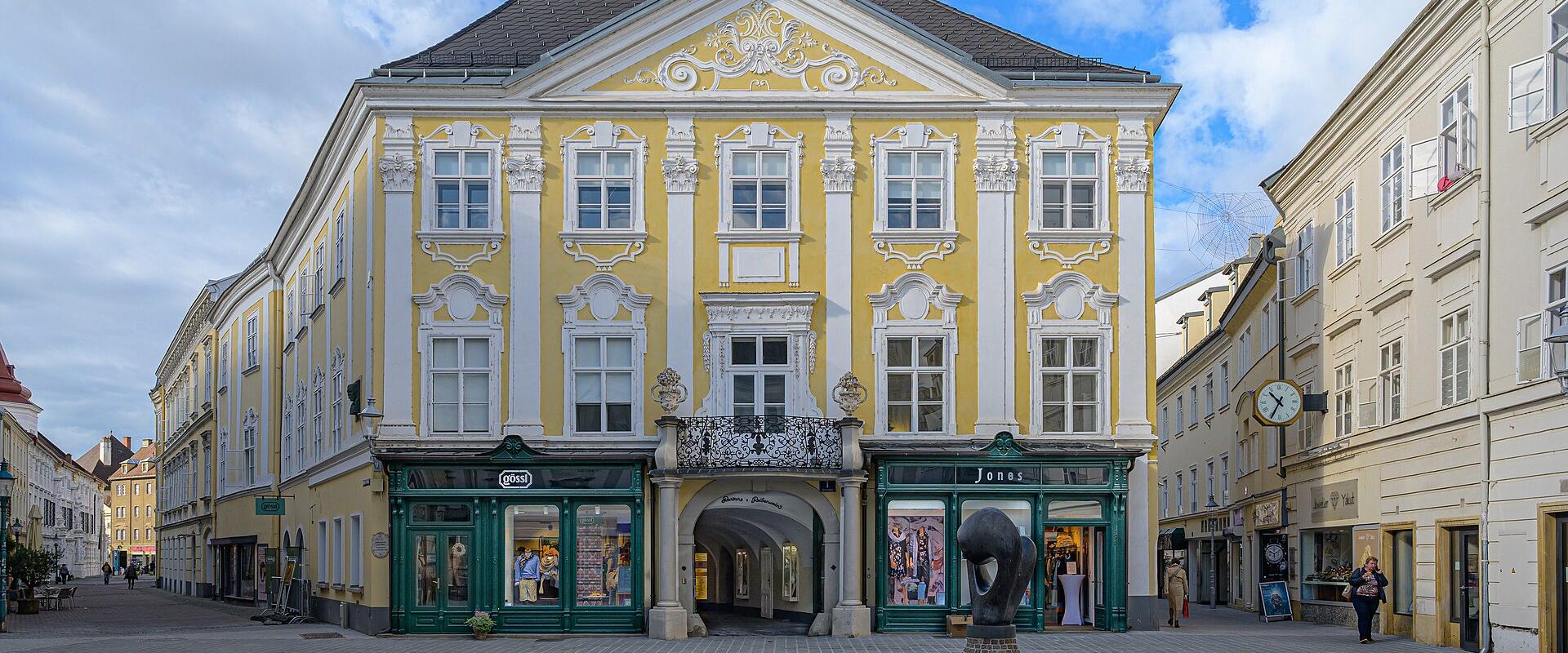
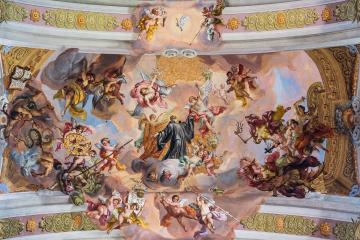
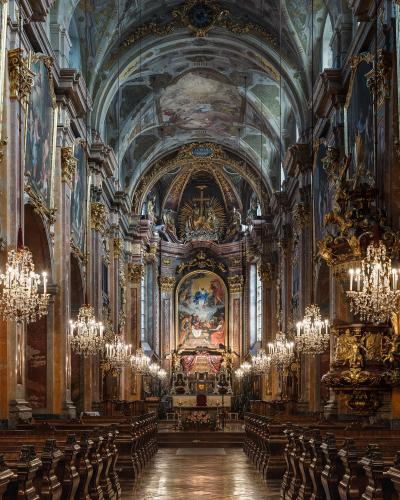
The Baroque Old Town, the Altstadt, is a compact, pedestrian area around the Rathausplatz and the Domplatz. St. Pölten Cathedral, the Domkirche, is a former collegiate church with Gothic roots and a Baroque interior created largely by the architect Jakob Prandtauer and the painter Daniel Gran, with a prominent tower and grand altars. The Rathausplatz is lined with pastel façades, and at the centre of the square a Trinity column and fountains give it its character. Small shops, bakeries and cafes occupy the old houses, and a market is held on the square beside the Town Hall.
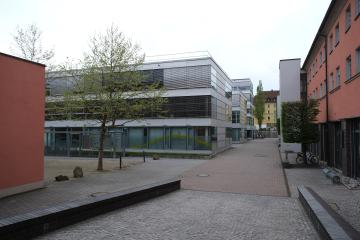
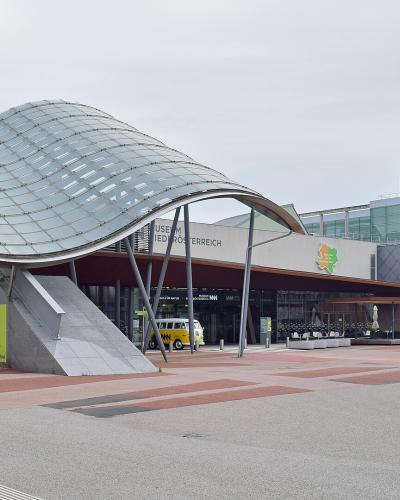
Because the capital moved only in the 1980s, a government quarter, the Regierungsviertel, was built on a green-field site beside the Traisen River. The architects, among them Gustav Peichl, created a campus of colourful buildings and a sound tower, the Klangturm, which makes the city one of the largest ensembles of contemporary architecture in Austria. Nearby, the Festspielhaus, or Festival Hall, hosts concerts and opera, and the Museum Niederösterreich, the museum of Lower Austria, covers the nature, history and culture of the state with a modern exhibition. The area is sometimes branded as a 'City of the Future', the Stadt der Zukunft, a project that links the old centre with new districts and public spaces.
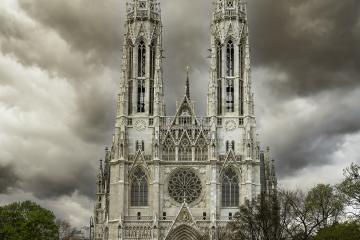
A short walk from the centre leads to buildings that tell a different story. The former Synagogue, a Jugendstil building of the early twentieth century, now houses an institute for Jewish history and a cultural centre, and it commemorates the community that was destroyed after 1938. The Pharmacy Löwen-Apotheke, a historic pharmacy, preserves its Art Nouveau interior. These buildings show the town's cultural variety beyond the cathedral and the town hall.
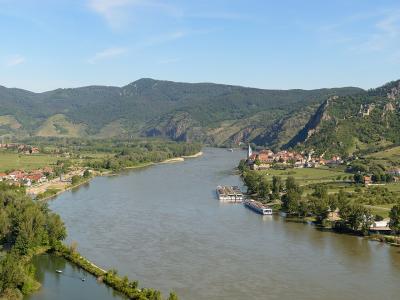
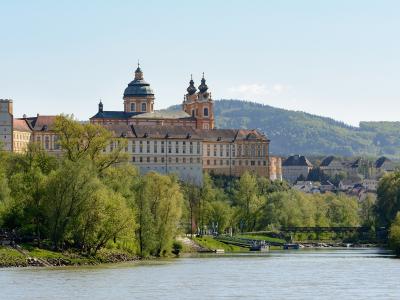
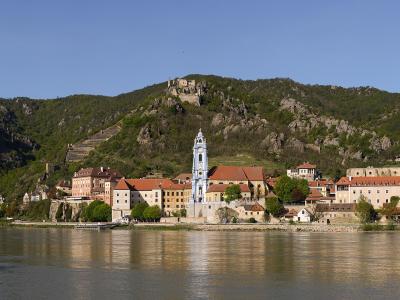
Outdoors, the Traisen river path is popular for cycling and walking, and a lake district, the Viehofner Seen, just north of the centre, offers swimming in summer; tourist listings also call the lake the Kleiner See, and local sources refer to it as the 'St. Pölten Lake' in some descriptions. The Vienna Woods begin to the east, and the Danube valley, the Donau of the German name, with the Wachau lies to the north-west. To the south-west, the Mostviertel is known for its pear orchards, cider, called Most, and farm shops. Benedictine Göttweig Abbey, above the Danube near Krems, is a short drive away.
Cultural life includes concerts, theatre and festival events, especially in summer, along with a Christmas market on the Rathausplatz. The city has a university of applied sciences, which gives it a young population, and a growing media and technology sector.
Food is Lower Austrian: schnitzel, roast pork, dumplings, Mostviertel cider and fruit brandies, and in autumn game dishes. Cafes sell coffee and pastries, and a handful of restaurants offer modern interpretations.
The best time to visit is from May to September for warm weather and outdoor events, with June the best month for the cultural calendar. September is often sunny, and spring and autumn are quiet. Winters are cold but the Advent market has atmosphere.
Getting there is easy. St. Pölten Hauptbahnhof is on the main western railway, with fast trains from Vienna's Westbahnhof and Hauptbahnhof in about 25 to 30 minutes, and from Salzburg in around two hours. The S-Bahn links the city with Vienna's suburbs. By car, the A1 motorway passes the city, and the road to the Wachau starts here. Local buses connect with Krems, Melk and the Mostviertel villages.
Best Time to Visit
Visit from mid-June to early September for warm weather ideal for hiking and outdoor activities.
Did you know?
Interesting, verified facts about St. Pölten
St. Pölten Has Another Verifiable Detail
HistoryThe atmosphere is vibrant and youthful, driven by its status as a university town and a hub for technology and innovation.
Source: St. Pölten University of Applied SciencesPlan Your Visit to St. Pölten
Essential travel tips and information for your trip to St. Pölten.
Suggested Itineraries
Travel Tips
Currency
EUR • Cards widely accepted
Language
German • English in tourist areas
WiFi
Free WiFi in cafes and hotels
Explore St. Pölten by Interest
Discover attractions and experiences in St. Pölten organized by your interests and travel preferences.
All attractions in St. Pölten
Sorted by our recommendation score
Quick Facts
Book your stay
Frequently Asked Questions
More destinations in Lower Austria
Explore other amazing places in the Lower Austria region