- Where
- Dürnstein, Lower Austria
- Directions
- Directions
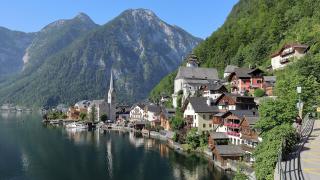
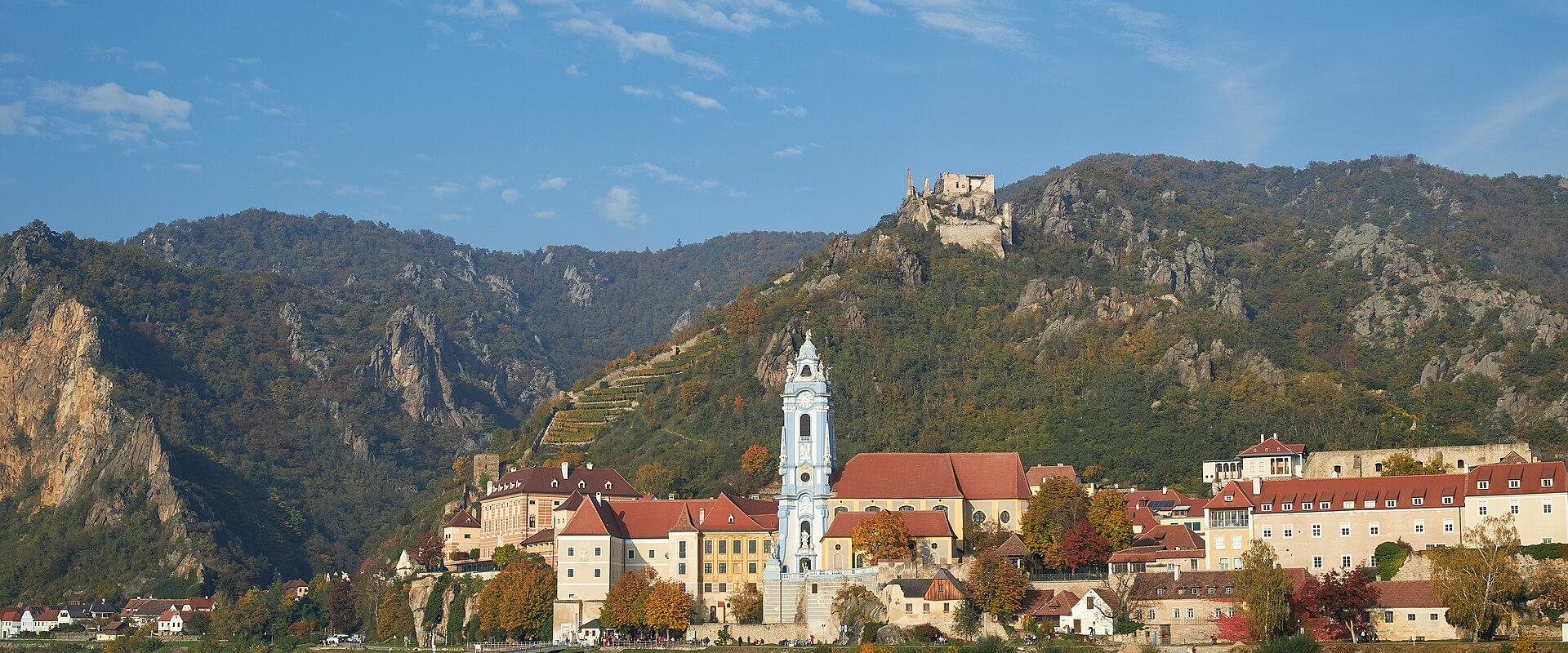
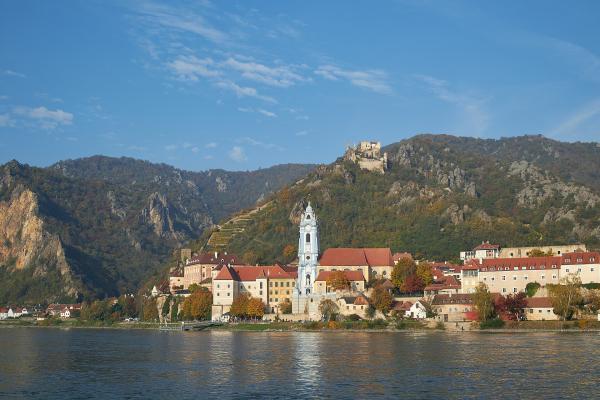
Dürnstein is a small walled town on the left bank of the Danube in the Wachau, the stretch of the river valley in Lower Austria between Melk and Krems that is a UNESCO World Heritage cultural landscape. The town lies on a narrow strip of land between the river and a steep hill covered in terraced vineyards, and above it on the ridge stand the ruins of a medieval castle. The baroque abbey tower, painted in blue and white, is the best-known sight of the Wachau, seen from boats on the river, from the road on the opposite bank and from every angle in the town.
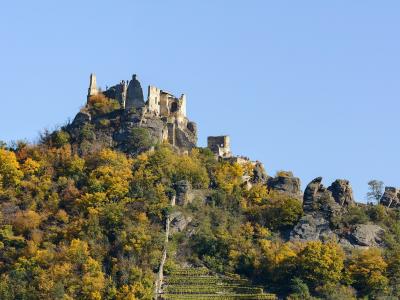
The town's fame rests on a story from the Middle Ages. In 1192, King Richard I of England, known as the Lionheart, was returning from the Third Crusade when he was captured near Vienna by Duke Leopold V of Austria, who held a grudge against him from the siege of Acre. The king was imprisoned in the castle of Dürnstein, which belonged to the lords of Kuenring, until a huge ransom was paid in 1194. A romantic legend tells that the minstrel Blondel found his master by singing outside the castle walls, though historians consider this a later invention. The castle was destroyed by Swedish troops in the Thirty Years' War, and the ruin can be reached by a steep path from the town that takes about twenty to thirty minutes and rewards the climb with a magnificent view of the Danube and the vineyards.
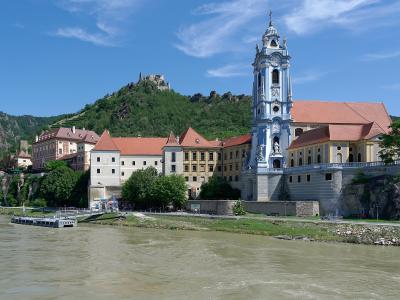
The abbey, the Stift Dürnstein, was founded in the early fifteenth century for Augustinian canons, and its Baroque rebuilding in the early eighteenth century gave it the elegant blue tower, a work of the architect Matthias Steinl, and a church with a lavish interior. The courtyards and the church can be visited, and the abbey is covered in a separate listing. The old town has a single main street, the Hauptstraße, lined with houses of the Gothic, Renaissance and Baroque periods, and town gates at each end, one of which, the Kremser Tor, belongs to the town wall. Shops, wine taverns, cafes and small hotels line the street, and it is easy to walk from one end to the other in a few minutes.
The town is also a centre of Wachau wine and fruit. The vineyards around it produce Grüner Veltliner and Riesling of high quality, graded locally as Steinfeder, Federspiel and Smaragd, and the region is famous for its apricots, which are used in jam, brandy and liqueur. Tastings are offered in the wine taverns and cooperatives.
Dürnstein is a popular stop on Danube cruises and on the Danube cycle path, and it can be crowded in summer at midday. Visit early or late for a quieter experience, and allow two to three hours.
Categories
More photos coming soon
Nearby Attractions
Other places to visit in Dürnstein
Questions people ask
Quick Facts
Best Time to Visit
Visit from mid-June to late August for warm weather ideal for wine tasting and hiking.