

Dürnstein Abbey (Stift Dürnstein)
Baroque Augustinian abbey in Dürnstein, Austria
- Where
- Dürnstein, Lower Austria
- Directions
- Directions
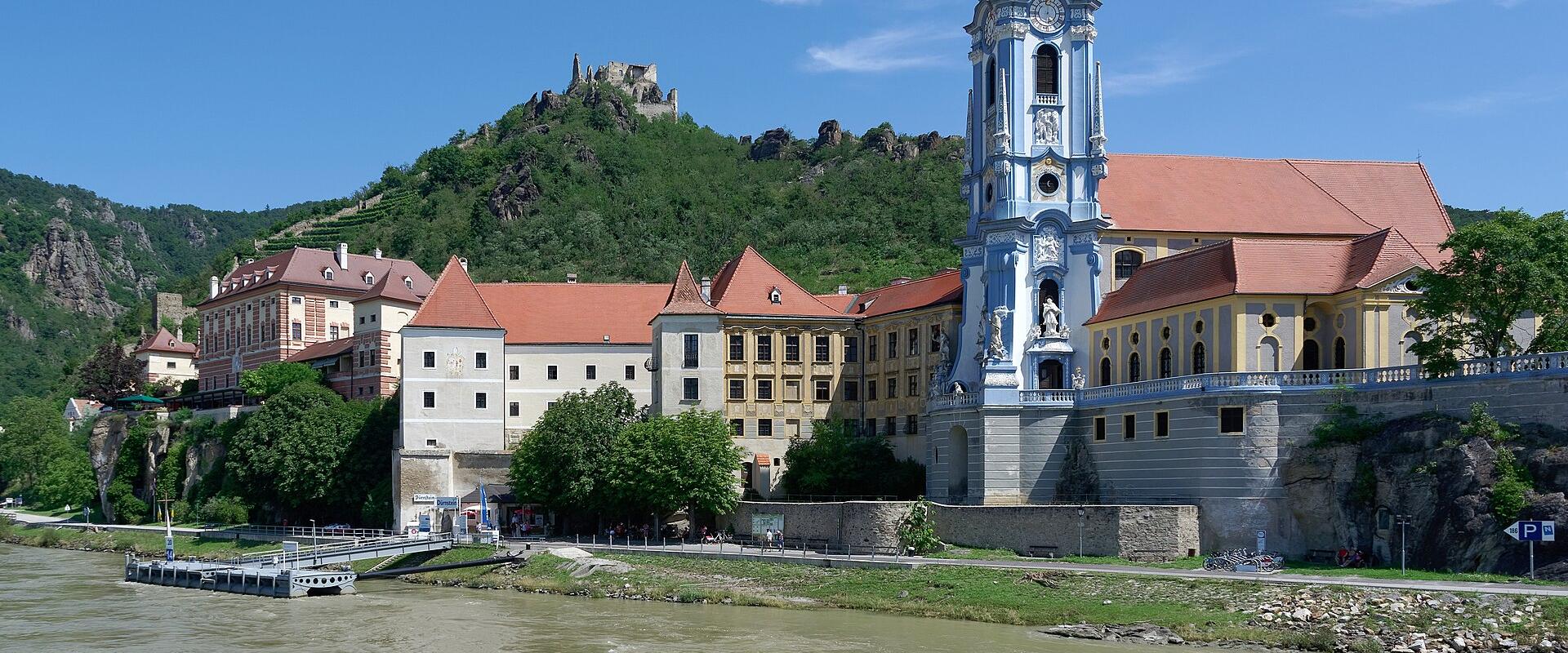
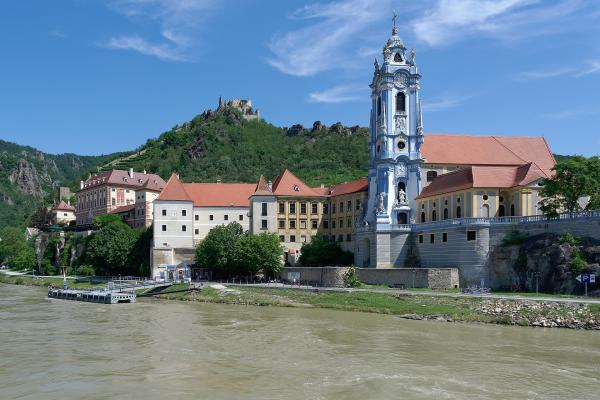
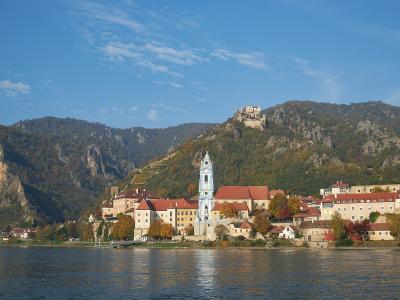
Dürnstein Abbey (Stift Dürnstein) stands on the Danube in the Wachau, in Lower Austria, and its blue and white church tower is the most famous landmark of the valley. It is seen from every boat on the river, from the cycle path on the opposite bank and from the vineyards above the town. The abbey was founded in 1410 as a monastery of Augustinian canons, and it was funded by Elisabeth, a member of the Kuenring family, the lords of the Wachau, who also left their mark on the castle ruins above the town. In 1788, during the reforms of Emperor Joseph II, the monastery was dissolved, and it was taken over by the canons of Herzogenburg, who still look after the site today.
The abbey is a showpiece of the Baroque. In the early eighteenth century, under the provost Hieronymus Übelbacher, the buildings were rebuilt with the best architects of the period, in the circle of Jakob Prandtauer, Matthias Steinl and Joseph Munggenast, who also worked at nearby Melk and Göttweig. The church, with its richly decorated interior, has a stucco ceiling, altars and a tower with a blue and white colour scheme that has become a symbol of the Wachau. A great attraction is the series of Baroque halls, including a picture hall, the Bildersaal, which is one of the few that have been completely preserved in the region, with a collection of paintings of the period.
The visit is organised as a guided tour or an audio tour in several languages. It takes about an hour and leads through the Gothic columned hall, with its slender pillars, which survives from the medieval phase, the courtyards, the festival hall and the Baroque church. The church is the highlight, and the view from the courtyard over the Danube and the vineyards is memorable. The abbey is open from late March to late October, with longer hours on weekdays and shorter on Sundays and public holidays, and guided tours in German are offered on certain days, with pre-booking recommended. The entrance is charged, with reduced rates for students and children.
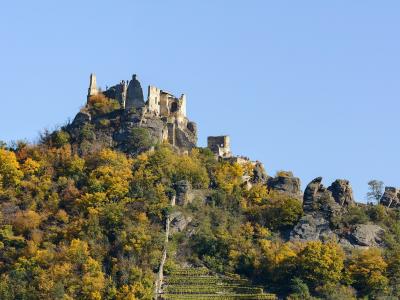
The abbey is at the edge of the old town of Dürnstein, which is covered in a separate listing, and a short walk leads from the Hauptstraße to the entrance. The castle ruin, where King Richard the Lionheart was held in captivity, is reached by a path from the town. A visit to the abbey can be combined with a wine tasting in the town, where the Wachau vineyards produce Grüner Veltliner and Riesling.
Boat trips on the Danube and the cycle path make it easy to reach, and a visit takes about one to two hours.
Categories
More photos coming soon
Nearby Attractions
Other places to visit in Dürnstein
Questions people ask
Quick Facts
Best Time to Visit
Visit from mid-June to late August for warm weather ideal for wine tasting and hiking.