

- Admission
- Individual and combined tickets available
- Where
- Hall in Tirol, Tyrol
- Directions
- Directions
Hall in Tirol is a well-preserved medieval town on the Inn river, a few kilometres east of Innsbruck, and its name comes from the salt that was the source of its wealth. The word hall is an old term for salt, and from the Middle Ages the salt mined in the mountains of the Karwendel above the town was boiled here and shipped along the river, which made Hall one of the richest towns in Tyrol. Salt was not the only product. In the late fifteenth century, the ruling Archduke Sigismund, known as the Rich in Coin, moved the mint of Tyrol to Hall, to make use of the silver that was mined in the region, and the town became a centre of coinage. Its most famous product was the Guldengroschen, a large silver coin first struck here in 1486, which is regarded as the forerunner of the thaler, the coin that gave the world the word dollar.
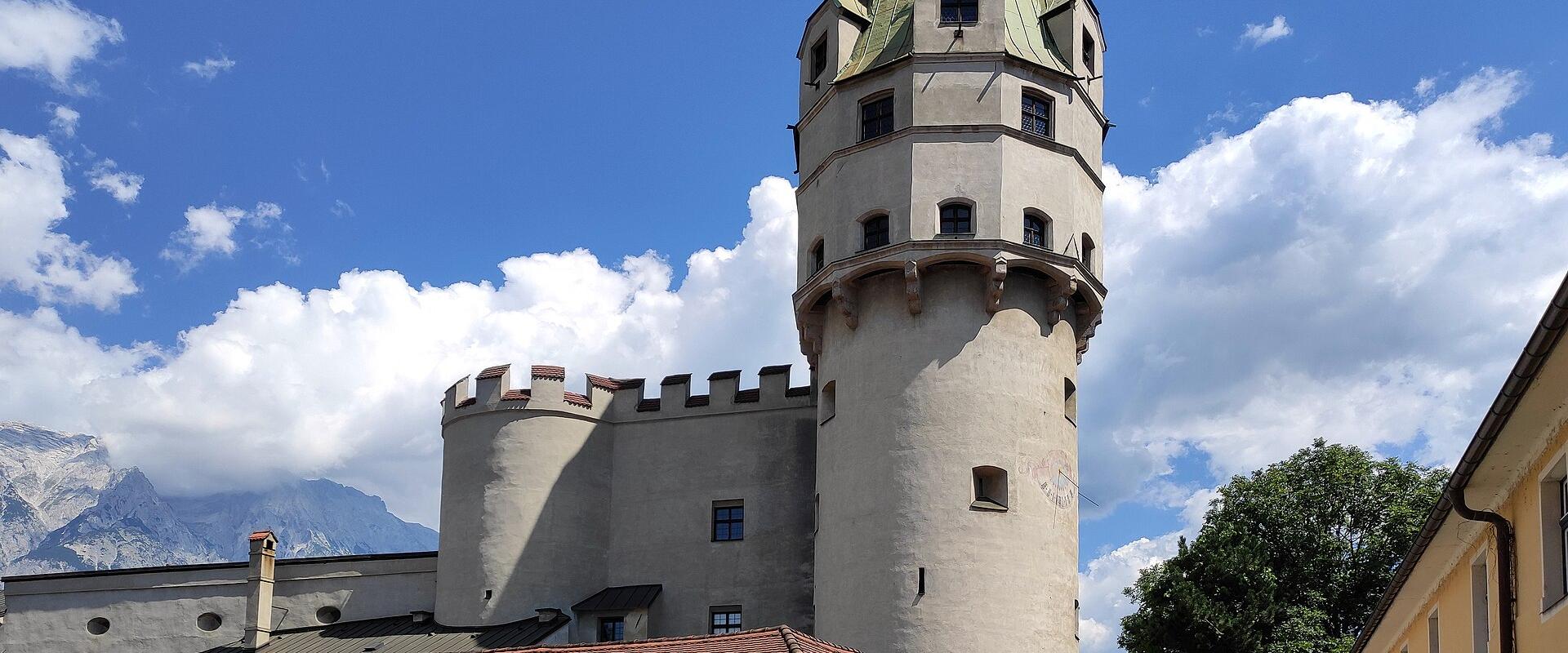
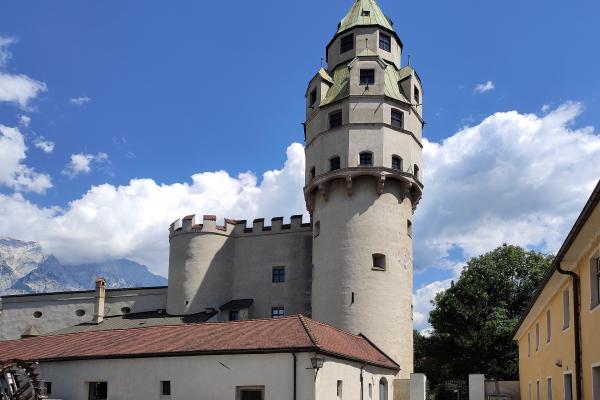
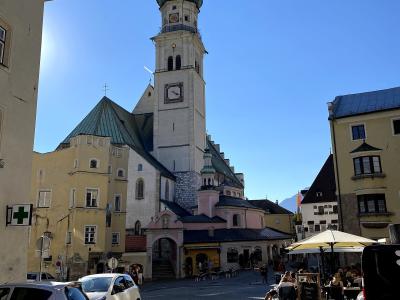
Hasegg Castle (Burg Hasegg) is where this story is told today. The fortress was built in the fourteenth century on the edge of the town as a stronghold to protect the town and the salt trade, and it was altered and extended over the centuries, and by the fifteenth century it housed the mint. It is a complex of towers, walls and halls, dominated by the Mint Tower (Münzerturm), whose pointed roof is covered with copper that has weathered to a distinctive green over the centuries. The tower and the castle are among the landmarks of the old town and can be seen from many points in it. The interior is a museum, the Münze Hall, which presents the history of coining and the economy of the region.
The visit is interactive. You learn how silver was refined and coins were made, and the museum shows a replica of a sixteenth-century roller press, an early machine in which the coin blanks were pressed between engraved rollers using the force of water, which made it possible to produce coins faster and in better quality. The highlight for many visitors is the chance to strike a coin by hand on a historic press and take it home as a souvenir. Audio guides in several languages explain the exhibits, and tours of the castle can be arranged.
Hall's old town is compact and pleasant to explore. The main square, the narrow lanes and the Gothic parish church, and the historic salt mine in the mountains above, which can be visited, complete the picture of a medieval salt town. Tickets can be bought for the castle alone or combined with other attractions, and the opening times depend on the season. Allow about one to two hours for the castle.
Categories
More photos coming soon
Admission Fees
- Admission
- Individual and combined tickets available
Hours and prices change, especially out of season. Check with the venue before you go.
Nearby Attractions
Other places to visit in Hall in Tirol
Questions people ask
Quick Facts
Best Time to Visit
Visit from late June to late August for warm weather ideal for hiking and exploring the old town.