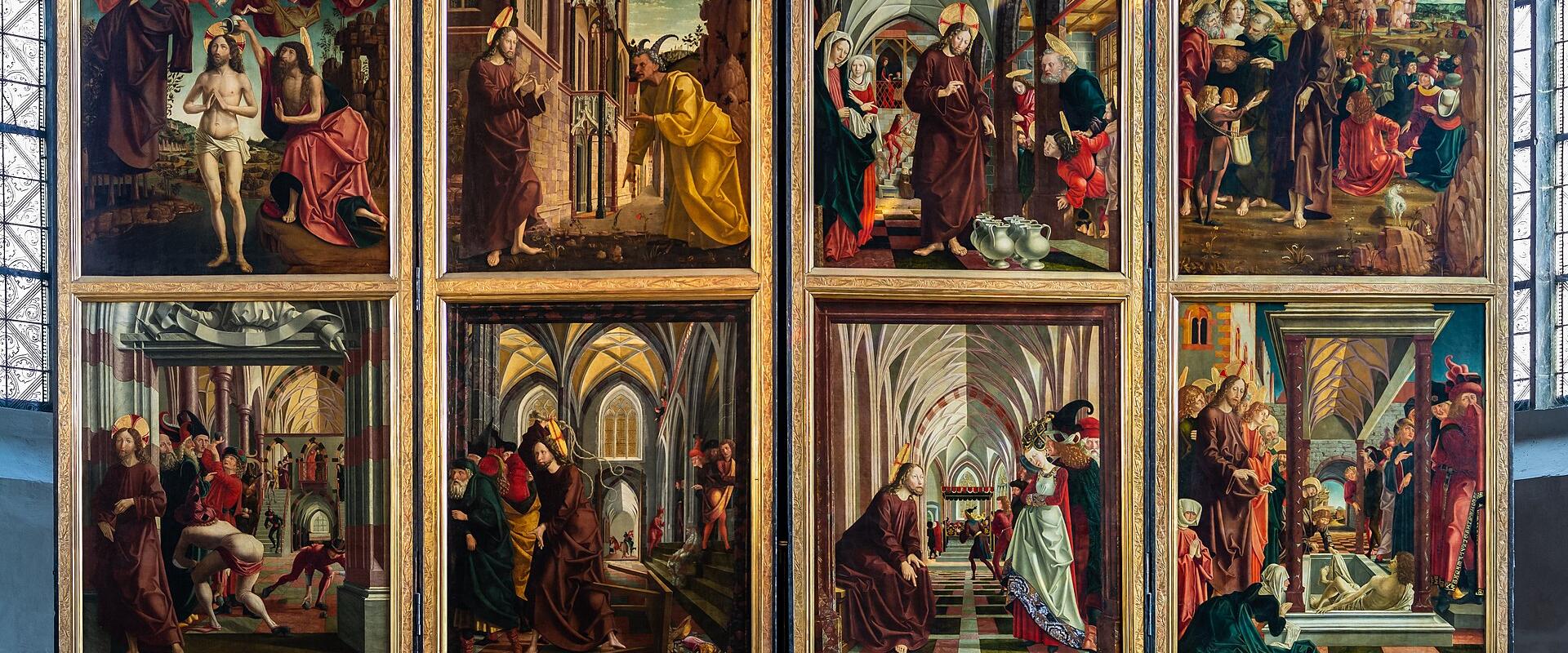
St. Wolfgang's Pilgrim Church (Wallfahrtskirche St. Wolfgang)
Largest village church in St. Pölten diocese
- Admission
- Free admission
- Hours
- 8 a.m. until dark
- Where
- St. Wolfgang, Upper Austria
- Directions
- Directions
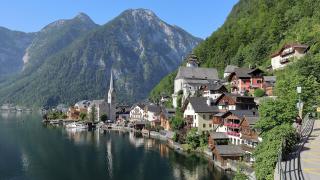
The Pilgrimage Church of St. Wolfgang (Wallfahrtskirche St. Wolfgang) stands above the lake in the village of St. Wolfgang im Salzkammergut, on the northern shore of the Wolfgangsee, and it is one of the most important pilgrimage churches in Austria. According to the legend, Wolfgang, bishop of Regensburg in the tenth century, withdrew to this region as a hermit and, in order to find the place where he should build a church, threw his axe from the cliff of the Falkenstein, and it landed on the spot where the church stands today. The story is depicted in paintings and carvings in the church, and the axe is a symbol that appears in the figure of the saint.
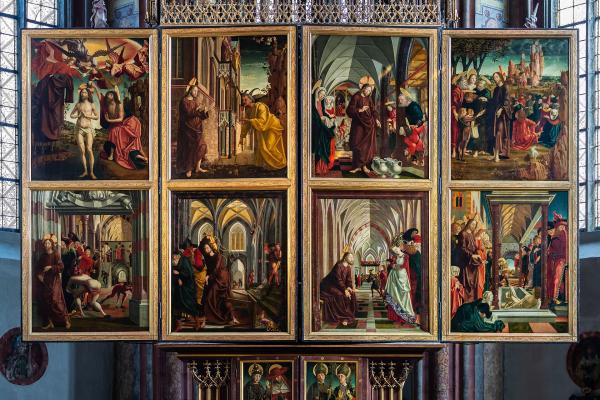
The present church is a late Gothic building, with construction in the fourteenth and fifteenth centuries and later additions, and it is regarded as one of the great church interiors of Austria. Its fame rests on the altars. The main treasure is the winged high altar by the artist Michael Pacher from Bruneck in South Tyrol, completed in 1481. Its richly carved and painted panels, with a Coronation of the Virgin at the centre and scenes from the life of Christ and of St. Wolfgang on the wings, are among the masterpieces of late Gothic art in Central Europe, and the gilded figures glow in the light of the church. A second altar, the large Baroque double altar by Thomas Schwanthaler, was added in the seventeenth century, and it shows how the church kept pace with changing styles. The contrast between the Gothic altar and the Baroque decoration is one of the pleasures of a visit.
St. Wolfgang has been a destination for pilgrims since the Middle Ages. In the late medieval period it was among the most important pilgrimage sites in the Alps, after Rome and Einsiedeln, and the crowds of pilgrims led to the foundation of the first inns, which began the tradition of hospitality in the village. A fountain near the church was said to have healing water, and pilgrims still arrive on foot and by boat, particularly around the feast day of the saint at the end of October.
The church is open to the public during the day, and entry is free, though donations help with its maintenance. It is a working church, so visitors should be respectful during services, and flash photography is discouraged. The interior is smaller than many people expect, so it can be crowded in summer, and early morning offers the best chance to see the altars in peace.
The church is a few minutes' walk from the lake landing stage and the village centre, where the Weißes Rössl hotel and the Schafbergbahn station are close. Allow thirty minutes to an hour for the church and its details.
More photos coming soon
Hours & Fees
- Open
- 8 a.m. until dark
- Admission
- Free admission
Hours and prices change, especially out of season. Check with the venue before you go.
Nearby Attractions
Other places to visit in St. Wolfgang
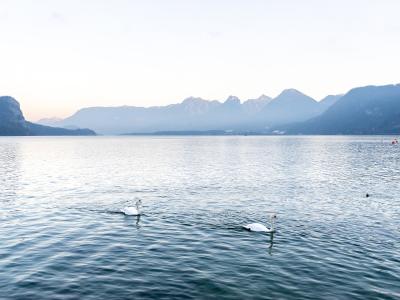
Lake Wolfgang (Wolfgangsee) Boat Tour
Historic lake steamship tours in St. Wolfgang
Natural Wonders · Transportation Heritage
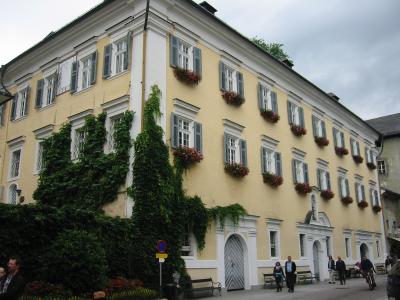
Schloss St. Wolfgang
Historic manor in St. Wolfgang, Austria
Alpine Lakes · Historic Palaces
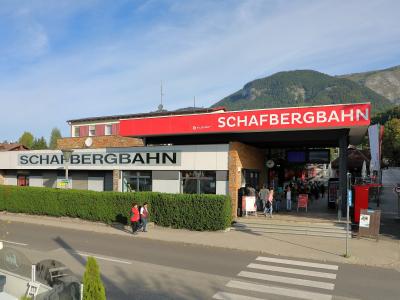
Schafbergbahn
Austria's steepest historic steam cog railway
Historic Railways · Mountain Hiking
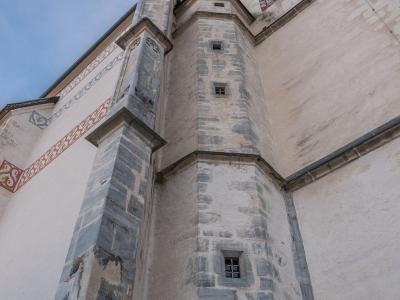
St. Wolfgang's Church Tower (Turm)
13th-century Gothic church tower in St. Wolfgang
Architectural Highlights · Local History
Questions people ask
Quick Facts
Best Time to Visit
Austria enjoys a Mediterranean climate with warm summers and mild winters, making it ideal for visiting year-round.