Plunging Into the Celtic Depths
The air hits you first—thick, cold, and heavy with the scent of damp stone. It feels less like a breath of fresh air and more like stepping into a wet wool blanket that refuses to let go. We are at the Dürrnberg mine, just a short drive from Salzburg’s bustling center, yet the vibe is worlds away. This isn’t a polished museum exhibit designed for passive observation. It is a genuine time machine.
For twenty-six centuries, miners worked these tunnels by candlelight, carving their lives into the rock face. Today, you step into their shoes, or rather, their sturdy boots. The experience involves sliding down steep shafts on your bottom, clad in simple protective gear that offers little glamour but plenty of history. It is dark, chaotic, and undeniably raw.
Leave the noise of the modern world above ground. Down here, the only thing that matters is the salt. You are not just observing history; you are sliding through it. The journey is uncomfortable in the best possible way, forcing you to engage with the environment rather than just watch it. It is an unforgettable descent into the heart of the earth.
Riding the Subterranean Waves
The mine train shuddered violently as it navigated the narrow-gauge tracks of the Dürrnberg tunnels. Coal dust hung suspended in the air, catching the erratic beam of my headlamp. The atmosphere shifted instantly, growing heavy with the metallic tang of mineral-rich air and damp stone. We swapped our street clothes for crisp white overalls, adopting the uniform of modern-day salt workers for the next ninety minutes. That preparation ended abruptly when we climbed onto a simple wooden raft.
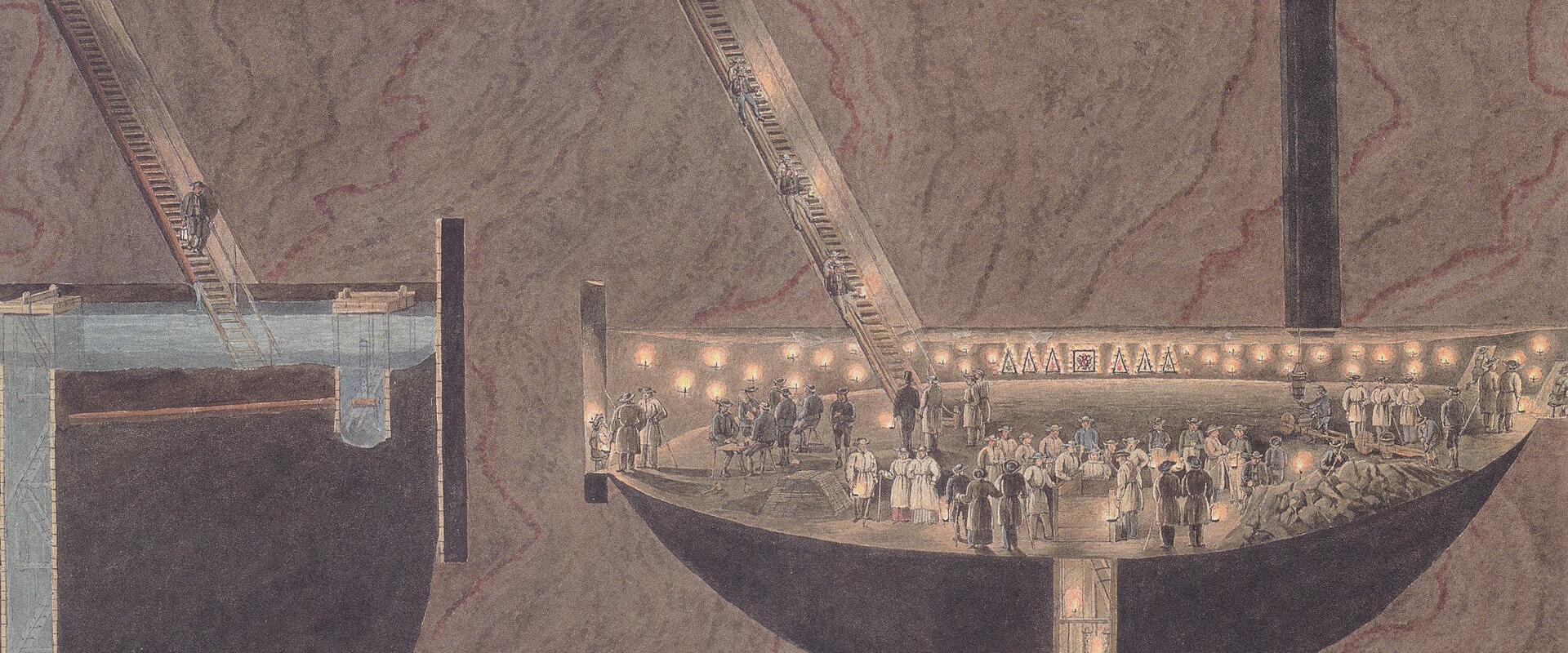
We glided silently across a subterranean salt lake, its surface an inky void that swallowed our light. The water was pitch black, offering no reflection, only the gentle lapping of waves against the wooden hull. In the center of this underground expanse, we crossed the border between Austria and Germany. Standing in two nations simultaneously felt bizarre, suspended above millions of years of geological compression. The quiet was profound, broken only by the rhythmic sound of the raft. It served as a stark, humbling reminder of human insignificance beneath the towering Alps.
Gravity’s Wild Slide
Wood splinters groaned as I launched into the chute, the wooden slide swallowing me whole in a blur of motion. For a hundred meters, smooth pine rushed past, turning the descent into a pure adrenaline spike that had me screaming like a kid again. Above, suspended salt crystals glittered in the dim light, resembling tiny diamonds in a subterranean jewel box. This isn’t just play; it’s history in motion. Celtic miners once navigated these exact tunnels, trading safety for the white gold that built empires. You feel the weight of millennia on your shoulders, even as you fly. It’s a visceral lesson in why this rock mattered more than gold. Grab your helmet, take a breath, and let gravity do the work. The slide awaits, offering a front-row seat to the underground magic of the Dürrnberg.
Gear Up for the White Gold Quest
The Dürrnberg mine maintains a steady 9°C year-round, so thermal layers are essential. You will don provided white miners’ overalls, though sturdy boots remain mandatory for the 1km trek. I still remember slipping on the wet rock near the salt lake, a reminder that safety gear isn’t just a formality.
Photography is strictly prohibited inside to protect the ancient atmosphere and the delicate salt formations. Book your 90-minute tour online weeks in advance, as tickets sell out fast. The experience suits kids aged four and up. Bring your sense of adventure, not your camera gear.
Your Next Descent
The cold from the Dürrnberg mine doesn’t just fade; it lingers in your bones long after you’ve traded the damp, cotton overalls for your own clothes. One moment, you are standing in the bright entry hall; the next, you are hurtling two hundred meters down a shaft, the wind rushing past your ears with a force that outshouts any alpine gale. This experience stands in stark contrast to the usual Salzburg rhythm of crowded Mozart museums and rigid imperial tours. Here, the silence is heavy, broken only by the clatter of the mine cart and the drip of water in the 2,600-year-old Celtic tunnels. You will navigate these dark passages, raft across a subterranean lake, and touch history that predates the Habsburg dynasty. For roughly €24.50, the price feels almost negligible against the sheer adrenaline of the descent. Book your ticket at Salzwelten Salzburg now. The earth below is ready for you.