




Echoes of the Danube’s Golden Thread
The Danube does not merely flow through the Wachau; it acts as a liquid archive, holding the weight of Habsburg ambition in its current. Autumn strips the air bare, sharpening the limestone cliffs until they glow against the sky. Vineyards shift into patchworks of amber and gold, a visual testament to the season’s crisp clarity. I remember standing in Dürnstein, watching the baroque spire pierce the clouds. Last light gilded the terraced slopes, illuminating a landscape that has absorbed both imperial decrees and the sweat of peasant labor.
The 2024 vintage whispers of endurance. April’s frost nearly ruined the crop, yet a generous summer compensated with small, exquisitely balanced grapes. You taste that struggle in every sip of Grüner Veltliner. It is a flavor profile defined by tension and release, a direct reflection of the vine’s survival.
Sitting at a Heuriger table offers more than a glass of wine. It opens a door to communal memory. A glass of Sturm costs around €4.50, but the real price is paid in attention. Winemakers here do not just serve drinks; they share lineage. They speak of ancestors who pruned these very vines by candlelight, their breath visible in the cold cellar air. The harvest is not merely agricultural work. It is a ritual of preservation, a way to honor the earth that sustained emperors and artists alike.
This connection between soil and soul defines the Austrian experience. The golden thread binds past glory to present joy. It is a legacy poured into crystal glasses, waiting to be appreciated. Enjoy the quiet majesty of the harvest season.
The Alchemy of Freshness: Tasting Sturm
Autumn in the Wachau doesn’t arrive quietly; it announces itself with the sharp snap of grape stems crumbling underfoot. I remember standing in a dusty Heuriger near Dürnstein, surrounded by the pungent, sweet scent of fermenting sugar mixing with damp earth. That first taste of Sturm was a revelation. Unlike the sterile polish of Vienna’s Sekt, this young wine is wild, cloudy, and aggressively alive.
It tastes of green apples and white pepper, a rough sketch before the oil painting of mature wine settles in. For just €4.50, you hold the raw, untamed energy of the harvest in a glass. Bubbles pop against the tongue like distant fireworks over Melk Abbey, offering a chaotic, beautiful vibrancy that stillness cannot match.
This drink is a temporal bridge. Each sip connects you to the peasant laborers who have tended these steep, terraced slopes since the Middle Ages. The initial sweetness vanishes quickly, replaced by a dry, lingering finish that demands another immediate sip. It is resilience bottled, a concept made tangible through flavor rather than abstract history.
The 2024 vintage tells a story of survival. Despite the devastating frost in April, winemakers captured a robust character in the grapes that refused to yield. To drink Sturm is to taste history itself—fresh, fleeting, and fiercely alive. It reminds us that perfection often bubbles with youthful vigor rather than sitting still. This ephemeral joy defines the true spirit of an Austrian autumn.
Hands in the Soil: A Harvesting Pilgrimage
The Danube carves through the Wachau with a quiet, persistent grace, revealing vineyards that cling to steep, terraced slopes like ivy to ancient stone. This is where the earth yields its gold.
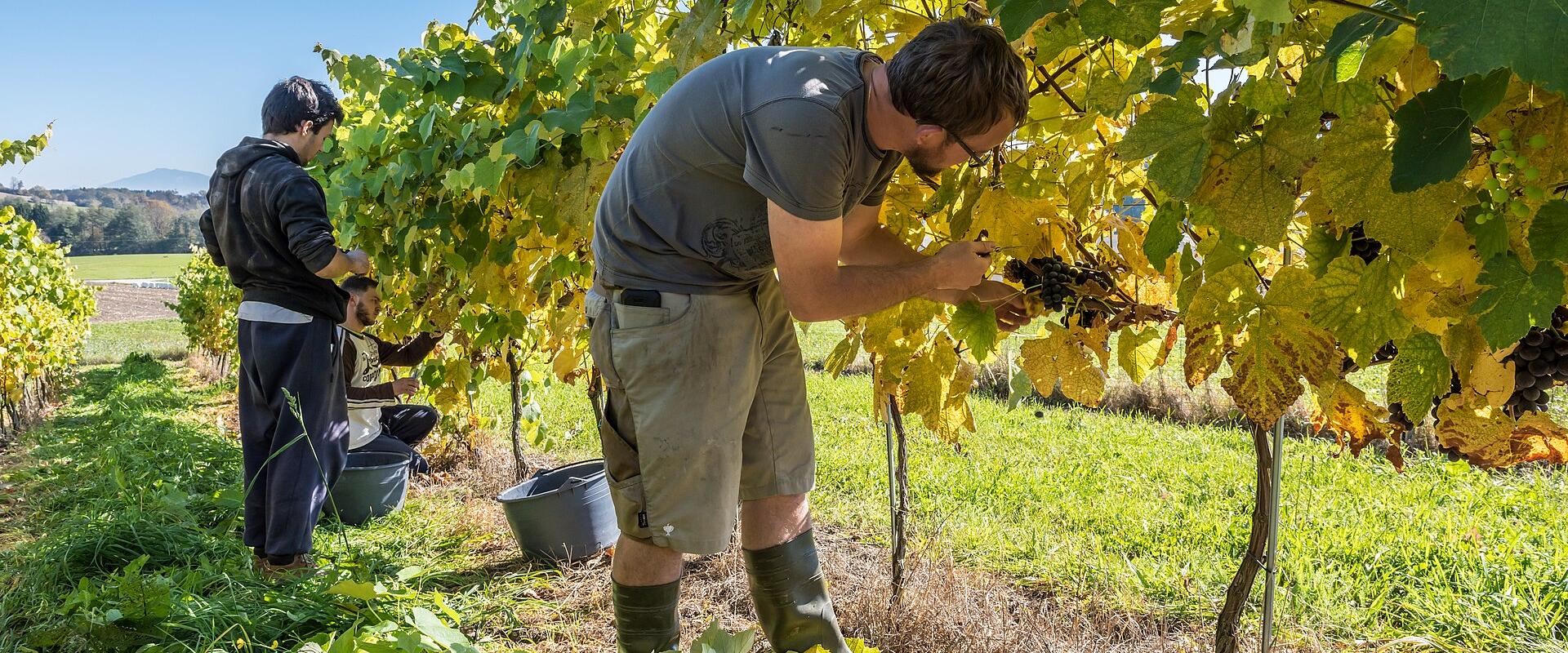
In Dürnstein, I watched locals hoist heavy baskets of Grüner Veltliner. Your back aches. Your spirit soars. It is not merely work; it is a ritual passed down through generations. You will sweat beside families who have tended these plots since the Baroque era.
Expect to invest around €150 for a full day. That price often includes lunch at a Heuriger. Camaraderie blooms immediately. Strangers become kin over shared struggles with harvest knives. As evening falls, the first taste of the new vintage warms you. This connection links you to the soil and the history beneath your feet. This is not tourism; it is communion with the land that has shaped Austrian identity for centuries.
Every glass holds a legacy of hands. It stands as a testament to tradition.
A Symphony of Flavor: Pairing with Autumn’s Bounty
Crisp air in the Wachau valley carries the sweet scent of ripening grapes mingled with woodsmoke. This marks the arrival of Sturm, the cloudy, partially fermented wine that defines the Austrian autumn. I remember sitting in a rustic Heuriger near Dürnstein, surrounded by woven straw baskets lining the walls. Sipping this effervescent nectar, I paired it with a plate of Marillenschnitzel. The apricot’s delicate sweetness cut through the wine’s slight tang, creating a harmony that felt baroque in its complexity.
Spring frosts reduced the 2024 harvest size, yet the remaining grapes achieved a concentrated intensity. Such boldness demands robust companions. A hearty Wachauer Gulasch offers rich, spiced beef and paprika, grounding the lighter notes of the new vintage. You will find such traditional meals in family-run taverns for €15 to €25, a modest price for such depth.
Locals gather to toast the harvest, their laughter echoing off stone cellars. This ritual feels as enduring as the Habsburgs, though it plays out in modern revelry. The Sturm cleanses the palate between bites of rich food, creating a symbiosis of taste and tradition. Austrian culture here is not merely observed; it is savored. Every glass connects us to the land and its enduring spirit.
The Enduring Vintage: A Reflection on Legacy
Late October light spills over Dürnstein’s terraced slopes, casting long shadows past Baroque spires that have anchored this valley since the twelfth century. I remember standing near the castle ruins, where the only sounds were dry leaves skittering across stone and the distant, rhythmic thrum of harvesters. The 2024 crop was small—April’s late frosts had thinned the buds significantly—but what remained packed a punch. Each bottle holds the concentrated intensity of a struggle overcome by a warm, golden autumn, offering a profound lesson in nature’s unpredictability.
Uncorking a Grüner Veltliner from Aggsbach’s steep inclines feels less like drinking wine and more like reading a history book written in soil and patience. Hand-harvesting these precarious slopes demands a reverence for the land that industrial methods simply cannot replicate. It is a tactile connection to imperial heritage, where every grape is selected by hand, ensuring that the final product reflects not just the vintage, but the specific character of the hillside.
As the sun sinks below the Danube, painting the river in molten copper, the parallel between culture and wine becomes clear: both require time to mature. The Wachau does not merely preserve its past; it actively cultivates it. This ongoing dialogue ensures that the legacy of these hills remains vibrant, nuanced, and enduring, passing from one generation to the next with every sip.