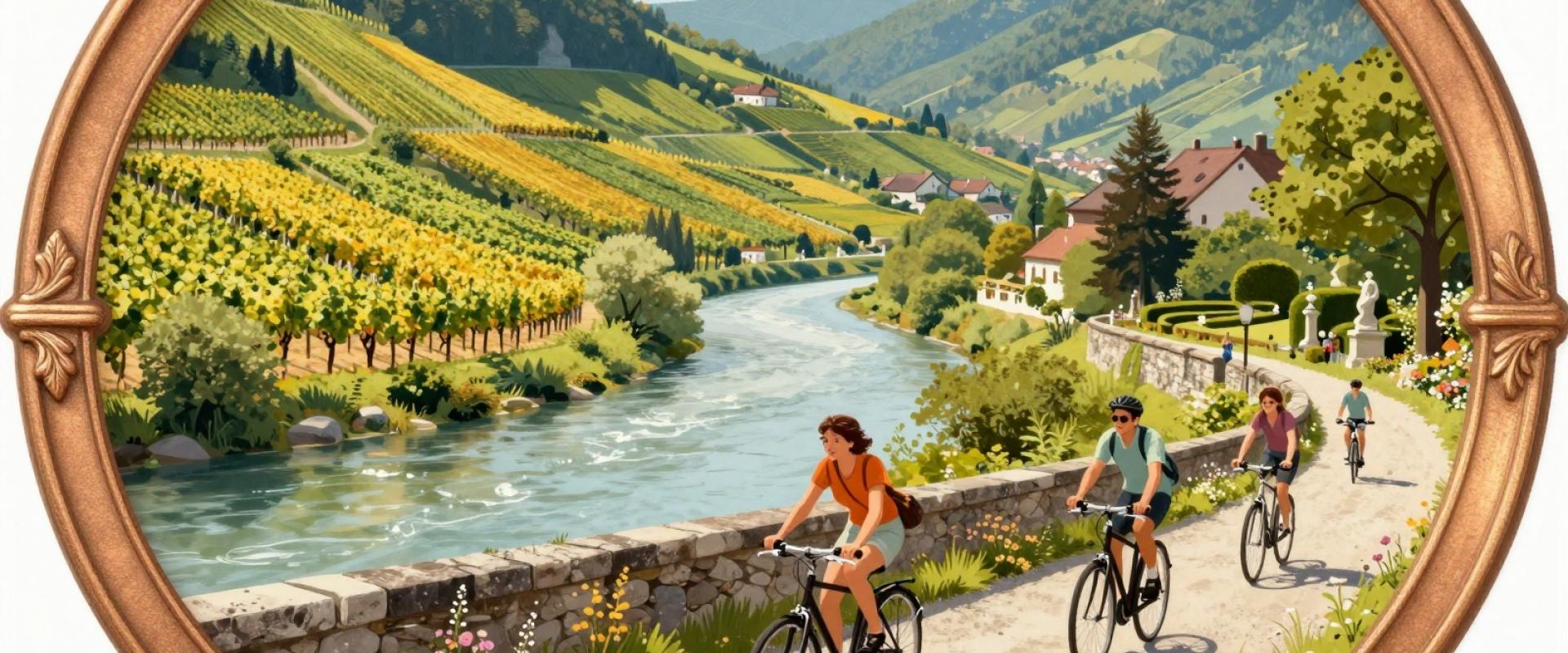
Echoes of the Baroque on Two Wheels
The scent of ripening apricots hung heavy in the air, a sweet reminder that summer had fully claimed the Wachau. My first summer ride along the Danube Cycle Path remains etched in my memory, not for its distance, but for its depth. This UNESCO World Heritage route is more than a ribbon of asphalt; it is a historical corridor where monks, emperors, and artists have left their fingerprints on the landscape. As I pedaled past the ruins of Dürnstein Castle, where Richard the Lionheart once languished, centuries seemed to dissolve under the warm Austrian sun.
My legs found a steady rhythm, mirroring the gentle flow of the river below. Baroque churches emerged from the valley floor like jewels set in velvet, their ornate facades glowing in the afternoon light. I stopped at a traditional Heuriger, allowing the crisp acidity of a local Grüner Veltliner to cut through the heat. That ancient terroir grounded me, connecting the present moment to a lineage of cultivation that stretches back generations. The path itself remains flat, yet the history beneath the tires feels steep and profound.
Imperial grandeur unfolded in every mile. Terraced vineyards clung precariously to limestone cliffs, while quiet monasteries watched the river’s bend with stoic silence. These structures have stood for eight hundred years, witnessing the rise and fall of dynasties. This was not merely exercise; it was an education in grace. I moved through a living museum where cobblestones told stories of resilience and vineyard rows spoke of patience. The pace was leisurely, the landscape spoke softly, and time seemed to expand within the valley walls. The legacy of the Habsburgs is etched into the soil, waiting not for observers, but for participants who are willing to listen.
The journey typically begins near Melk Abbey, where its massive Baroque architecture looms over the Danube, signaling the start of the imperial corridor. From here, the path stretches roughly thirty kilometers to Krems, offering a terrain that is predominantly flat and forgiving. This consistency allows for a steady, uninterrupted rhythm, letting cyclists glide past centuries-old vineyards that cling to sun-drenched slopes. The ease of the ride belies the richness of the surroundings.
Dürnstein often appears as a surprise, its striking blue Gothic tower standing in stark contrast to the surrounding greenery. Legend holds that King Richard the Lionheart was imprisoned in its dungeons in 1192, a fact that adds a layer of medieval intrigue to the town’s remarkably preserved medieval core. Nearby, the St. Pölten Cathedral offers a serene counterpoint, a quiet space for reflection amidst the bustling history. For those seeking comfort, local e-bike rentals in Melk typically cost between €35 and €45 daily. This investment covers the cost of battling the occasional headwind and ensures that the gentle gradients are conquered with ease rather than exhaustion.
As you pedal toward Krems, the atmosphere shifts with the seasons. In spring, the air carries the delicate scent of apricot blossoms; by late summer, it thickens with the heavy, sweet aroma of ripe fruit. The ride concludes in Krems an der Donau, a city that retains the charm of its Hanseatic past. Half-timbered houses line the streets, whispering tales of imperial trade routes that once thrived here. This segment of the path connects stone and spirit, transforming a simple commute into a journey through time.
The Art of the E-Bike and Riverside Respite
The Danube flows with a quiet dignity, much like the steady hum of an electric bike. In July, the heat can turn Krems’ cobblestones into frying pans, making electric assistance not just a luxury, but a practical necessity. For thirty-five to fifty euros a day, you can secure a reliable machine from a reputable shop in Melk. This small financial commitment preserves your physical energy for what truly matters: the experience itself. You can glide past the ornate facades of Melk Abbey without breaking a sweat, arriving in Dürnstein cool, clear-headed, and ready to wander.
In Spitz, the sensory experience deepens. The scent of baking strudel mingles with the yeasty tang of fermenting Grüner Veltliner, creating an olfactory tapestry unique to the region. I often pause at a local Heuriger, where a glass of wine costs just €4.50. Pair it with a €12 plate of Brettljause—a curated selection of cured meats, cheeses, and pickles—and you have a perfect midday anchor. These pauses are essential. The flat paths invite a slower rhythm, allowing your eyes to catch the intricate geometry of vineyard terraces and the subtle shifts in light across the river. Here, the valley’s true pulse emerges, reminding us that travel is as much about stopping as it is about moving.
A Legacy Written in Stone and Water
Pedaling stops, but the Danube keeps moving. Roman legions once floated on these waters; medieval merchants followed in their wake. Today, you trace their path, feeling the weight of history in every turn of the wheel. This is no passive sightseeing trip; it is a deep dive into the soul of Central Europe.
In Dürnstein, the vineyards climb steeply, echoing the ambition of Prince Eugene of Savoy, who once sat in the very tower that held the English king captive. His captors never guessed that the wine produced in these slopes would outlast the stone walls that imprisoned him. The Grüner Veltliner carries notes of lime and pepper today, a liquid testament to resilience. The ride from Krems to Melk covers thirty kilometers of flat gravel, leaving your legs feeling light but your mind engaged.
Ornate monasteries line the banks, watching silently as faith and art stand frozen in time. Stop often. Sip apricot brandy. Listen to the current. Imperial history meets your present breath in these moments. Stone walls hold memories, but it is the traveler who breathes life into them. The landscape stays with you, long after the wheels cease to turn.