Baden bei Wien
Historic spa town south of Vienna with thermal baths and parks
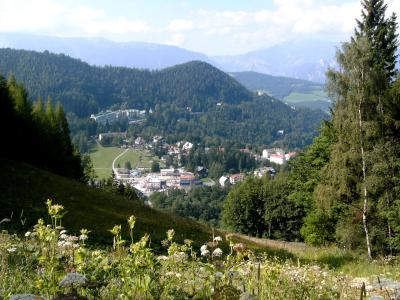
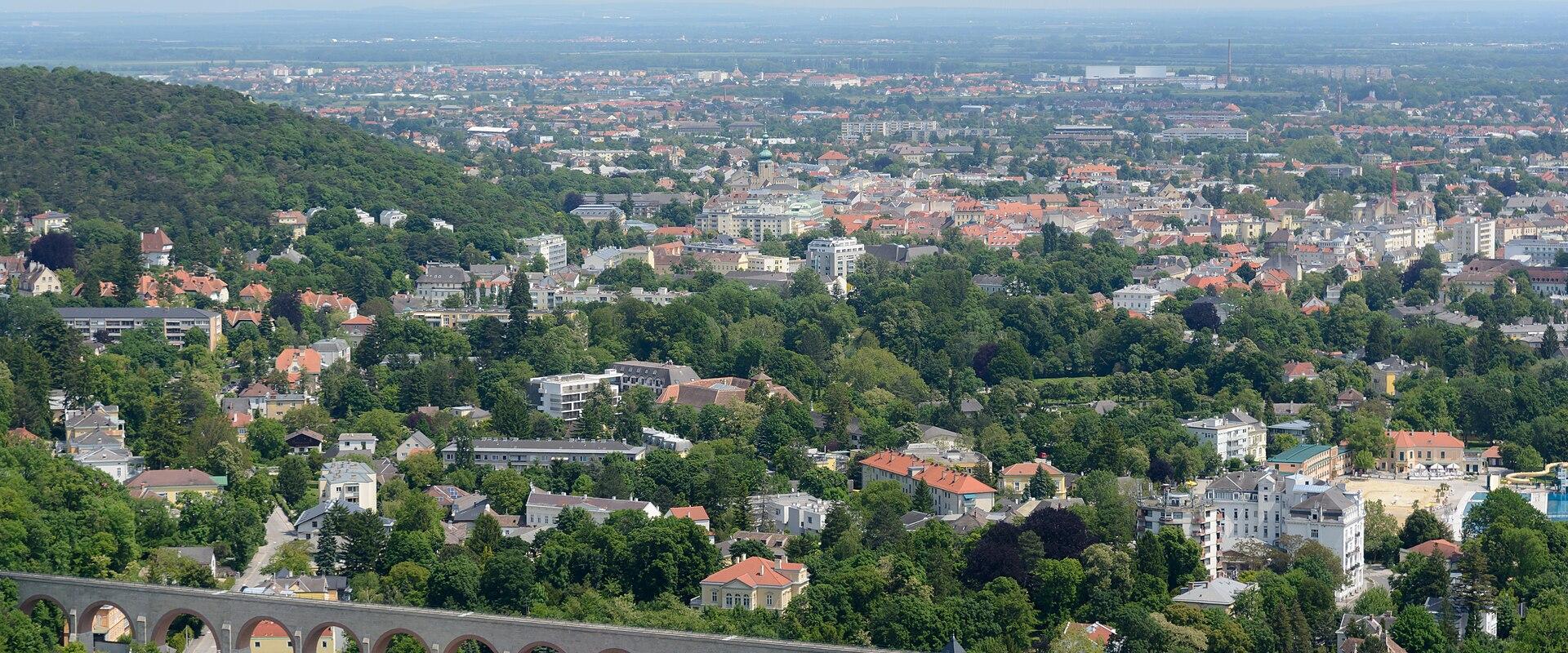
Baden bei Wien, in Lower Austria, lies on the Schwechat river at the point where the Vienna Woods meet the plain of the Vienna Basin. The town has about 26,000 inhabitants, and the vine-covered slopes and woods above it, with the Weilburg ruins and views over the plain, give it a village-like setting despite its closeness to the capital. Its name simply means the baths.
The springs are the town's foundation. Warm sulphur water, at around 36 degrees, rises at about a dozen points in the town, and the Romans, who called the place Aquae Pannoniae, built Roman baths here around the first century. The healing waters, believed to help rheumatism, brought visitors for centuries, and in the Habsburg period, from the late eighteenth century, the town became a summer resort of the court. Emperor Franz I stayed here frequently, and his visits made the town fashionable. A great fire in 1812 destroyed most of the old town, and the rebuilding in the Biedermeier style, with low, harmonious houses and wide streets, gave it the unified look it has today.
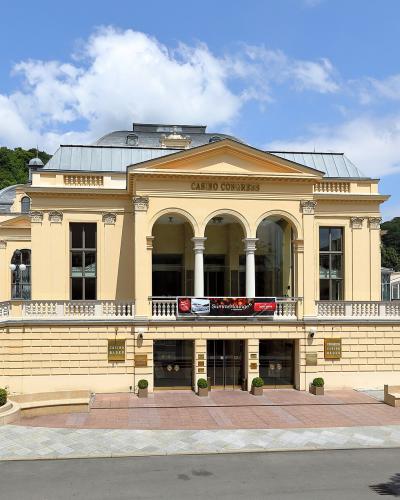
The centre is the Hauptplatz, with its Trinity Column and the Rathaus, the Town Hall, and the pedestrian streets around it, lined with Biedermeier buildings and cafes. The Kaiserhaus, a summer residence of Emperor Franz I, is among the finest buildings of the Austrian Biedermeier, and Joseph Haydn and other composers also knew the town. Late nineteenth-century architecture in Secession style adds variety, and the Kurhaus, a concert and event hall at the edge of the park, is the centre of the spa culture.
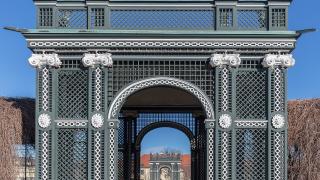
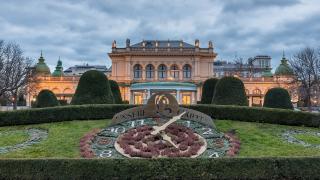
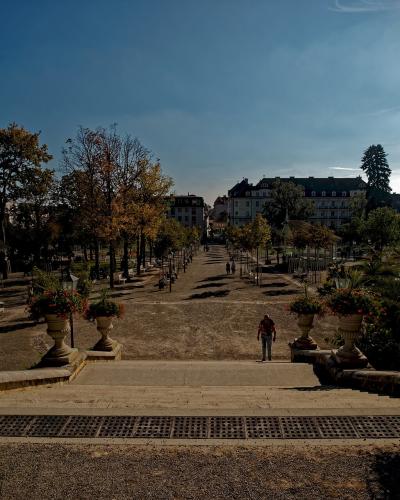
The Kurpark is the pride of Baden. This landscaped park was laid out in the English style in the nineteenth century, with winding paths, ponds, old trees and a collection of monuments. A Beethoven temple, a bust of Mozart and a monument to Mozart recall the composers and emperors who knew the town, and the Doblhoffpark nearby has a Rosarium with hundreds of rose varieties. Beethoven spent several summers in Baden and sketched parts of his Ninth Symphony here, and Mozart wrote his motet Ave verum corpus in the town in 1791. The Beethovenhaus, where he lived in 1821, is now a small museum. Operetta is also at home: the Sommerarena, an open-air theatre with a retractable roof, stages operettas in summer.
The spa tradition continues in the Thermal Baths, the Thermalbad, and the Römertherme, a modern thermal baths with warm pools and saunas, and the Strandbad, a large open-air bath, is a popular family spot. The Casino Baden, one of the oldest in Austria, adds to the resort's atmosphere. Baden is one of the 11 towns in seven countries that UNESCO inscribed in 2021 as the Great Spa Towns of Europe', a World Heritage Site, a distinction that recognises the way the town's spa buildings, parks and promenades shaped a European spa culture.
Outdoors, the Vienna Woods, the Wienerwald, begin at the edge of the town. Trails lead to the Weilburg ruins, the Rauhenstein and Rauheneck castles in the Helenental valley, and the vineyards of the Thermenregion. The area is known for Heuriger taverns, which sell new wine with cold platters, and local growers produce Grüner Veltliner, Riesling, Rotgipfler and Zierfandler. The town is also known for a long operetta tradition and a Christmas market in Advent.
The best time to visit is from May to September, with June and July the most pleasant for the park and the wine taverns, and autumn for the wine harvest. Winters are quiet, with Advent the main season.
Getting there is simple. The Badner Bahn, a tram-like railway, connects Baden with Vienna's Oper stop in about 55 minutes, and regional trains and the S-Bahn run from Vienna Meidling, formerly via the Südbahnhof, which has been replaced by Vienna's Hauptbahnhof, in about 25 minutes. By car, the A2 motorway passes the town, and Vienna is about 25 minutes away. Within the town, everything central is within walking distance.
Best Time to Visit
Visit from mid-June to early September for warm weather ideal for hiking and spa visits.
Did you know?
Interesting, verified facts about Baden bei Wien
Baden bei Wien Has a Distinct Local Story
HistoryBaden bei Wien is a spa town located in the district of Baden in Lower Austria, situated approximately 26 kilometers south of Vienna.
Source: Baden bei Wien - WikipediaPlan Your Visit to Baden bei Wien
Essential travel tips and information for your trip to Baden bei Wien.
Suggested Itineraries
Travel Tips
Currency
EUR • Cards widely accepted
Language
German • English in tourist areas
WiFi
Free WiFi in cafes and hotels
Explore Baden bei Wien by Interest
Discover attractions and experiences in Baden bei Wien organized by your interests and travel preferences.
All attractions in Baden bei Wien
Sorted by our recommendation score
Quick Facts
Book your stay
Frequently Asked Questions
More destinations in Lower Austria
Explore other amazing places in the Lower Austria region