
- Admission
- Free entry with Graz Card or Graz Card Light
- Where
- Graz, Styria
- Directions
- Directions
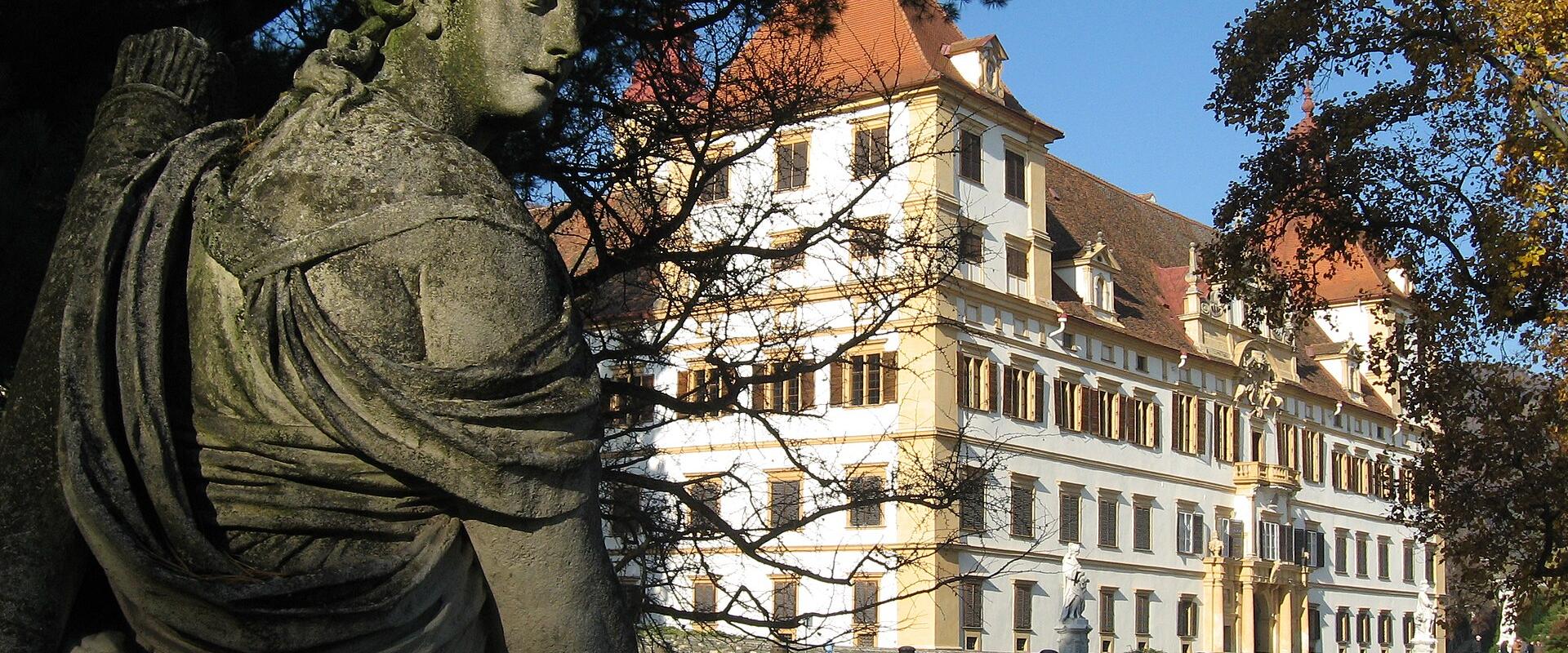
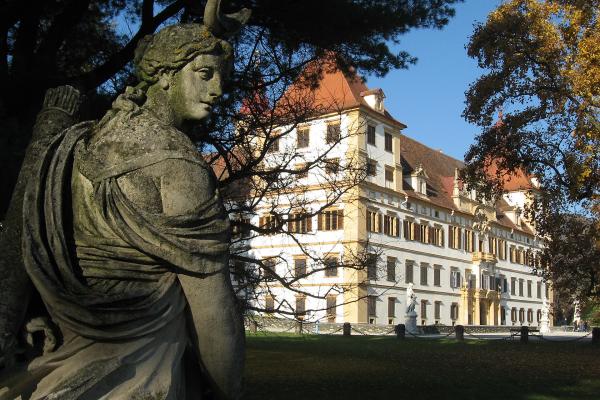
Eggenberg Palace (Schloss Eggenberg) lies on the western edge of Graz and is the most important Baroque palace in Styria. It was built between 1625 and 1646 for Hans Ulrich von Eggenberg, a leading adviser of Emperor Ferdinand II, with the architect Giovanni Pietro de Pomis at the start of the project. The palace is a large square complex with four corner towers and an inner courtyard, and it has been part of the UNESCO World Heritage site Graz, City of Design, since the palace was added to the historic centre listing in 2010. It is also part of the Universalmuseum Joanneum.
The real treasure of the palace is its suite of twenty-four state rooms (Prunkräume), which are among the best-preserved interiors of their period in central Europe. The rooms are decorated with stucco, painted ceilings, tapestries, furniture and ceramic stoves from the seventeenth and eighteenth centuries. At the centre lies the Planetary Hall (Planetensaal), whose ceiling is covered with painted panels showing the planets and the cosmos. The whole building was planned with symbolism in mind, with numbers that refer to the calendar and the passage of time, and the architecture is meant to represent the order of the universe as understood at the time. The state rooms can be visited on guided tours at set times.
The palace also houses the Alte Galerie, which shows paintings and sculpture from the late Middle Ages to the late eighteenth century, including works from the circle of Lucas Cranach the Elder. There are further collections in the building, such as an archaeological collection and a coin cabinet, and the museum provides a changing programme of exhibitions. Some of the best-known paintings and sculptures are the religious works of the Alpine region, which give a picture of the cultural life of the region.
The palace park is a delight in its own right, an extensive garden with lawns, old trees, and the Planetary Garden (Planetengarten), which echoes the cosmic theme of the interior. A rose garden and an area where peacocks roam freely in spring and summer add to the atmosphere, and the grounds are free to enter, which makes them popular with local residents, joggers and families. The park opening hours vary with the season, longer in summer and shorter in winter.
The palace is easy to reach from the centre of Graz by tram, and a visit takes about two to three hours for the state rooms and the gallery, with extra time for the gardens. It is a good choice for those who like decorative arts, Baroque architecture, and quiet green spaces, and it is a calmer alternative to the busy old town. Holders of the Graz Card get free entry, so check the ticket options before you go.
More photos coming soon
Admission Fees
- Admission
- Free entry with Graz Card or Graz Card Light
Hours and prices change, especially out of season. Check with the venue before you go.
Nearby Attractions
Other places to visit in Graz
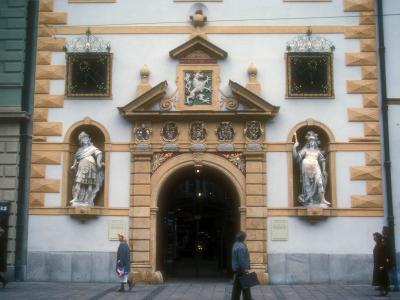
Styrian Armoury
World's largest preserved historical armoury
History & Heritage · Museums & Art
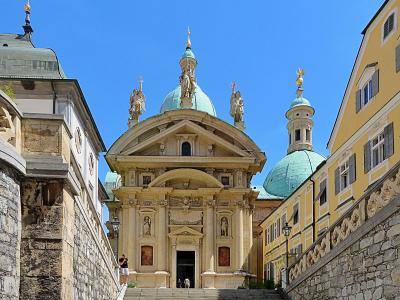
Mausoleum
Imperial burial site with distinctive turquoise domes
Free Architectural Highlights · Historic Palaces
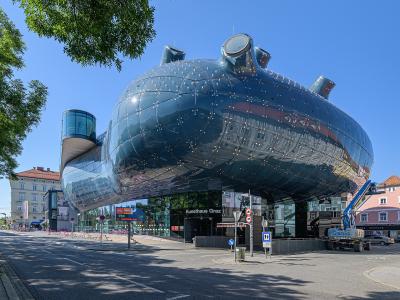
Kunsthaus Graz
Friendly alien contemporary art museum
Architectural Highlights · Contemporary Art
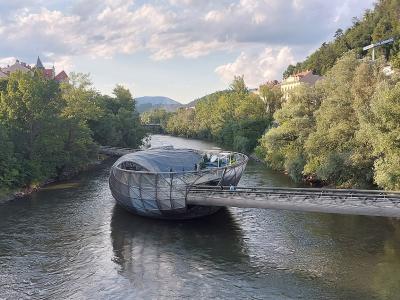
Murinsel
Vito Acconci's steel island café on the Mur River
Free Museums & Art · Urban Exploration
Questions people ask
Quick Facts
Best Time to Visit
Visit from mid-June to early September for warm weather ideal for outdoor activities and riverfront exploration.