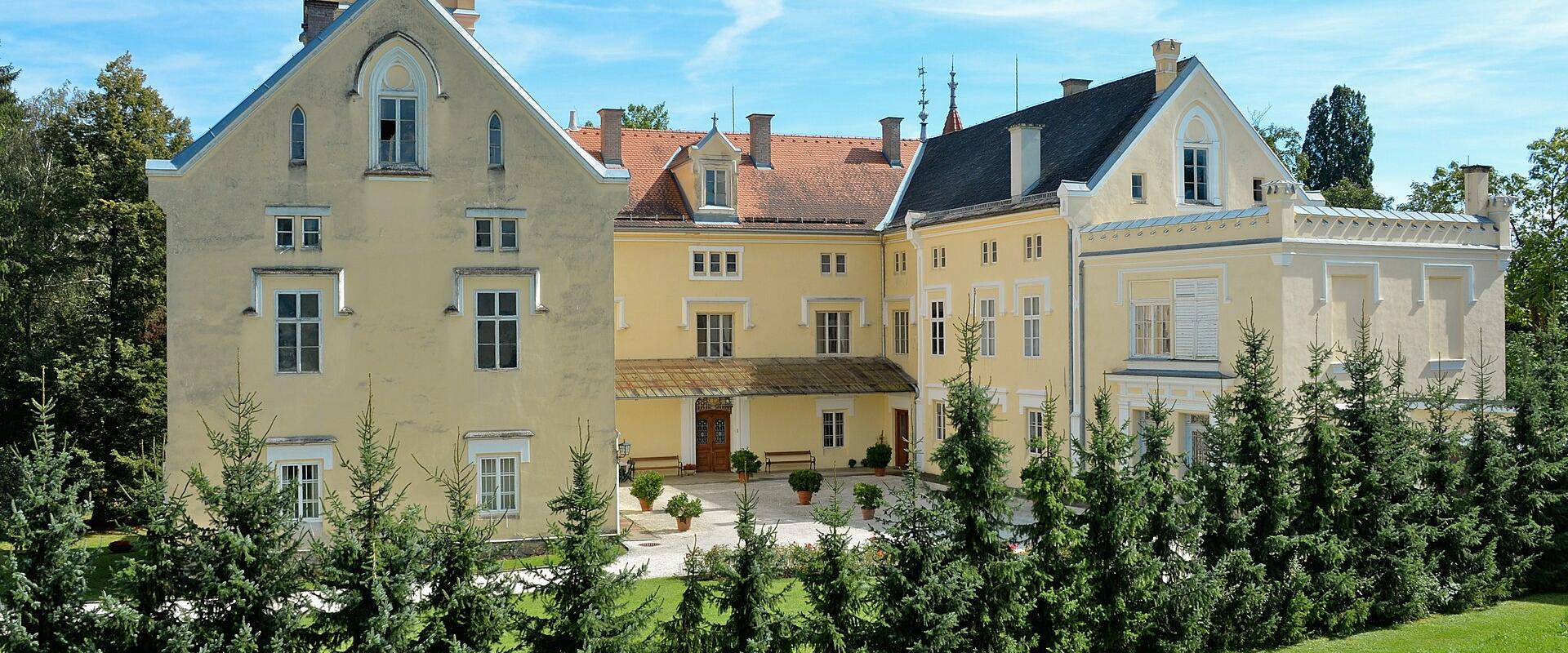
Schloss Wolfsberg
Historic castle in Wolfsberg, Austria
- Where
- Wolfsberg, Carinthia
- Directions
- Directions
Wolfsberg is the main town of the Lavanttal, the long, sheltered valley of the Lavant river in the east of Carinthia, between the Koralpe and the Saualpe mountains, and Schloss Wolfsberg stands above the town as its most prominent historic building. The Lavanttal has a different character from the rest of Carinthia. It is a warm, fertile valley that is known as the fruit orchard of the province, with apple orchards, cider and mild air, and its history was long separate from the rest of Carinthia, since for centuries it belonged to the prince-bishops of Bamberg in Bavaria, who held large estates in the region. Wolfsberg was the centre of their administration in the valley, and the castle was the seat of their governors, which is why it is a significant building in the story of the area.
The castle has medieval origins and has been rebuilt and extended several times, and the result is a large complex of wings and courtyards in which different periods are visible, including Renaissance and later features. It lies on a rise above the old town, and from the streets below, it forms part of the skyline, together with the tower of the parish church. In the nineteenth century, the castle came into the ownership of a noble family, and it has remained in private hands, which affects the question of public access. Visitors should be aware that the castle is not a public museum, and it is advisable to check with the local tourist office whether exhibitions, concerts or tours are being held, since access depends on events and on the season.
The town offers a great deal to see around the castle. The old town of Wolfsberg has a main square with a town hall, historic houses and churches, and the Lavanttal is known for its mining history and for the Koralpe, a mountain of about 2,100 metres that has a ski area in winter and hiking in summer. The orchards are at their loveliest in spring, when the blossom covers the valley, and in autumn, when the fruit is picked and the new cider is tasted, and farms sell apples, juice and schnapps. The valley's roads and cycle paths follow the Lavant river and link the villages.
The town is reached by road from Klagenfurt and Graz via the motorway, and by train via the Lavanttal railway. The castle is within a few minutes' walk of the centre. A visit takes half an hour for a walk around the outside and the surroundings, and longer if there is an event.
The castle is a good starting point for discovering a valley that is less visited than the Carinthian lakes.
Categories
More photos coming soon
Nearby Attractions
Closest attractions by distance
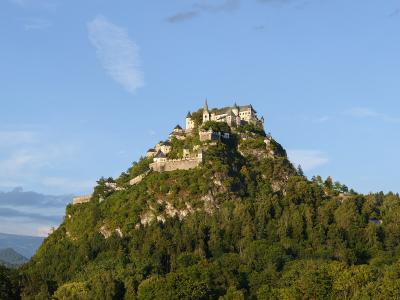
Hochosterwitz Castle
14-gate medieval fortress in Carinthia
From €18 Fortifications · Funiculars
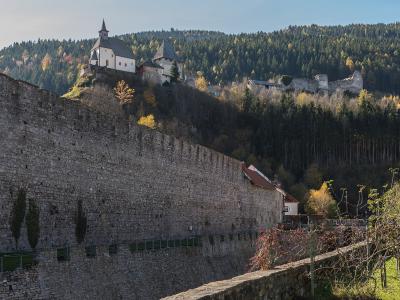
Friesach Town Moat
Historic water-filled moat encircling Fries
Fortifications · Old Towns
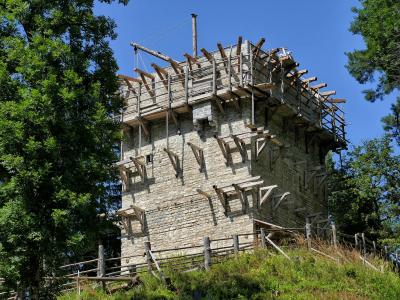
Burgbau Friesach
Medieval castle construction site in Friesach, Austria
Medieval Castles
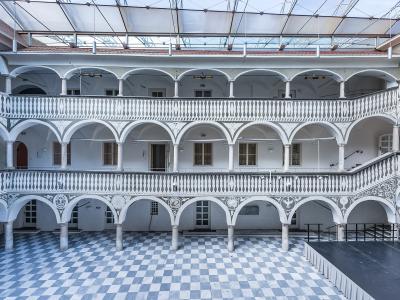
Rathaus St. Vein An Der Glan
15th-century Gothic town hall with Baroque facade
Architectural Highlights · Historic Houses
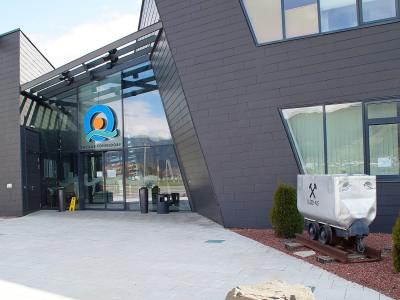
Therme Aqualux Fohnsdorf
Aquatic spa with outdoor pools and sauna
From €20.32 Thermal Springs · Water Sports
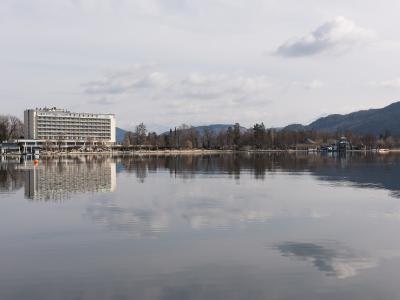
Lake Wörthersee
Alpine lake in Carinthia, Austria
Alpine Lakes · Boat Tours
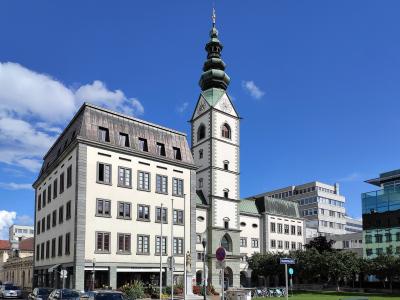
Cathedral Of St. Peter And Paul
Baroque cathedral in historic Klagenfurt
Architectural Highlights · Old Towns
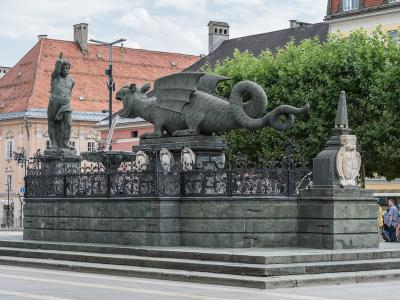
Lindwurm Fountain (Lindwurmbrunnen)
16th-century stone dragon fountain, Klagenfurt's emblem
Free History & Heritage · Urban Exploration
Questions people ask
Quick Facts
Best Time to Visit
Late June to late August offers warm weather ideal for hiking and outdoor activities in the region.