- Admission
- Free access to the road and rail line
- Hours
- The pass is accessible 24 hours a day, 365 days a year, as it is an open public road.
- Where
- Semmering, Lower Austria
- Directions
- Directions
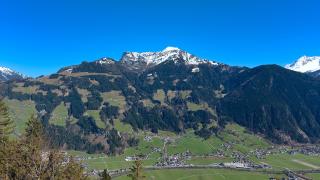
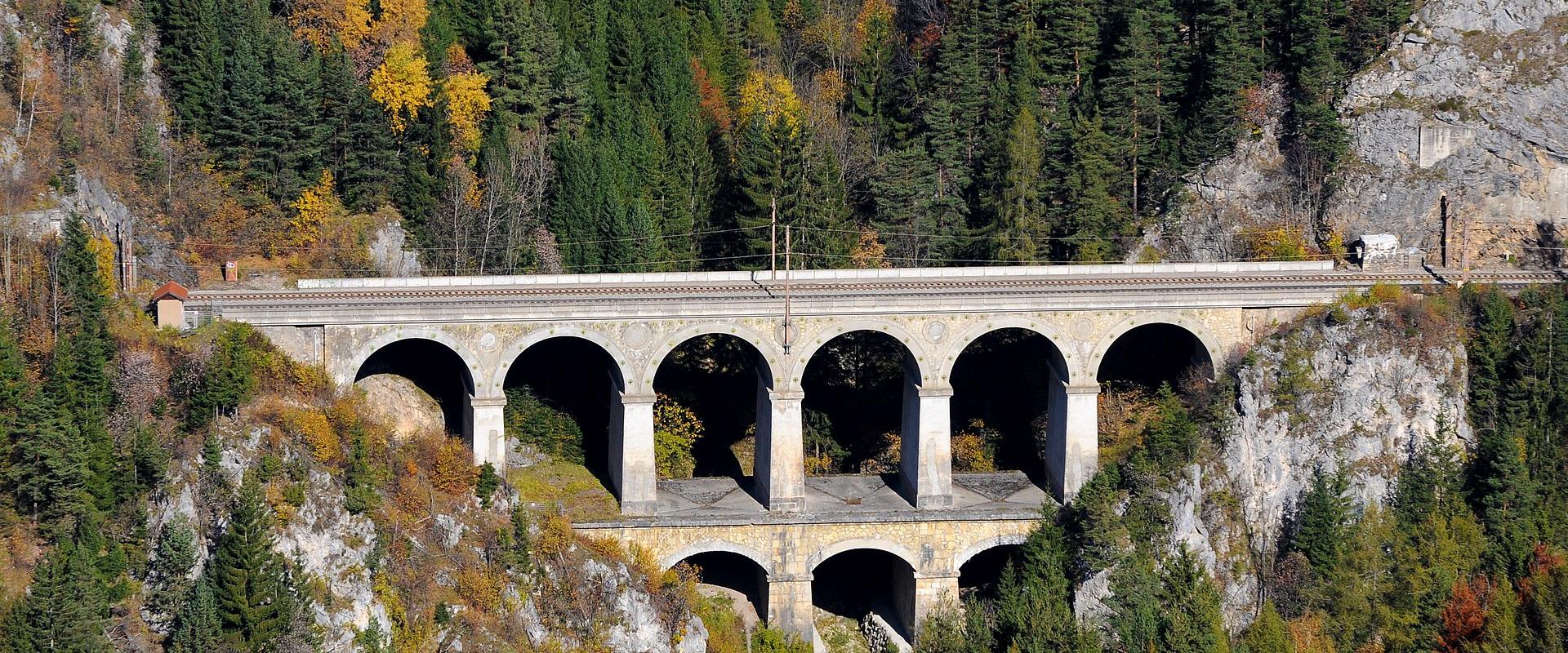
The Semmering is the mountain pass that divides Lower Austria from Styria, and it has been a crossing point of the Eastern Alps for centuries. The road summit lies at roughly 985 metres, and the pass connects the Vienna basin with the Mürz valley. For most of history it was a hard crossing, and the opening of the Semmering Railway in 1854 changed that. Designed by the engineer Carl von Ghega and built between 1848 and 1854, it was the first mountain railway in Europe to be built on standard gauge, and it was inscribed on the UNESCO World Heritage list in 1998, the first railway to receive that status.
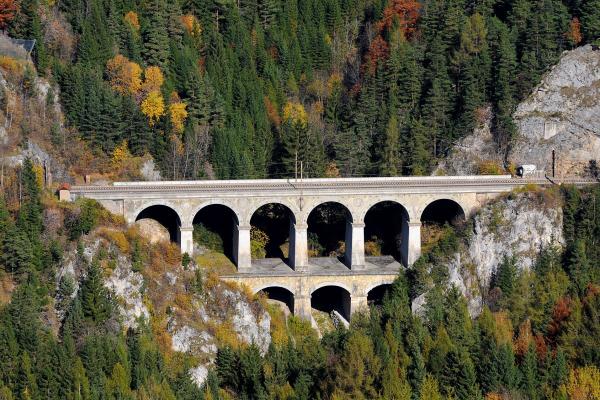
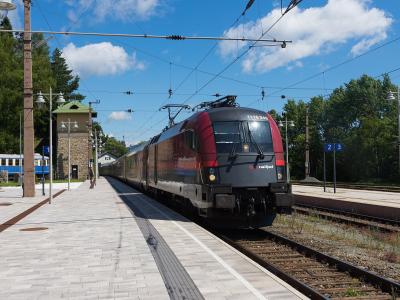
The railway line runs about forty-one kilometres between Gloggnitz and Mürzzuschlag, with fourteen tunnels, over a dozen large viaducts and more than a hundred smaller curved stone bridges and arches. The summit tunnel lies at about 895 metres. The engineering was built to take steep gradients, and the line follows the valley sides with sharp curves, so that trains seem to hang above the slopes. The best known structure is the double-tier Kalte Rinne Viaduct, and the Weinzettelwand and Krauselklause are other eye-catching sights.
The arrival of the railway made the Semmering a fashionable summer retreat for wealthy Viennese families in the late nineteenth century. Villas, guest houses and large hotels were built on the slopes, including the Südbahnhotel from the early 1880s and the Hotel Panhans from the 1880s, and the area became known as a place for clean mountain air and walks. Many of these Belle Époque buildings still stand, some restored and some in need of restoration, and they give the town an old-fashioned atmosphere.
Visitors can see the pass in several ways. The railway itself can be ridden from Vienna by changing at Gloggnitz, and the journey is a scenic one, particularly on the upper stretch. For walkers, a well-marked hiking path follows the line of the railway between viaducts, with information boards, and it is easy to combine a short stretch with a train ride back. By car, the S6 expressway crosses the Semmering mainly through tunnels, while the older road over the pass is slower and much more scenic, and motorcyclists favour it in warm months.
The pass is open to the public throughout the year, and the walks and views cost nothing. In winter the area around the pass is a small ski region, with runs on the nearby Hirschenkogel and the Zauberberg, and in summer it is a base for hikers and cyclists. A new railway tunnel, the Semmering Base Tunnel, is being built beneath the mountain to speed up modern traffic, though the historic line is meant to remain in use.
Categories
More photos coming soon
Hours & Fees
- Open
- The pass is accessible 24 hours a day, 365 days a year, as it is an open public road.
- Admission
- Free access to the road and rail line
Hours and prices change, especially out of season. Check with the venue before you go.
Nearby Attractions
Other places to visit in Semmering
Semmering Railway (Semmeringbahn)
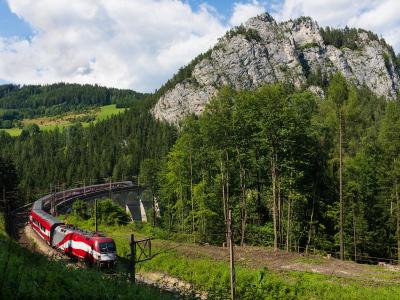
UNESCO World Heritage mountain railway
Free Historic Railways · Mountain Hiking
Semmering Ski Resort
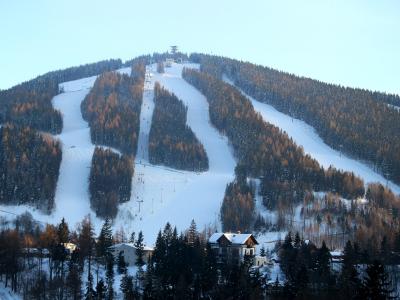
Connected Stuhleck and Hirschenkogel ski areas
From €10 Mountain Hiking · Ski Resorts
Zauberberg Ski Resort
Lower Austria's only World Cup slope and night skiing
Ski Resorts
Hirschberg Ski Resort (Hirschenkogel)
14km of slopes and an illuminated trail in Semmering
From €51 Mountain Hiking · Ski Resorts
Questions people ask
Quick Facts
Best Time to Visit
Austria enjoys a Mediterranean climate with warm summers and mild winters, making it ideal for visiting year-round.