
Whispers in the Gilded Parlors
Vienna’s 19th-century salons thrummed with a quiet electricity, distinct from the roaring crowds of the Staatsoper. Instead of grand spectacle, the air held the intimate rustle of silk and the sharp intake of breath before a Chopin nocturne began. I recall standing in a cramped Beethovengasse apartment, watching a pianist navigate a complex sonata for merely twelve guests. Every subtle shift in pedal work felt less like performance and more like a secret confession shared among trusted friends.
These private gatherings served as the true cradle of the Viennese Classical tradition, far removed from the imperial grandeur of the Burgtheater. While public opera houses demanded visual flair, these hidden venues offered unadulterated musical honesty. You can still encounter this spirit today in the converted Palais of the 7th district. For a modest €25, a chamber recital ticket grants access to acoustics that time has left untouched.
This contrast defines the soul of Austrian music: the loud public spectacle against the quiet private whisper. Schubert himself performed in such rooms for friends rather than faceless crowds. Modern listeners who seek out these smaller halls understand that true artistry often thrives in shadows rather than spotlights. Venture into these spaces to find the genuine heartbeat of a composer’s intent.
Echoes in Stone and Vault
Karlskirche’s dome holds sound differently than any modern hall. I recall standing there, watching the cello’s low notes cling to the marble as if refusing to dissipate into the void. Vienna’s secular concert halls get all the acclaim, yet these sacred spaces offer a closeness that feels almost personal. The acoustics here do not just amplify; they preserve.
Vivaldi’s Four Seasons finds its true home within these walls. The Minorite Church nearby offers weekly chamber concerts that draw listeners craving something raw and unpolished. There is no gilded ornamentation to distract from the music. You sit in wooden pews that have absorbed centuries of quiet devotion. The cost is modest—usually between €15 and €25—but the value is immeasurable.
Unlike the opulent Musikverein, these sanctuaries prioritize sonic purity over visual spectacle. Baroque composers wrote for these specific vaulted ceilings, and the light filtering through stained glass enhances every bow stroke with ethereal clarity. Venturing into these smaller spaces allows you to hear the composers’ original intentions. History breathes through the silence between the notes.
The Art of the Chamber Invitation
Chamber music thrives in intimacy. Consider the Musikverein’s small Red Hall, where tickets range from €25 to €60 for a profound, acoustic experience.
Subscribe to the Wiener Konzerthaus newsletter instead of joining the mainstage queues. It releases last-minute seats for their intimate Kammermusiksaal performances at preferential rates.
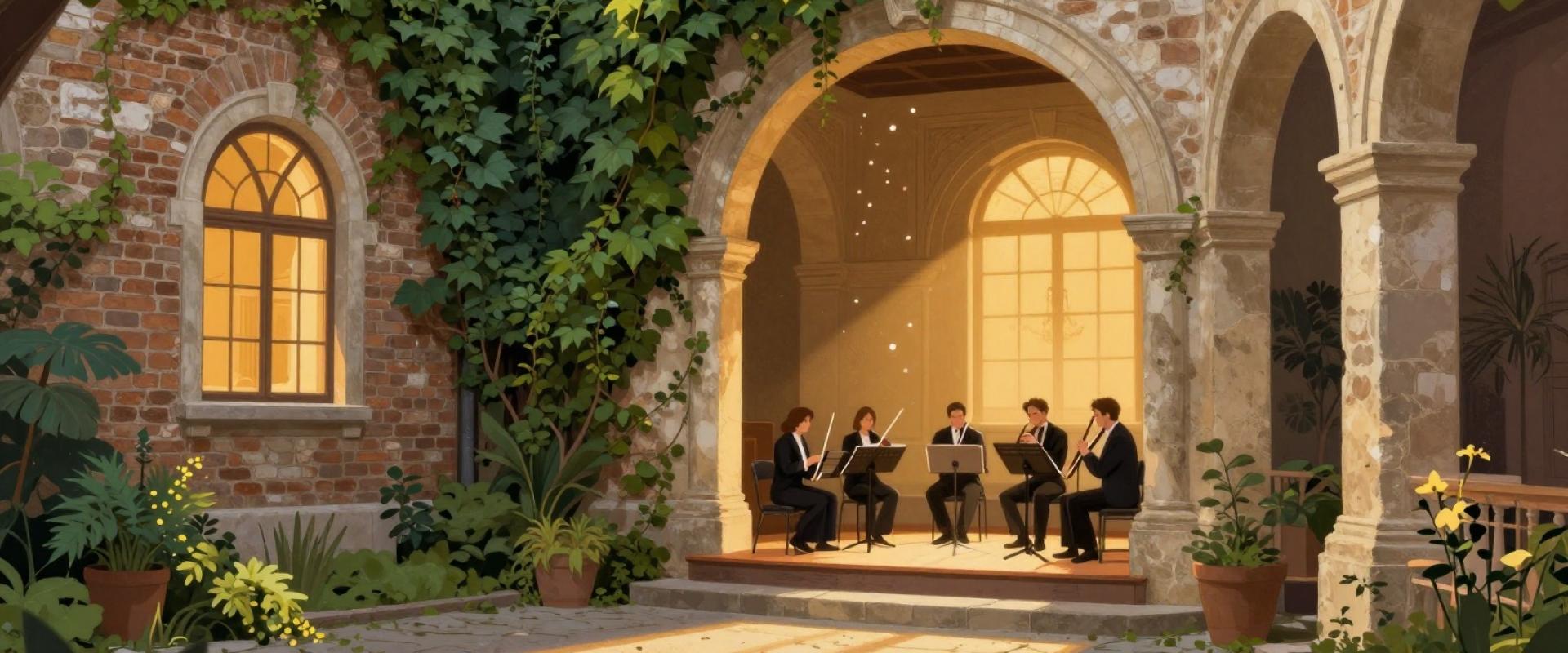
These smaller gatherings allow you to witness the nuanced interplay between instruments without the grandeur of the large hall. You might find yourself seated in a historic townhouse in Innere Stadt, listening to a string quartet perform Schubert in a room that once hosted the composer himself.
This exclusivity fosters a deeper connection with the music and the history surrounding it. Local calendars, such as those from Vienna Tourist Board, highlight these lesser-known venues. They ensure you discover spaces where every note resonates with personal significance.
Embrace this curated access. It transforms a simple concert into a private dialogue with the past. The legacy of Austrian composition lives not just in stone, but in these shared, silent moments of reverence.
A Silent Conversation
Silence is not merely an absence of noise; it serves as the canvas upon which Vienna paints its sonic masterpieces. When you step into an intimate chamber venue like the Palais Ferstel, you join a lineage of listeners who understand that respect is spoken through stillness. Do not applaud between movements. Wait for the conductor’s final gesture to fade into the gilded air.
This disciplined hush, cultivated since the days of Mozart, transforms a mere performance into a sacred ritual. I recall sitting in the dim light of the Schwarzenberg Palace, where every breath felt amplified by history. Tickets for such exclusive experiences often range from €40 to €80, securing a front-row seat to cultural continuity.
By honoring these traditions, you do more than attend a concert. You preserve the soul of the Habsburg legacy. In that shared quietude, the boundary between past and present dissolves, leaving only the enduring echo of Austrian artistry.