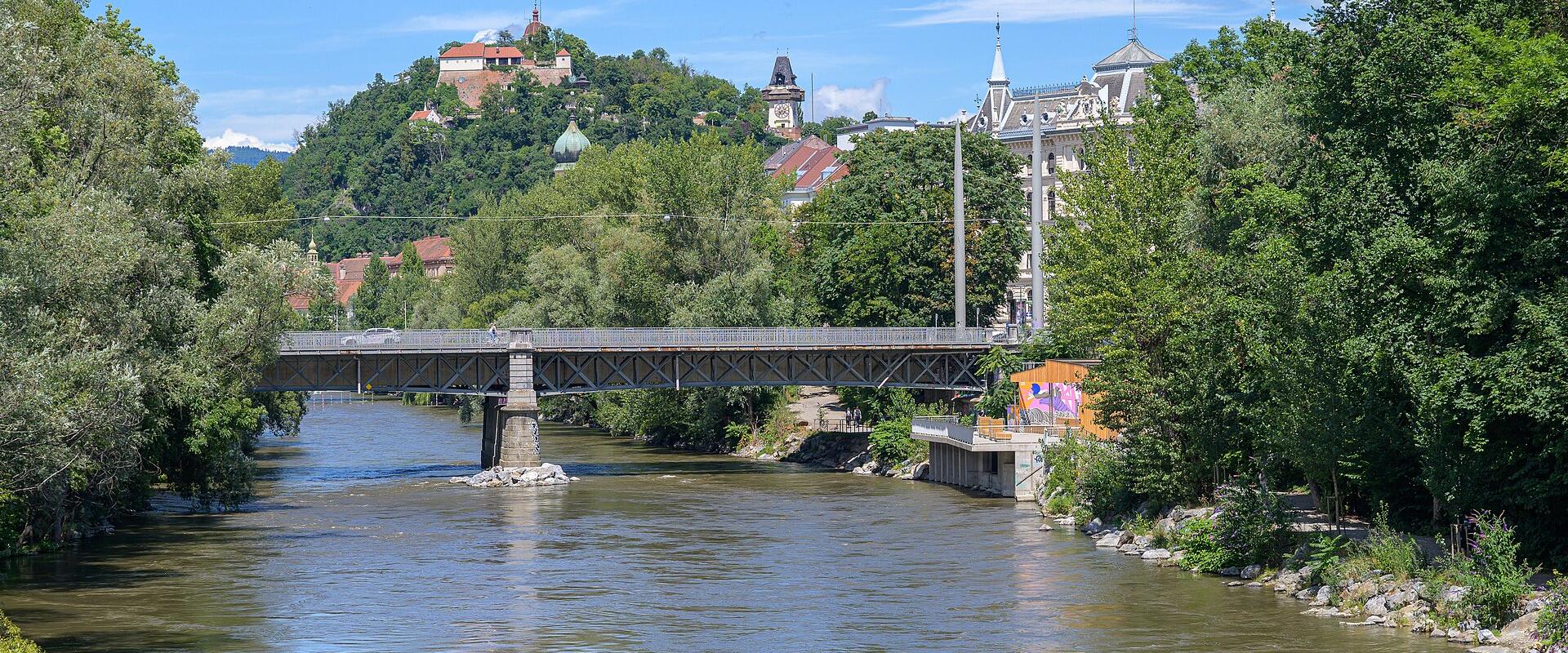
Chasing the Summit: A Hiker’s Ascent to History
The wind off the Mur River carries a bite that cuts through even the warmest layers, a sharp reminder that you are standing 473 meters above the city center. My knuckles whitened around the cold iron of the Uhrturm railing, grounding me in the present while the past loomed large. Graz’s Schlossberg is not merely a green park; it is a verdant sentinel that has defied empires for a millennium. Its name, derived from the Slavic Gradec or "little castle," hints at the defensive structures erected over a thousand years ago, long before the city below took its current shape.
Domenico dell’Allio designed this Renaissance fortress in 1544, crafting what was then Europe’s most formidable military installation. History tested its resolve in 1809 when Napoleon’s forces besieged the hill. The garrison held out until their ammunition ran dry, forcing citizens to surrender. Yet, amidst the destruction that followed, the clock tower remained standing. Today, the heaviest bell in Styria still tolls from that same stone, a resonant echo of survival that has outlasted empires.
Getting there requires a choice. You can ride the funicular or the glass lift, but the true experience lies in the Felsensteig. I climbed the 260 steps carved by WWI prisoners of war, feeling my lungs burn with every ascent. The physical effort transforms the view into something earned rather than given. From the top, red-tiled roofs stretch out like a terracotta sea toward the distant Alps. The air is thinner here, the silence deeper.
Tie your laces and step onto the path. The climb offers more than just exercise; it offers perspective. Standing where soldiers once defended the city, you understand why Graz feels so layered. The history here is not locked behind glass but etched into the stone and soil. Let the steep incline challenge you. The summit rewards not just with sightlines, but with a profound sense of continuity.
Goats, Guns, and the Giant Bell
Chaos erupted on the slopes of Graz’s Schlossberg in 1532. Ottoman forces advanced, expecting a swift conquest, but the city’s defenders were out of gunpowder. In a stroke of desperate genius, they rounded up the hill’s feral goats. Heavy stones were lashed to their horns, and the animals were released toward the enemy lines. The sight of horned beasts charging through the fog terrified the invaders, who interpreted it as a divine warning and retreated. History, quite literally, was saved by livestock.
Today, the Uhrturm stands as a silent witness to that survival. Its massive bell, weighing over two tons, chimes every fifteen minutes. I remember standing on the summit during a harsh snowstorm, the cold biting my cheeks, listening to that deep, resonant toll echo against the limestone. It is not merely a clock. It is a heartbeat for the city below.
The original fortifications protecting Graz from Napoleon were dismantled after 1809. Yet, the Uhrturm and the Karmeliterplatz stairs remain. You can climb the 260 steps carved by WWI prisoners, or take the funicular. Either way, the view is worth the effort. The red roofs of Graz stretch out like a sea of terracotta. The Alps loom in the distance, crisp and white. This is not just a tourist trap. It is a place where history breathes. Come feel the wind on the summit. Lace up your boots. The climb awaits.
The Climb: Stairs, Trams, and Sweat
Tie your laces. The Felsensteig demands respect. Those 260 steps, carved by WWI prisoners, test your soul. I chose the stairs over the funicular. Why? Because sweat builds character. The glass lift is easy, but boring. The funicular costs just €2.50, sure. But walking up lets you feel the history. You pass ancient bastions. You smell the pine. The Uhrturm waits at the top. It stands 473 meters above the city. Its bell tolls every fifteen minutes. That heavy sound echoes off red roofs. You earn that view. My legs burned. My heart raced. But the panorama? Worth every drop. Don’t skip the climb. It defines Graz. Start hiking now. Your boots are ready.
Golden Hour Over the Mur
The Uhrturm commands the skyline, standing watch over Graz’s sea of terracotta tiles with a quiet authority that no mountain peak could match. While I’ve spent mornings chasing light up Kitzbühel Horn, this city’s heartbeat feels far more intimate. For just €3.50, the funicular whisks you upward, mimicking the steep, grassy inclines of the Tyrolean foothills without the altitude sickness.
Sunlight catches the Mur River at dusk, transforming the water into a ribbon of molten gold. Napoleon’s cannons once echoed off the Schloßberg’s limestone face, their thunder replaced now by the gentle sigh of wind moving through ancient bastions. It isn’t the Alps, yet there is a distinct magic here that defies comparison.
I climbed the 260 steps of the Felsensteig path last Tuesday at 6 PM, seeking the city’s highest vantage point. The air was crisp, carrying the rich, smoky scent of roasted chestnuts from a nearby vendor. Watching the urban landscape shift from steel gray to warm amber as streetlights flickered on was a privilege.
Grab a coffee from a corner kiosk and linger. Let the day soften around you. You will want to stay until the last light fades, savoring the quiet before the night fully takes hold.
Lace Up and Conquer Graz
My calves are currently screaming in protest, a burning reminder of the 260 stone steps I just climbed. These stairs, hewn from rock by WWI prisoners, lead directly to the Uhrturm, whose bell tolls with heavy, resonant authority. The sound bounces off the Renaissance bastions Domenico dell’Allio designed in 1544, creating an auditory echo that seems to vibrate in your chest.
You don’t need to suffer through the climb if your legs prefer a reprieve. The funicular offers a smooth ascent, sparing you the physical exertion while still delivering you to the top. From there, the view is unapologetically vast. The city unfolds below you, a sea of red-tiled roofs stretching toward the distant, snow-capped Alps. This vantage point reveals Graz’s true character, an imperial masterpiece that feels both ancient and alive.
Start your own exploration of this hill today. Whether you choose the steep path from Karmeliterplatz or the mechanical lift, the summit rewards every effort. The air is crisp, the history is tangible, and the perspective is entirely worth the journey.