Steyr
Historic industrial city where Steyr and Enns rivers meet
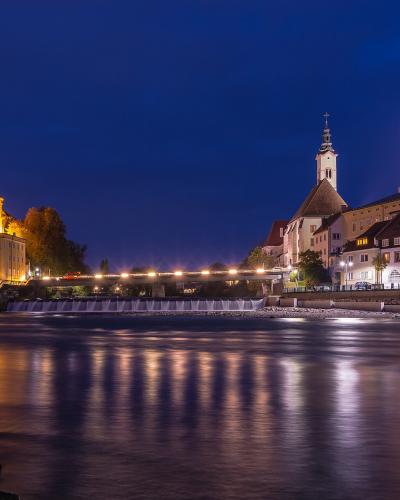
Steyr lies in the Traunviertel of Upper Austria, in the State of Upper Austria's southern part, on a tongue of land between the Steyr and Enns rivers. The old town is built on a spur above the confluence, with steep streets running down to the water on both sides, and the rivers have shaped its history. Records of a fortress here date to the tenth century, and by the Middle Ages Steyr was the commercial centre of the iron trade, supplying knives, scythes, armour and weapons to much of Europe. The Eisenwurzen, the iron-working region to the south, supplied the ore, and the rivers supplied the power.
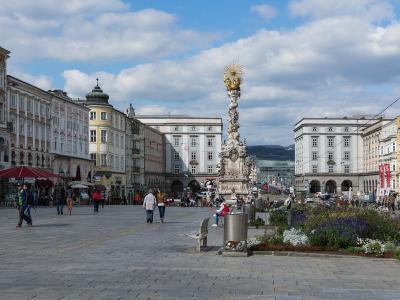
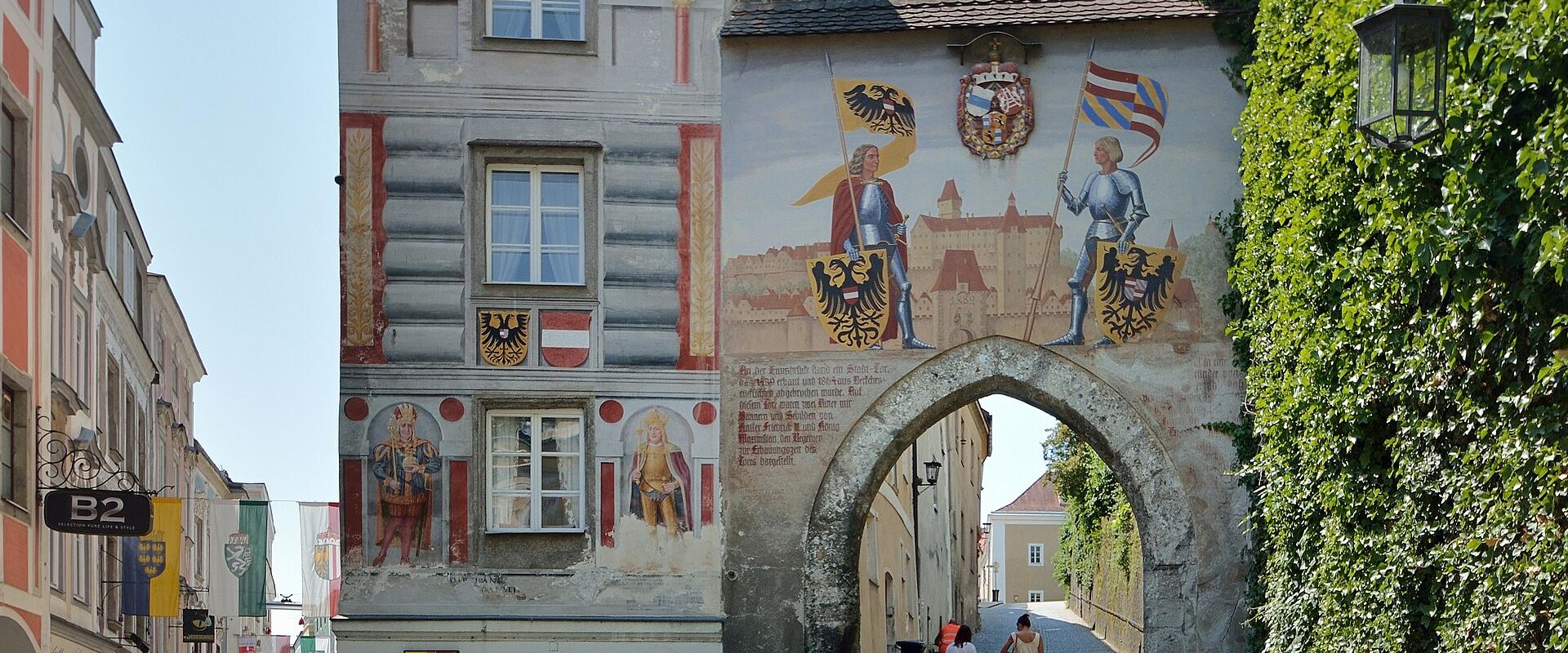
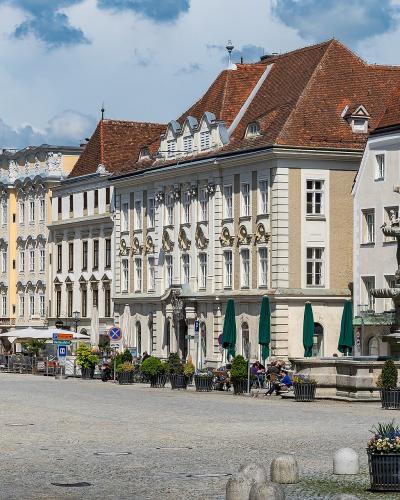
The Stadtplatz, or main square, is a long, gently sloping space framed by tall townhouses, many of them with painted or stuccoed façades and decorated gables. The best-known building is the Bummerlhaus, a Gothic burgher house with a distinctive arcaded front and a carved dog's head, probably the source of its name. Nearby, the Rococo town hall stands out with its tower, and the fountain on the square is a favourite meeting point. The square becomes a Christmas market in Advent, which fits Steyr's long association with the season.
Above the old centre stands Schloss Lamberg, a Baroque castle built in the seventeenth century on the site of an older fortress. Its park and rooms are used for exhibitions and cultural events, and the grounds give a view over the roofs of the old town. From the Schloss, steps lead down to the riverside, where the Steyr River Promenade runs along the Enns and the Steyr, with benches, bridges and views toward the Alps.
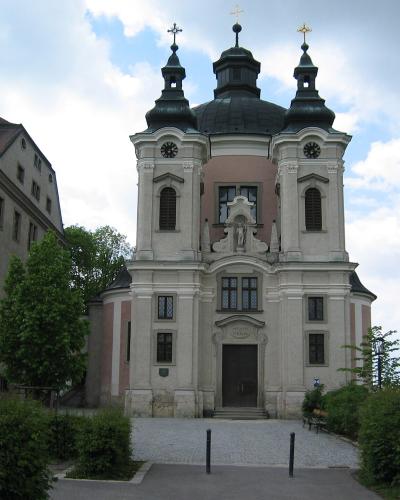
The Christkindl pilgrimage church, the Wallfahrtskirche Christkindl, lies about three kilometres from the centre on a hill, and it is one of the most distinctive Baroque churches in the region. It was built in the early eighteenth century around a tiny figure of the Christ Child that was placed in a hollow tree. Each December, the village has a special post office, where letters and cards can be sent with a Christkindl postmark, and a Christmas market. The church can be reached on foot, by bus or by a small tourist train in season.
Steyr's industrial heritage is the other main theme. In the nineteenth century, the engineer Josef Werndl turned the local arms trade into a modern factory that produced rifles, including the Steyr Mannlicher, and later cars, trucks, tractors and motorcycles, under names that are still known across Europe. A museum of work and industry, the Museum Arbeitswelt, occupies a former factory building by the river and explains the lives of the workers as well as the products. Some firms remain in the city, and engines and vehicles are still built nearby.
Outdoor recreation is easy. The rivers offer canoeing, rafting and fishing, and cycle routes follow the Enns north to the Danube and south into the foothills. The hills around Steyr have walking trails, and the Nature Park of the Eisenwurzen and the Kalkalpen National Park lie within driving distance for longer trips. Day outings also reach the Traunstein mountain and the lakes of the Salzkammergut. Cultural events fill the summer and include Music concerts, a Festival of street theatre, and local fairs, and the details vary from year to year.
Food in the city is Upper Austrian: Steyr has a tradition of roast pork, dumplings, sauerkraut and Mostviertel cider, as well as river fish and a good selection of cafes with cakes. Craft beer and wine taverns round out the offer, and the local Lebkuchen, gingerbread, is a seasonal speciality around Christmas.
The best time to visit is from mid-June to early September for warm weather and river activities, though May and September are quieter and good for sightseeing. December brings the Christmas atmosphere for which the city is known. Winters are cold, but the old town looks attractive with snow.
Getting to Steyr is straightforward. Trains from Linz take about 40 minutes with a change at St. Valentin, and from Vienna the trip takes about an hour and a half to two hours. From Salzburg, the journey takes around two hours. By car, the A1 motorway passes nearby, and the road from Linz is short. Germany lies to the north, and Passau is about an hour and a half away.
Best Time to Visit
Visit from mid-June to early September for warm weather ideal for canoeing and hiking along the rivers.
Did you know?
Interesting, verified facts about Steyr
Steyr Is Shaped by a River
HistorySteyr is a statutory city in Upper Austria, located at the confluence of the Steyr and Enns rivers.
Source: Steyr (river) - WikipediaPlan Your Visit to Steyr
Essential travel tips and information for your trip to Steyr.
Suggested Itineraries
Travel Tips
Currency
EUR • Cards widely accepted
Language
German • English in tourist areas
WiFi
Free WiFi in cafes and hotels
Explore Steyr by Interest
Discover attractions and experiences in Steyr organized by your interests and travel preferences.
All attractions in Steyr
Sorted by our recommendation score
Quick Facts
Book your stay
Frequently Asked Questions
More destinations in Upper Austria
Explore other amazing places in the Upper Austria region