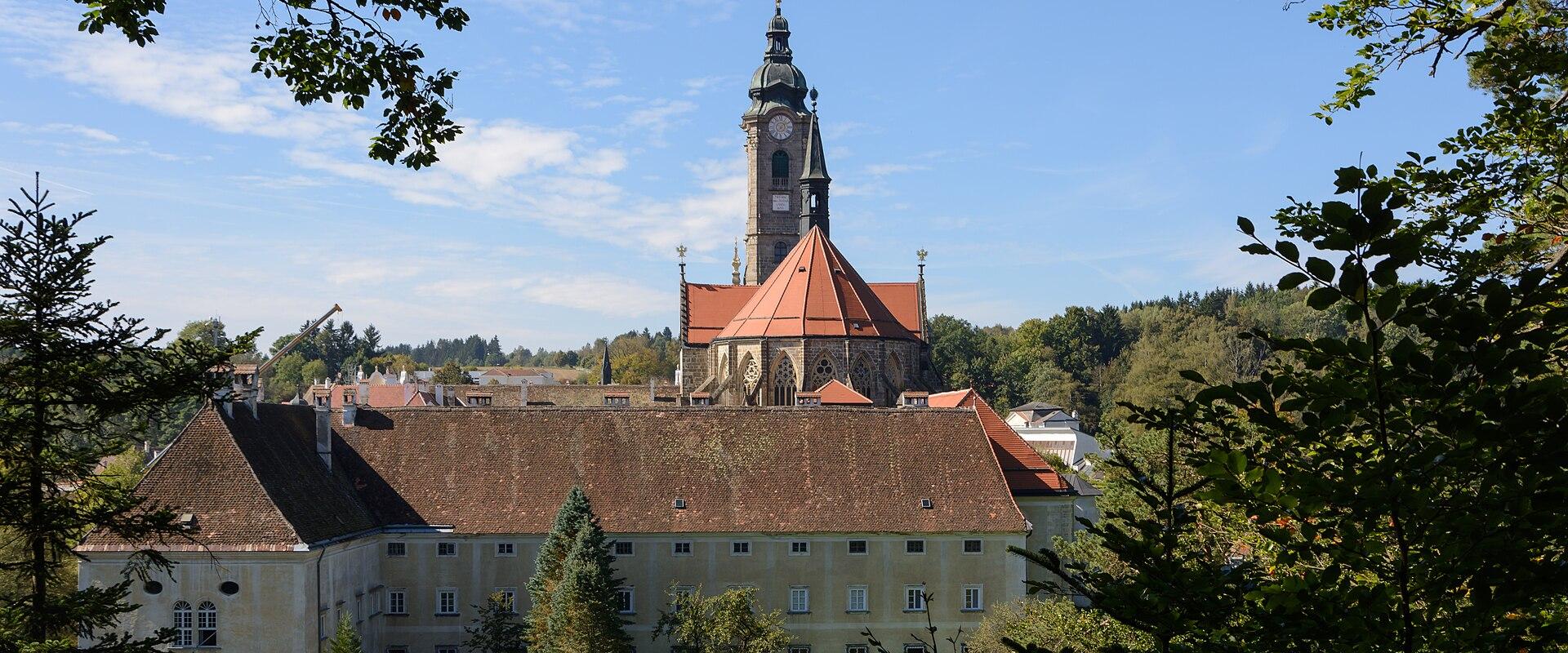
Zwettl
Lower Austrian town known for its historic abbey
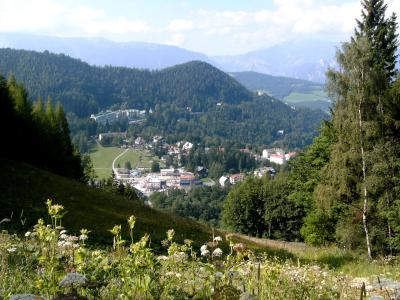
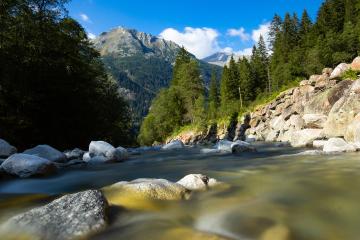
Zwettl lies in the north-western part of Lower Austria, at about 520 metres, in the Waldviertel, a granite plateau of rolling hills, mixed forest, ponds and meadows that reaches toward the Czech border. The climate is cooler and rainier than in the Danube valley, and winters can be cold and snowy. The Zwettl river, a tributary of the Kamp, runs through the town in a wooded valley, and the area is among the least densely populated in Austria.
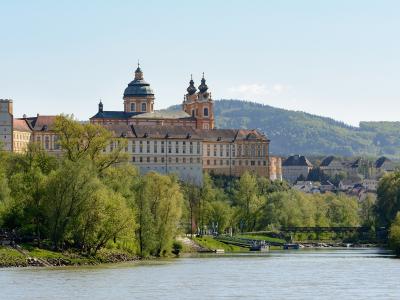
The town grew in the shadow of the abbey. In 1138, Hadmar I of Kuenring, a powerful noble, founded a monastery of Cistercian monks on land by the Kamp, and Stift Zwettl became one of the major religious and economic centres of the region, owning vast forests and farmland. The monks cleared forest, drained marshes and developed the Waldviertel, and the abbey has been inhabited without a break ever since, with only one interruption in the Reformation era.
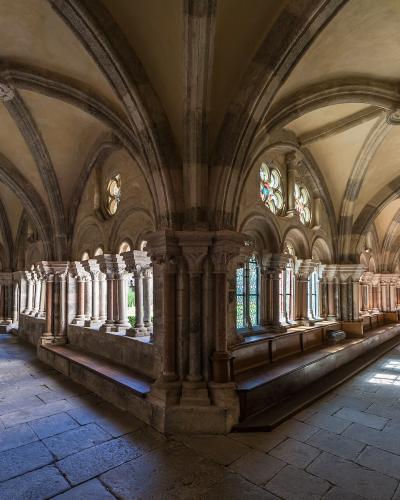
Zwettl Abbey is a large complex that rewards a guided visit. The oldest parts, such as the chapter house and the cloister, are Romanesque and early Gothic, among the best preserved Cistercian buildings in Europe, and the abbey church, rebuilt in the Baroque period, has a tower of 1722 designed by the architect Matthias Steinl, the tallest in the district. The library, the abbey's wine cellars and the monastery's brewery, still working, are part of the experience. The monks follow the Benedictine Rule; Cistercians are a separate reform branch of the Benedictine tradition. The abbey is open to visitors from spring to autumn, usually from late March to the end of October, with guided tours in several languages, and a calendar of concerts and exhibitions. Check the current season.
The town itself is small. A long main square, the Hauptplatz, with a Baroque plague column, and the pedestrian lanes around it, lead to the parish church, a Gothic building, and to a number of burgher houses. The Zwettler Brewery, one of the best-known in the region, is a source of local pride, and its beer is served throughout the Waldviertel. A small museum covers the history of the area,.
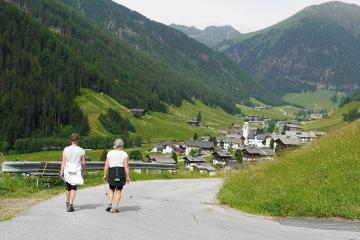
Outdoors, the landscape is gentle. The Walderlebnisweg Zwettltal, the Forest Trail in the Zwettl valley, is a hiking route along the river through woodland, with information boards on the forest's ecology and signs about the fauna, suitable for families. Other trails lead through the Waldviertel's hills and past granite boulders, the Waldviertel's characteristic formations, and cycling routes follow quiet roads and former railway lines. The Kamp reservoirs, such as the Ottenstein and Dobra lakes, offer swimming, boating and fishing in summer, and the Kamp valley is one of the most scenic in the region.
Food is Waldviertel cooking: carp from the local ponds, served fried or baked, is the classic dish, with poppy-seed dishes, potatoes in many forms, Waldviertler Knödel, dumplings, and roast pork. Poppy and mushrooms are regional specialities, and farms sell honey, schnapps and cheese.
The best time to visit is from May to October, with June to September most comfortable for walking and swimming. October brings autumn colour in the forests, and winters are cold with snow; the abbey is mostly closed to visitors then, except for events.
Getting there takes some planning. Zwettl is not on a main railway line, and the nearest railway stations are at Krems and Gmünd, with buses linking them with the town in about an hour. By car, the road from Vienna via Krems and the Kamptal takes about two hours, and the drive from Linz takes an hour and a half. Beyond the town, the border with the Czech Republic is about an hour away, and a car or bicycle is the best way to explore the Waldviertel.
Plan Your Visit to Zwettl
Essential travel tips and information for your trip to Zwettl.
Suggested Itineraries
One Day in Zwettl
1 dayPerfect for a quick visit. See the main highlights and get a taste of local culture.
Extended Zwettl Experience
2-3 daysComprehensive exploration including nearby attractions and cultural experiences.
Travel Tips
Currency
EUR • Cards widely accepted
Language
German • English in tourist areas
WiFi
Free WiFi in cafes and hotels
Explore Zwettl by Interest
Discover attractions and experiences in Zwettl organized by your interests and travel preferences.

All attractions in Zwettl
Sorted by our recommendation score
Quick Facts
Book your stay
Frequently Asked Questions
More destinations in Lower Austria
Explore other amazing places in the Lower Austria region