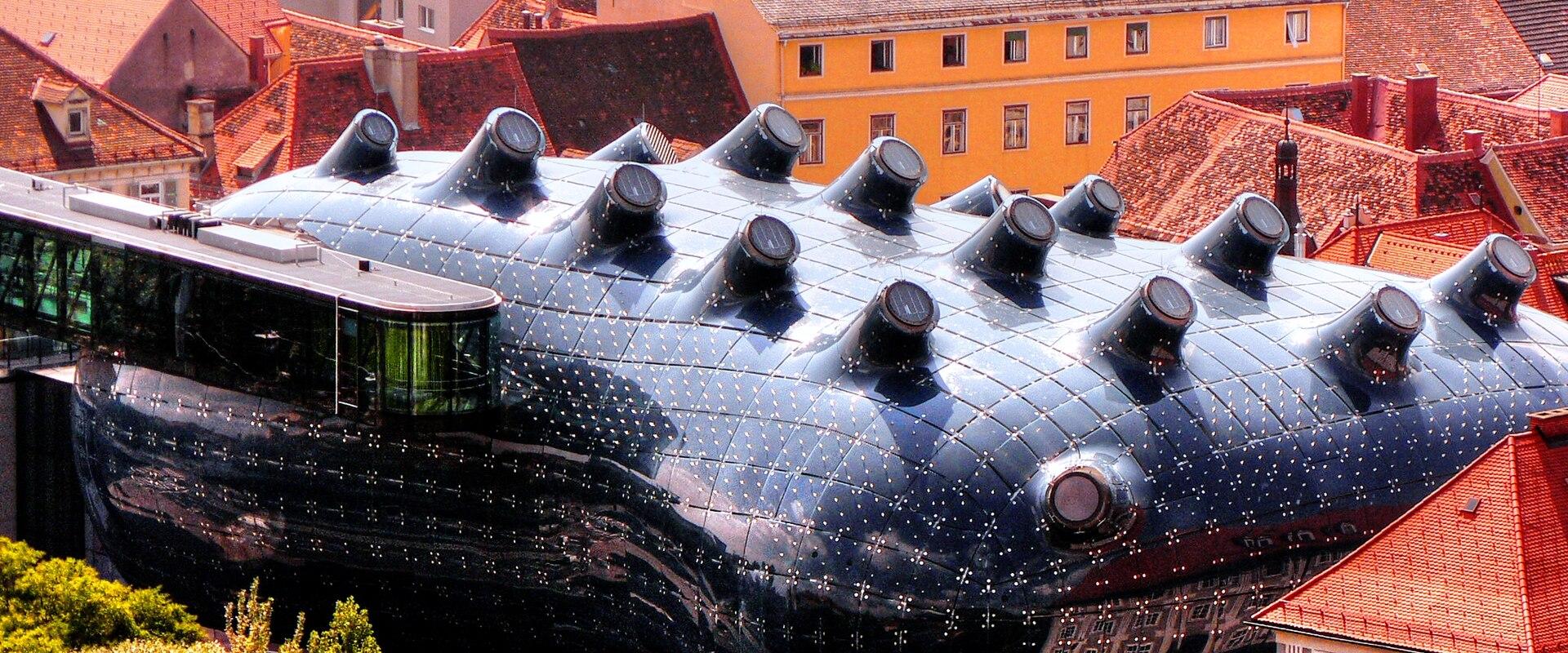
- Where
- Graz, Styria
- Directions
- Directions
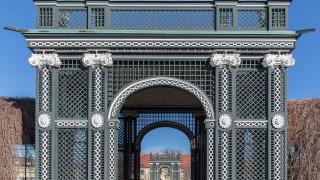
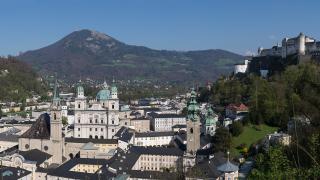
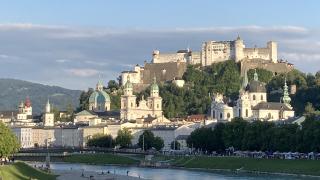
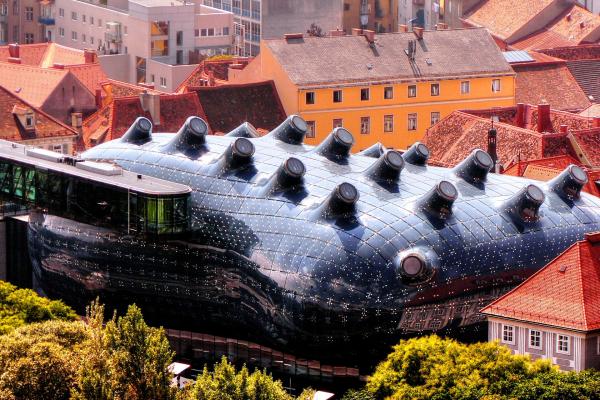
The old town of Graz, the capital of Styria, is one of the best preserved historic centres in central Europe, and it was inscribed on the UNESCO World Heritage list in 1999, with Schloss Eggenberg added to the site in 2010. Unlike many cities that were rebuilt after wars, Graz kept its streets and buildings from the Middle Ages onwards, and the roofscape of red tiles seen from the Schlossberg gives a vivid picture of the town. Walking through the narrow lanes, arcades and courtyards, you pass houses from the Gothic, Renaissance and Baroque periods, one after another, and the mix of styles, together with the contemporary architecture of the Kunsthaus and the Murinsel on the river, helps explain why the city won the title of European Capital of Culture in 2003.
The old town is compact and best explored on foot. The Hauptplatz is the main square, with the town hall and a fountain, and from there the Herrengasse, a pedestrian street lined with shops and cafes, leads to the Landhaus, a Renaissance building with an arcaded courtyard that was designed by the Italian architect Domenico dell'Allio in the sixteenth century. Close by is the Zeughaus, the arsenal, and the cathedral, a Gothic church with a famous medieval fresco, next to the mausoleum of Emperor Ferdinand II, a Baroque monument. In the Burg, the former imperial castle, the late Gothic double spiral staircase of around 1500 is a masterpiece of stonemasonry, in which two staircases wind around each other without meeting. It is often confused with the Schlossberg, but it lies in the courtyard of the Burg.
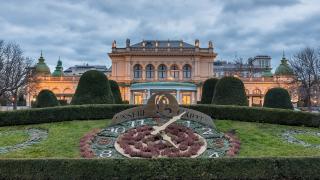
The centre of the old town is dominated by the Schlossberg, the hill that rises beside the Hauptplatz and which can be climbed by steps, by a lift inside the rock, or by a funicular. On top stands the Uhrturm, the clock tower, the symbol of Graz. A tower stood here from the Middle Ages, and the clock was added in the sixteenth century. A curious feature is that the hour hand is the long one, and the minute hand is the short one, because the clock was originally meant to be read from a distance. In 1809, when Napoleon's troops destroyed the fortress on the hill, the citizens are said to have paid a ransom to save the clock tower and the bell tower, and that is the reason why they survive. From the hill, there are views over the old town, the river Mur and the surrounding hills.
Several museums are within easy reach, among them the Styrian Armoury and the History Museum, which belong to the Universalmuseum Joanneum. The old town is free to explore, with cafes, restaurants and markets, such as the farmers' market at the Kaiser-Josef-Platz. Allow half a day to a full day for a leisurely visit.
Categories
More photos coming soon
Nearby Attractions
Other places to visit in Graz
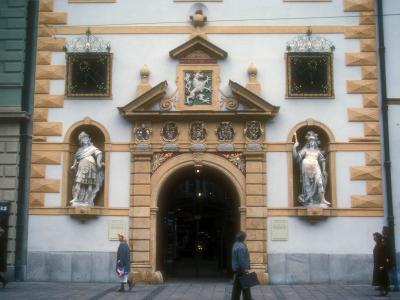
Styrian Armoury
World's largest preserved historical armoury
History & Heritage · Museums & Art
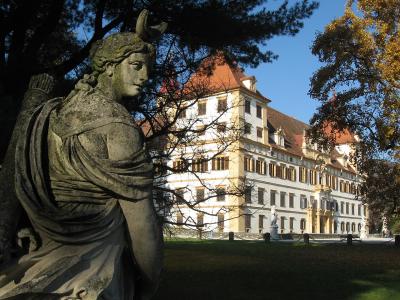
Eggenberg Palace
17th-century palace with original state rooms and art
Museums & Art · Architectural Highlights
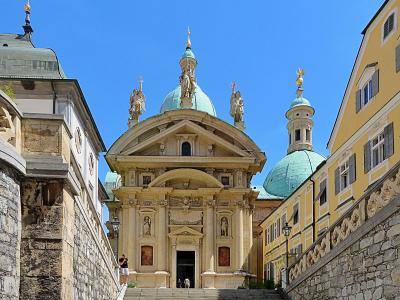
Mausoleum
Imperial burial site with distinctive turquoise domes
Free Architectural Highlights · Historic Palaces
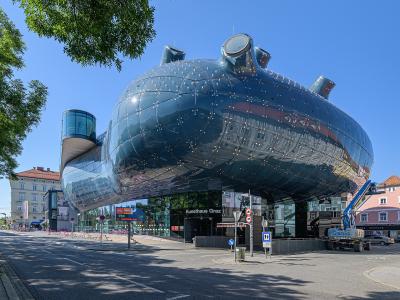
Kunsthaus Graz
Friendly alien contemporary art museum
Architectural Highlights · Contemporary Art
Questions people ask
Quick Facts
Best Time to Visit
Visit from mid-June to early September for warm weather ideal for outdoor activities and riverfront exploration.