- Admission
- Free entry
- Hours
- 06:00–19:00
- Where
- Graz, Styria
- Directions
- Directions
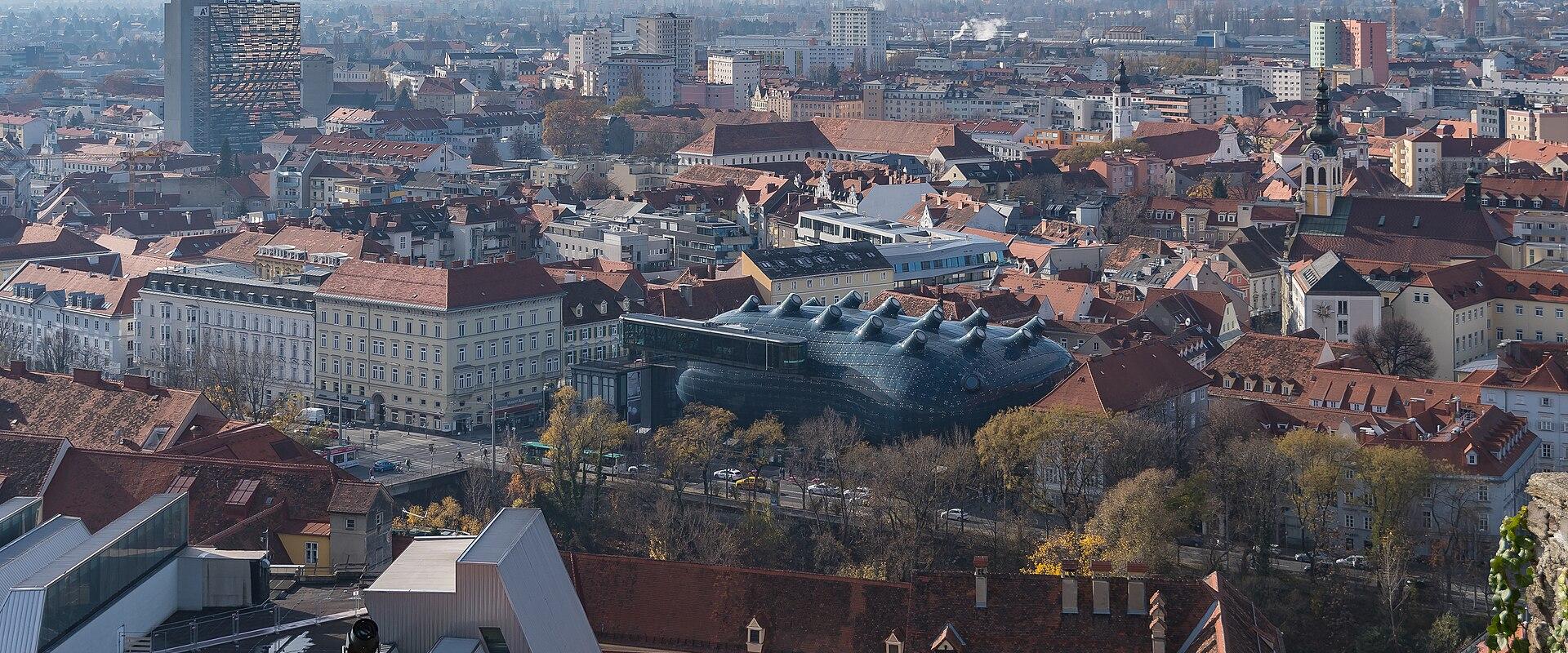
The historic centre of Graz is a UNESCO World Heritage site, and it is often described as one of the best preserved old towns in Central Europe. The city, the second largest in Austria, was a Habsburg residence for centuries, and it combines medieval lanes with Renaissance courtyards, Baroque palaces and the lively atmosphere of a university town. Graz was European Capital of Culture in 2003, and the title brought new buildings and a confident, cultural spirit. The city's tourist slogan, Austria's secret love, hints at its relaxed, southern character, with Italian-influenced squares, cafes and a mild climate that encourages life outdoors.
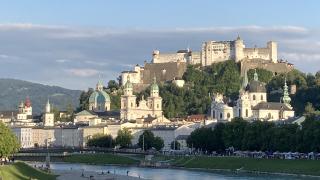
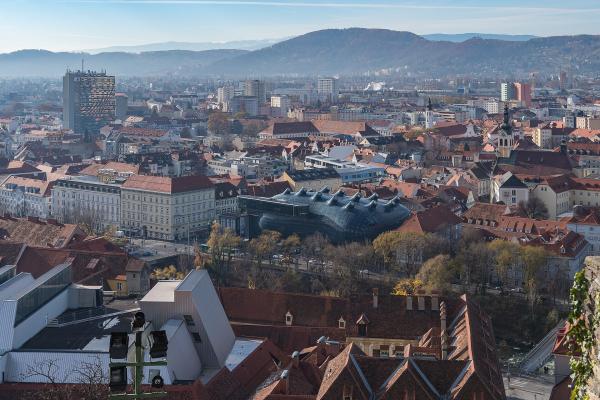
The Schlossberg, a wooded hill rising straight out of the old town, is the centre of the view. A fortress stood here from the Middle Ages, and the hill was fortified for centuries, until Napoleon's forces took the city in 1809 and had the fortifications blown up. Visitors can reach the top on foot, by a funicular railway or by a glass lift cut into the rock. Among the buildings that survive is the Clock Tower, the Uhrturm, the city's best known symbol. Its clock has an unusual feature, because the big hand marks the hours and the small hand the minutes, the reverse of the usual order. According to local tradition, the citizens paid a ransom to save the tower from destruction in 1809.
Below the hill, the old town is a mix of periods. The Hauptplatz and the long Herrengasse are lined with merchants' houses and palaces, many with arcaded courtyards that can be glimpsed through open gateways. The Landhaus, a Renaissance building with a beautiful arcaded courtyard, stands in Herrengasse near the Styrian Armoury. In the old imperial castle, the Burg, a late Gothic double spiral staircase is one of the unusual sights, with two flights that wind around each other without meeting. The cathedral, the Mausoleum of Ferdinand II and the Franciscan Church add religious and dynastic history, and the Kunsthaus and the Murinsel provide a modern counterpoint beside the Mur.
The centre is compact, and most sights can be reached on foot in a day. Pavement cafes, markets and small shops fill the lanes, and the regional cuisine, including pumpkin seed oil, is a strong part of the local identity.
Allow at least a day to wander through the old town and climb the Schlossberg, and more if you want to visit the museums. Graz suits culture lovers, food fans and anyone who enjoys a lively, walkable city that is less crowded than Vienna.
Categories
More photos coming soon
Hours & Fees
- Open
- 06:00–19:00
- Admission
- Free entry
Hours and prices change, especially out of season. Check with the venue before you go.
Nearby Attractions
Other places to visit in Graz
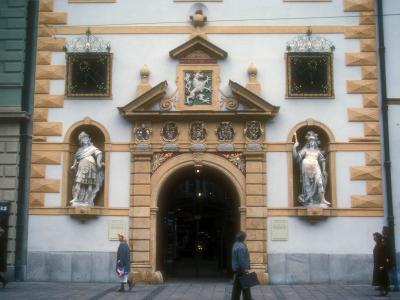
Styrian Armoury
World's largest preserved historical armoury
History & Heritage · Museums & Art
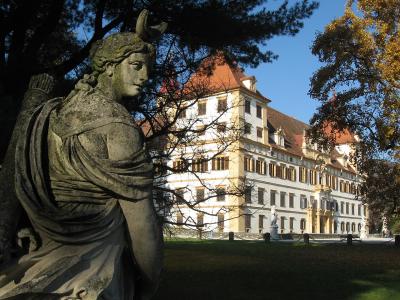
Eggenberg Palace
17th-century palace with original state rooms and art
Museums & Art · Architectural Highlights
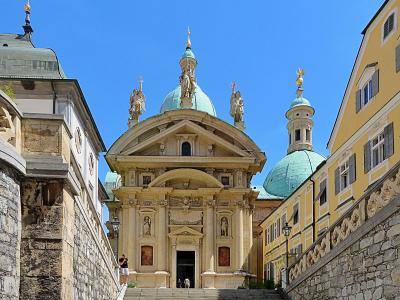
Mausoleum
Imperial burial site with distinctive turquoise domes
Free Architectural Highlights · Historic Palaces
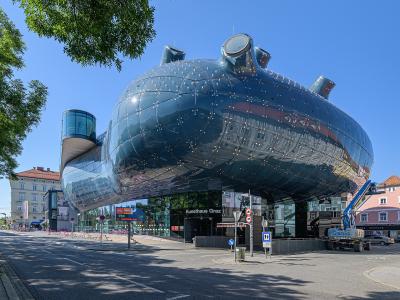
Kunsthaus Graz
Friendly alien contemporary art museum
Architectural Highlights · Contemporary Art
Questions people ask
Quick Facts
Best Time to Visit
Visit from mid-June to early September for warm weather ideal for outdoor activities and riverfront exploration.