What a Therme is
Austria has dozens of thermal spas, known as Thermen. A typical Therme is a large complex built around a natural warm or mineral spring, with indoor and outdoor pools, a sauna area, relaxation rooms and often a hotel attached. Many are used by locals for a day out as much as by tourists, and most sell day or part-day tickets to non-residents.
The water varies by region. Some spas are fed by sulphur springs, others by brine, and the Gastein valley is known for radon-bearing water. Several spas also offer medical treatments, but you do not need a prescription to use the pools.
Vienna: Therme Wien
The easiest spa to reach from a city break is Therme Wien in Oberlaa, in Vienna's 10th district. The U1 underground line runs directly there, in about 15 minutes from the centre. It is one of the largest city thermal spas in Europe, fed by sulphur springs, with indoor and outdoor pools and a large sauna area. It is popular at weekends, so a weekday visit is more relaxed. The sauna area and quiet zone are restricted to visitors aged 15 and over.
Just south of Vienna, the town of Baden bei Wien has been a spa since Roman times. Its sulphur springs are used at the Römertherme, and the town's Biedermeier centre and park are worth combining with a swim.
Styria's thermal region
Eastern Styria has the greatest concentration of spas in the country, and the area markets itself as the Styrian thermal region (Thermenland Steiermark). Among the best known:
- Rogner Bad Blumau – a spa resort designed by the artist Friedensreich Hundertwasser, with colourful, irregular buildings, grass-covered roofs and pools fed by two springs. It has a textile-free sauna zone.
- Therme Loipersdorf – a large family-oriented spa with several themed bathing areas and many pools and saunas.
- Bad Waltersdorf, Bad Radkersburg and Bad Gleichenberg – smaller spa towns with their own thermal or mineral springs, often visited for longer wellness stays.
The region is also known for wine, pumpkin seed oil and castles, so a spa stay is easy to combine with food and sightseeing.
Alpine spas: Gastein and the Ötztal
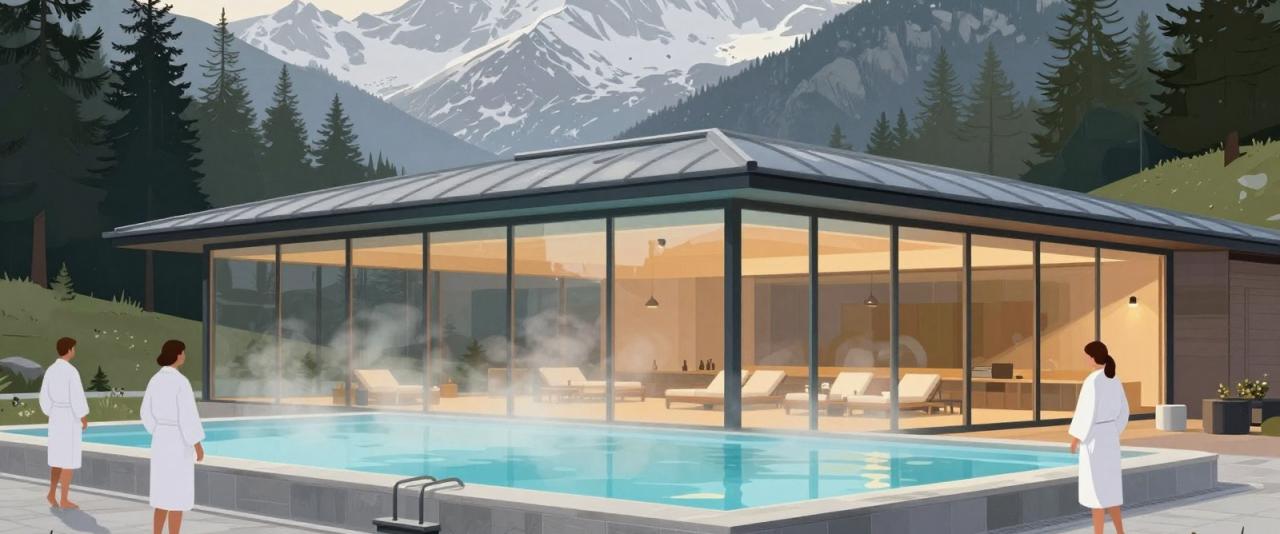
In the Gastein valley in the Salzburg region, Bad Gastein and Bad Hofgastein have a long history as spa towns. The Felsentherme in Bad Gastein is built into the rock and uses the local radon water, with an outdoor pool looking over the mountains. The valley also has a Heilstollen, a former mining gallery where warm, radon-rich air is used for medical therapy under doctors' supervision. Radon therapy is a recognised treatment in Austria, but it is a medical procedure, not a casual day out.
In Tyrol, Aqua Dome at Längenfeld in the Ötztal is fed by a sulphur spring and is known for its outdoor bowl-shaped pools with mountain views. Its sauna world is textile-free and costs extra. It is a common add-on to a skiing or hiking trip in the Ötztal.
Salt and brine: the Salzkammergut
In the Salzkammergut, the tradition is brine (salt water) bathing. Bad Ischl, the former summer residence of Emperor Franz Joseph, has the EurothermenResort with indoor and outdoor brine pools. Bad Aussee, in the Styrian part of the Salzkammergut, also has a brine spa. These are smaller and quieter than the big Styrian complexes.
House rules and etiquette
Austrian spas have clear conventions, and following them avoids awkward moments:
- Saunas are textile-free. In most sauna areas nudity is standard and swimwear is not allowed. Sit or lie on a towel so that no skin touches the wood. Some spas have separate areas or times where swimwear is allowed; check the rules on arrival.
- Pools need swimwear. In the main pools and children's areas, swimwear is required.
- Shower first. Shower before using the pools and again before entering a sauna.
- Quiet zones are quiet. Relaxation rooms are for resting, not conversation or phone calls.
- Age limits. Sauna areas and quiet zones often have minimum ages.
- Bring or rent. You will need a towel, a bathrobe and sandals. Most spas rent them, but bringing your own saves money.
Practical tips
- Time your visit. Weekends, school holidays and rainy days are busiest. Weekday mornings are usually calmest.
- Choose the right ticket. Most spas sell short tickets of a few hours, day tickets and evening tickets, with saunas sometimes priced separately. Prices vary considerably, so compare on the spa's own website.
- Book ahead for hotel stays. Spa hotels often include unlimited access to the baths, and some open earlier or later for hotel guests.
- Health. If you are pregnant or have heart or circulatory conditions, check with a doctor before using hot pools, saunas or radon treatments.