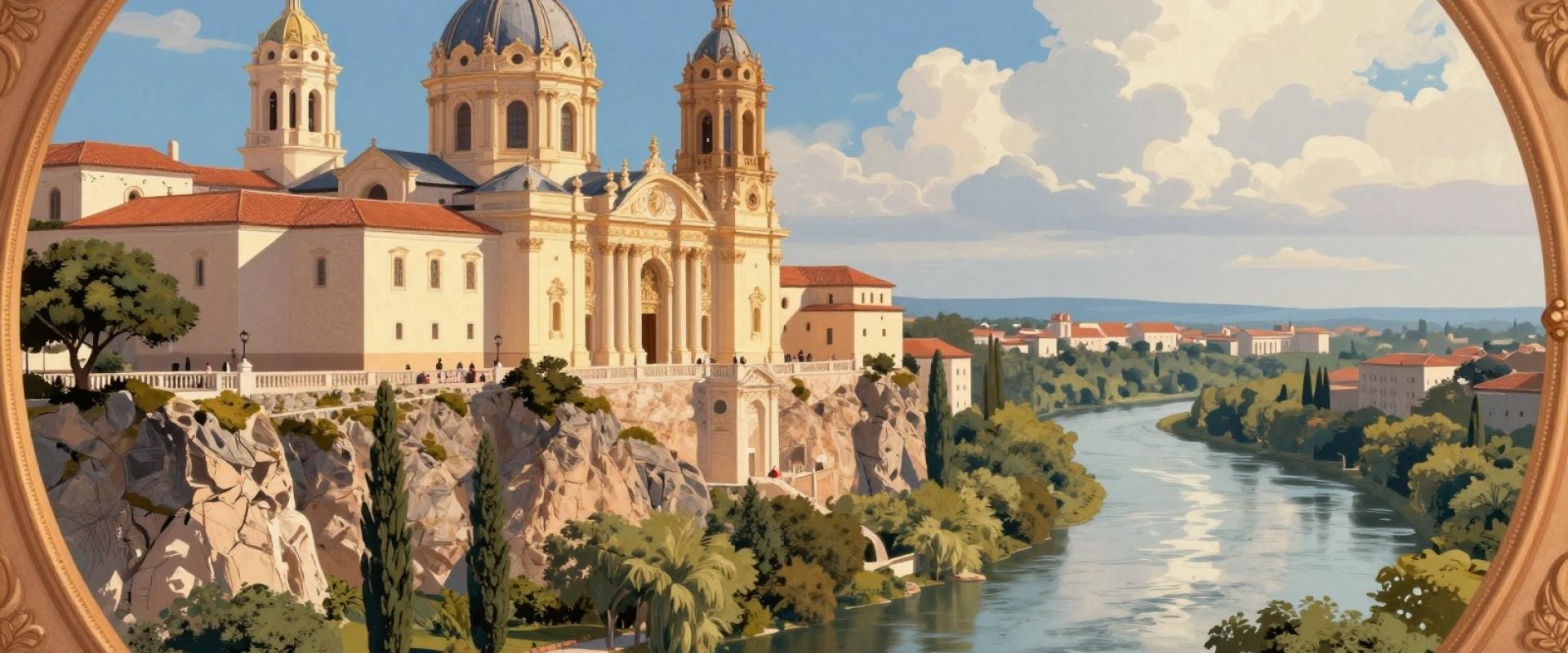
A Stone Sentinel Over the Silver Ribbon
Melk Abbey does not merely sit on the cliff; it grips it. Perched on a precipitous rocky outcrop, this Benedictine monastery commands the Danube with an authority that feels both ancient and immediate. Founded in 1089, it stands as a testament to spiritual resilience, having outlasted empires that once seemed eternal. Jakob Prandtauer’s Baroque masterpiece, completed in 1736, wraps the hillside in creamy limestone and gold leaf, creating a visual symphony that rivals any imperial palace in Vienna.
Inside, the Marble Hall draws the eye upward. Johann Michael Rottmayr’s illusionistic frescoes dissolve the boundary between earth and heaven, his quadratura painting making the dome appear to open into the sky. This Baroque engineering feat still stuns visitors today, turning plaster and pigment into a theological statement rather than mere decoration. Adjacent lies the Library, a sanctuary of thought housing over 100,000 volumes and 1,400 manuscripts. Its long hall, lined with marble columns and adorned with busts of emperors, feels less like a repository and more like a living archive. Walking beneath the painted ceiling by Paul Troger, one senses the weight of centuries of scholarship.
Outside, the gardens cascade toward the river, offering a serene counterpoint to the bustling tourist ferries below. From the Schlosspark, one can trace the serpentine path of the Danube as it carves through the Wachau valley, a landscape sculpted by centuries of monastic viticulture. This is not merely a museum piece; it is a living community where monks still chant the Divine Office. The interplay of light on the Baroque façade changes with the hour, casting long shadows that whisper of Habsburg power and monastic devotion. Standing here, one understands why Melk remains the crown jewel of the Danube Bend.
Whispers in the Marble Hall and Infinite Pages
The silence in the Marble Hall is heavy, almost sacred. I recall my first visit vividly; the air seemed to hold its breath. Jakob Prandtauer designed this space not merely for display, but for the divine. The sotto in sù frescoes create an optical illusion so convincing that gravity seems to lose its hold. It is a space intended to elevate the soul, and it succeeds.
The adjacent Library offers a different kind of elevation. Here, the focus turns inward. The marble columns are punctuated by busts of historical figures, creating a gallery of minds that span centuries. The sheer volume of texts—100,000 volumes—demands respect, yet the space feels intimate, inviting quiet reflection rather than awe-struck shouting. It is a place where the past is not locked away but remains accessible, a breathing entity of knowledge.
Nearby, the Imperial Apartments offer a glimpse into Habsburg opulence, though they pale in comparison to the spiritual intensity of the abbey’s core. Entry fees are approximately €10 for adults, a modest price for such grandeur. As you gaze at the Danube winding below, remember that this site has witnessed empires rise and fall. The art remains eternal. It is a testament to Austria’s enduring cultural legacy, preserved not just in stone, but in the continued practice of faith.
Drifting Through the Wachau’s Emerald Heart
The Danube does not merely flow; it carves a narrative through the heart of Austria. This truth becomes undeniable when you stand before Melk Abbey, that Baroque jewel perched on a rocky outcrop above the valley. From here, you can board a traditional Donaudampfschiff for a journey toward Krems. The ride takes approximately two hours, costing around €18 for a standard ticket, offering a serene escape from the terrestrial hustle.
As the vessel glides past vine-clad slopes and medieval watchtowers, the air fills with the scent of damp earth and ripening grapes. I recall a specific afternoon last October when the mist lifted just enough to reveal the intricate stucco work of the abbey’s façade, gilded in soft, golden light. The experience is less about transit and more about witnessing the landscape’s enduring grace. You will see the distinct ochre and cream tones of the abbey receding into the distance, a silent testament to the Benedictine community that has thrived here since 1089.
The rhythm of the propeller and the gentle lapping of water against the hull create a meditative pace, allowing one to truly absorb the architectural grandeur that defines this UNESCO World Heritage site. It is a reminder that history is not static but flows like the river itself, constantly reshaping the horizon while retaining its core identity. This journey connects the imperial past with the present moment, inviting travelers to pause and reflect on the beauty that surrounds them.
Savoring the Essence of the Empire
You cannot truly understand the Wachau valley without tasting its liquid soul. After wandering the gilded halls of Melk Abbey, where Jakob Prandtauer’s Baroque vision ascends toward the heavens, seek out a rustic Heuriger tavern for a moment of grounded reflection. Here, the air is thick with the scent of aging wood and local tradition, far removed from the marble halls of the monastery.
Order a glass of crisp Grüner Veltliner or the region’s famous Riesling; these wines carry the mineral tang of the steep, terraced vineyards that cascade down to the Danube’s edge. Pair your sip with a shot of clear, potent Kirsch, a cherry brandy distilled from the local harvest. I recall sharing a table with a local historian who explained that this strong spirit was once used by monks to ward off the damp chill of the river winters. The price for such an authentic experience typically ranges from €4 to €6 per glass, a modest fee for a taste of centuries-old heritage.
Sit by the window, watch the sunlight dance on the water, and let the silence of the abbey fade into the gentle hum of Austrian camaraderie. This is not merely consumption; it is communion with the land. The transition from Baroque grandeur to rustic simplicity is immediate, yet the connection to history remains unbroken. You are no longer just a visitor. You are part of the landscape.
Echoes of Eternity in Stone and Spirit
Stone remembers what paper forgets. When the Benedictine monks arrived in 1089, they understood that architecture could serve as a vessel for memory, preserving the sacred long after the voices that spoke it had faded. I still feel the sudden hush of the Marble Hall. It happens the moment afternoon sun hits Prandtauer’s frescoes, transforming plaster and pigment into a theological statement rather than mere decoration. Jakob Prandtauer’s vision here transcends typical Baroque excess; it is precise, intentional, and deeply spiritual.
Further inside, the library holds 100,000 volumes that whisper of centuries where scholarship and spirit intertwined. Those vaulted ceilings seem to defy gravity, lifting the mind above the mundane weight of daily life. Walking these grounds, history feels less like a heavy burden and more like a comforting embrace. The Danube flows onward, indifferent to empires, yet Melk stands firm against its current. This resilience defines Austria: a culture that honors its past while fully inhabiting the present.
As I left, the faint echo of a distant organ lingered in the air, a reminder that some beauties are truly eternal. We do not just visit these places. We join their ongoing story, carrying their grace into our own lives long after we have departed. The abbey remains, waiting for the next traveler to listen to its whispers in the marble and the infinite pages of its library.