What the Salzburg Festival is
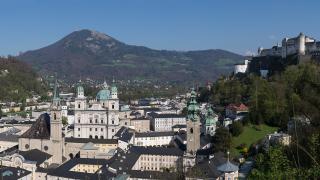
The Salzburg Festival (Salzburger Festspiele) is one of the most important classical music and theatre festivals in the world. It was founded in 1920 by the writer Hugo von Hofmannsthal, the director Max Reinhardt and the composer Richard Strauss, and its first production was Hofmannsthal's morality play Jedermann (Everyman), staged in front of Salzburg Cathedral. That play is still performed every summer on the same square.
The programme mixes three strands: opera, drama and concerts. The Vienna Philharmonic is the festival's resident orchestra, and visiting orchestras, soloists and ensembles fill the concert calendar. A shorter Whitsun Festival (Pfingstfestspiele) runs over the Pentecost weekend in May or June, and a separate Easter Festival is organised by a different body.
When it takes place
The summer festival runs for about six weeks from mid- or late July to the end of August. The 2026 edition ran from 17 July to 30 August. The festival has announced the 2027 summer festival for 16 July to 29 August 2027, with the Whitsun Festival on 14 to 17 May 2027.
The full programme for each summer is published in late autumn; the 2026 programme was released on 4 December 2025. That is the moment to start planning, because the most sought-after operas and concerts are booked heavily as soon as sales open. Hotels in the city centre also fill early for the festival weeks, so many visitors stay in outlying districts or nearby towns such as Hallein and travel in by train or bus.
The venues
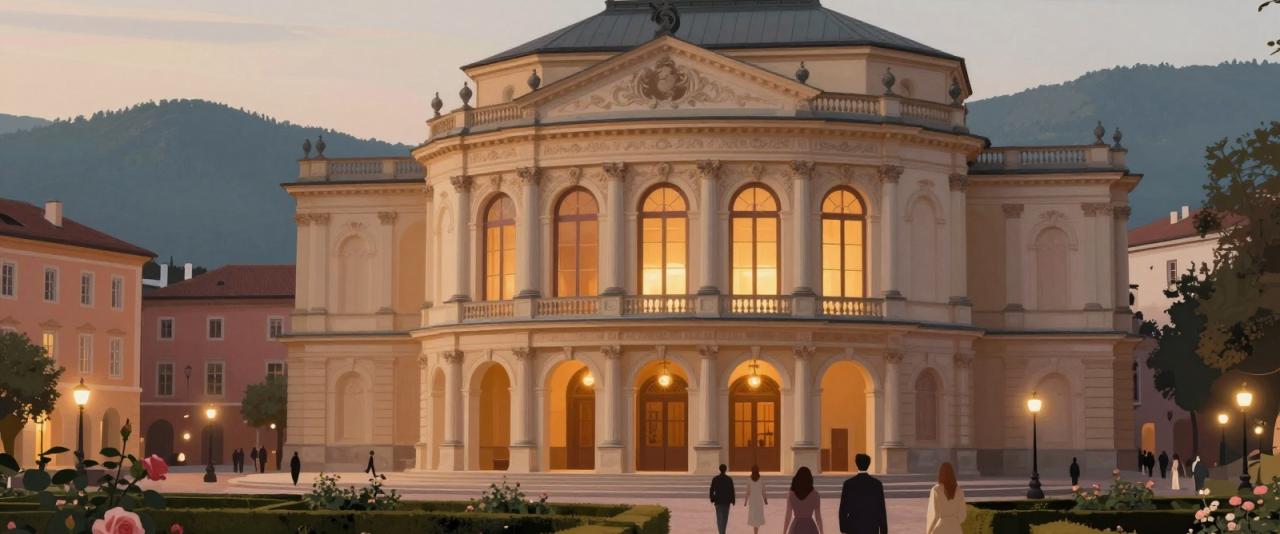
Most performances take place in a compact cluster on Hofstallgasse at the foot of the Mönchsberg, a short walk from the cathedral:
- Großes Festspielhaus – the large festival hall, used for big opera productions and orchestral concerts.
- Haus für Mozart – a smaller house suited to Mozart operas and mid-sized productions.
- Felsenreitschule – the former summer riding school, whose stage backs onto arcades cut into the rock of the Mönchsberg.
Other regular venues include the Domplatz (cathedral square) for Jedermann, the Salzburg State Theatre (Landestheater), the Great Hall of the Mozarteum, the Kollegienkirche, SZENE Salzburg and the Perner-Insel in Hallein, a former salt-works building used for drama. If it rains, Jedermann moves from the Domplatz into the Großes Festspielhaus.
How to get tickets
Tickets are sold through the festival's own website and its ticket office at Wiener-Philharmoniker-Gasse 3 (phone +43 662 8045 500). Buy from the festival directly or from the box office rather than from resale sites.
A few practical points from the festival's own guidance:
- Filter by price. The online calendar can be filtered to show only performances that still have tickets in your price range. Drama productions are generally cheaper than opera, and some plays have been offered for under €60.
- Check the availability list. The festival publishes a downloadable PDF of all remaining tickets and price categories, updated in real time.
- Standing places. When available, standing tickets are posted on the website and social media and sold on the production page. For Jedermann, standing room is released on the day of the performance, depending on the weather.
Youth tickets (U27)
The festival reserves about 6,000 tickets across opera, theatre and concerts for people under 27, at discounts of up to 90 percent. For 2026 the cut-off was being born after 30 June 1999; the date moves forward each year. Youth tickets are sold through the festival's Ticket Gretchen app, and the online programme has a "U27 tickets only" filter so you can see which performances are included. If you are not yet in the festival's customer database, you can register by email or through the ticket office. Joining the Young Friends of the festival gives priority when ordering youth tickets.
Free ways to experience it
You do not need a ticket to get a sense of the festival:
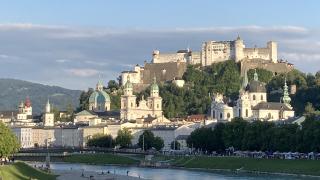
- Siemens Fest>Spiel>Nächte. Recordings of productions from previous years are shown free on a large screen on Kapitelplatz, beside the cathedral, with the fortress above. Bring something warm for late screenings.
- Festival opening celebration. The festival marks its start with a public Festival Opening Celebration; the details are published on the festival website before each summer.
- The atmosphere. During festival weeks the Hofstallgasse area is busy before evening performances, and the Domplatz stage for Jedermann is visible from the square during the day.
Practical tips
- Dress. Many audience members dress up, especially for opera premieres, but smart clothing is enough for most performances. Drama on the Perner-Insel and concerts in churches are less formal.
- Timing. Jedermann is performed outdoors in the early evening; long operas can finish late, so check end times before booking a restaurant or the last bus.
- Getting around. The festival district is in the pedestrianised old town; from the main station take a city bus towards the old town (Rathaus or Herbert-von-Karajan-Platz stops) or walk about 25 minutes.
- Combine it. Salzburg's museums, the fortress and the Mirabell Gardens are all within walking distance, so a festival day can include sightseeing in the morning and a performance in the evening.
Check the official festival website for the current programme, prices and the latest rules before you book.