How the network works
Austria's national railway, ÖBB (Österreichische Bundesbahnen), runs most long-distance and regional trains in the country. The main lines connect Vienna with Salzburg, Innsbruck and Vorarlberg in the west (the Westbahn), with Graz and Carinthia in the south, and with Linz, Passau and Germany. Many routes also continue to Munich, Zurich, Venice, Budapest, Prague and other neighbouring cities.
The train types you are most likely to use:
- Railjet (RJ/RJX): ÖBB's long-distance trains, with Economy, First and Business classes, a restaurant or bistro, and free Wi-Fi.
- Intercity (IC) and EuroCity (EC): other long-distance services, some run with partner railways.
- Regional trains (REX, R, S-Bahn): slower, stopping services. These are what you use for places such as Hallstatt, the Wachau or smaller Alpine valleys.
- Nightjet: ÖBB's overnight trains to cities including Hamburg, Zurich, Rome and Venice, with seats, couchettes and sleeper compartments.
On the Vienna–Salzburg route, the private operator WESTbahn also runs trains. Its tickets are separate from ÖBB's, so an ÖBB ticket is not valid on a WESTbahn train and vice versa.
Buying tickets
The simplest way to buy is the ÖBB app or the ÖBB online Ticketshop, which issue mobile tickets you show on your phone. Ticket machines and counters at larger stations also sell tickets. Buy before you board: many regional trains have no on-board ticket sales, and travelling without a valid ticket can lead to a penalty fare.
Within city and regional transport networks, such as Vienna's, local network fares often apply instead of standard ÖBB fares. The ÖBB app generally shows the correct ticket for a journey.
Ways to pay less
- Sparschiene: discounted advance fares, from €9.90 in second class within Austria at the time of writing. They are valid only on the specific train booked, cannot be cancelled or refunded, are sold online and in the app, and can be booked up to 180 days ahead. Availability is limited, so earlier booking generally means lower prices.
- Vorteilscard: a discount card that gives 50% off ÖBB standard fares for 12 months. ÖBB currently lists the Classic card at €73, the Jugend card (under 26) at €21 and the Senior card (65 and over) at €31. It pays off if you make several longer trips in a year.
- KlimaTicket Österreich: an annual pass for almost all public transport in Austria, including ÖBB trains and city networks. From January 2026 the Classic version costs €1,400 a year, so it only makes sense for residents or very long stays.
- Einfach-Raus-Ticket: a day ticket for groups of two to five people on regional trains (S-Bahn, R and REX) across Austria. It is valid all day on weekends and holidays, and from 9:00 on weekdays. ÖBB lists it from €38 for two people, with a version that includes bicycles.
Seat reservations
Seat reservations on ÖBB day trains within Austria are not compulsory, but they are worth considering on Friday and Sunday afternoons, during school holidays and on popular routes such as Vienna–Salzburg–Innsbruck. A reservation costs from €3 and can be booked up to 180 days ahead in the app, online or at a counter. If you do not take your reserved seat within 15 minutes of the train leaving your boarding station, the reservation lapses. Nightjet tickets always include a reservation.
Travelling with luggage and bikes
Luggage is not restricted beyond what you can carry and store yourself; long-distance trains have racks at the ends of carriages and overhead. Bicycles can be taken on many trains, but on long-distance trains bike spaces are limited and need to be booked in advance. On regional trains, bikes are usually allowed with a bicycle ticket when space is available. Check ÖBB's bicycle information for the train you plan to take.
Scenic lines worth riding
- Semmering Railway: the mountain line between Gloggnitz and Mürzzuschlag on the Vienna–Graz route, a UNESCO World Heritage Site, with viaducts and tunnels through the hills.
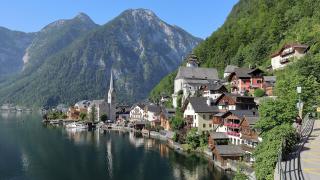
- Salzkammergut line: a regional line through the lake district between Attnang-Puchheim and Stainach-Irdning, passing Gmunden, Bad Ischl and Hallstatt, where a ferry links the station with the village.
- Arlberg line: the climb between Innsbruck and Bludenz through the Arlberg mountains.
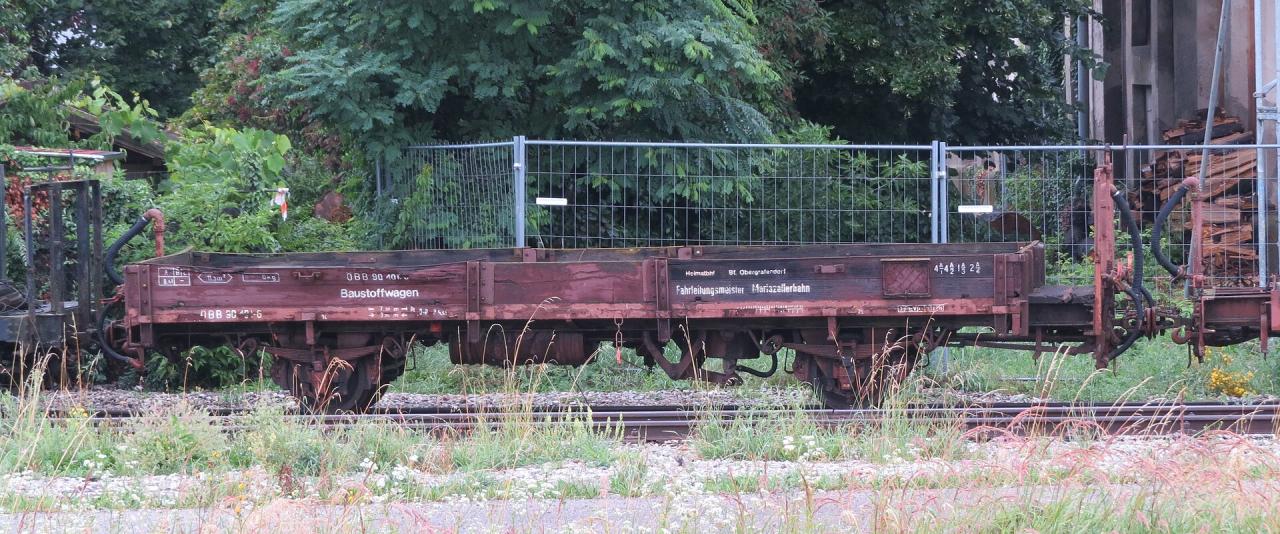
- Mariazellerbahn: a narrow-gauge line from St. Pölten into the pre-Alps to the pilgrimage town of Mariazell, run by NÖVOG rather than ÖBB.
Practical tips
- Check departure platforms on the station screens; they occasionally change.
- Real-time delays and replacement buses for engineering work appear in the ÖBB app.
- First class on a Railjet is usually much quieter on busy days and can be good value with a Sparschiene fare.
- Major stations such as Wien Hauptbahnhof, Salzburg Hbf and Innsbruck Hbf have lockers and are well connected to city trams and buses.