Friesach
Carinthia's oldest town with medieval castle and old town
Friesach lies in the Metnitz valley in northern Carinthia, in a basin ringed by forested hills and a few rocky outcrops that carry castles. The Roman road from the south ran close by, and the first written mention of the settlement dates to the ninth century. In 860 the king gave the area to the archbishops of Salzburg, and for centuries Friesach was the main possession of the Salzburg church in Carinthia, an arrangement that shaped the place. It grew rich from trade, particularly in salt, iron and silver. The Friesacher Pfennig, a silver coin minted here, circulated across much of the eastern Alps and Slovenia.
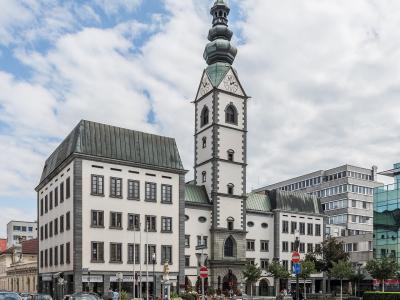
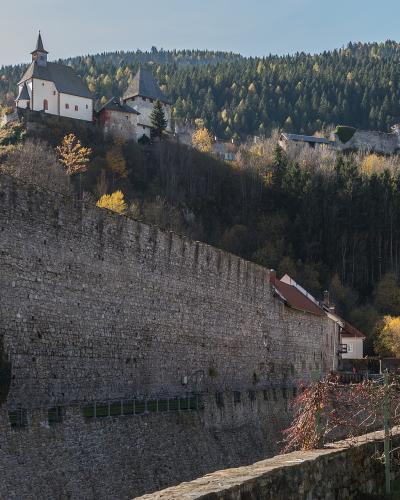
The result is a town that looks much as it did in the late Middle Ages. A town wall with towers and gates encloses the centre, and a moat, one of the few water-filled town moats in Austria, runs along part of the wall. A walk along the wall takes about half an hour and gives a good sense of the medieval fortifications. In the centre, the main square and the narrow lanes around it are lined with houses built between the fifteenth and eighteenth centuries, many with arcades and carved doorways.
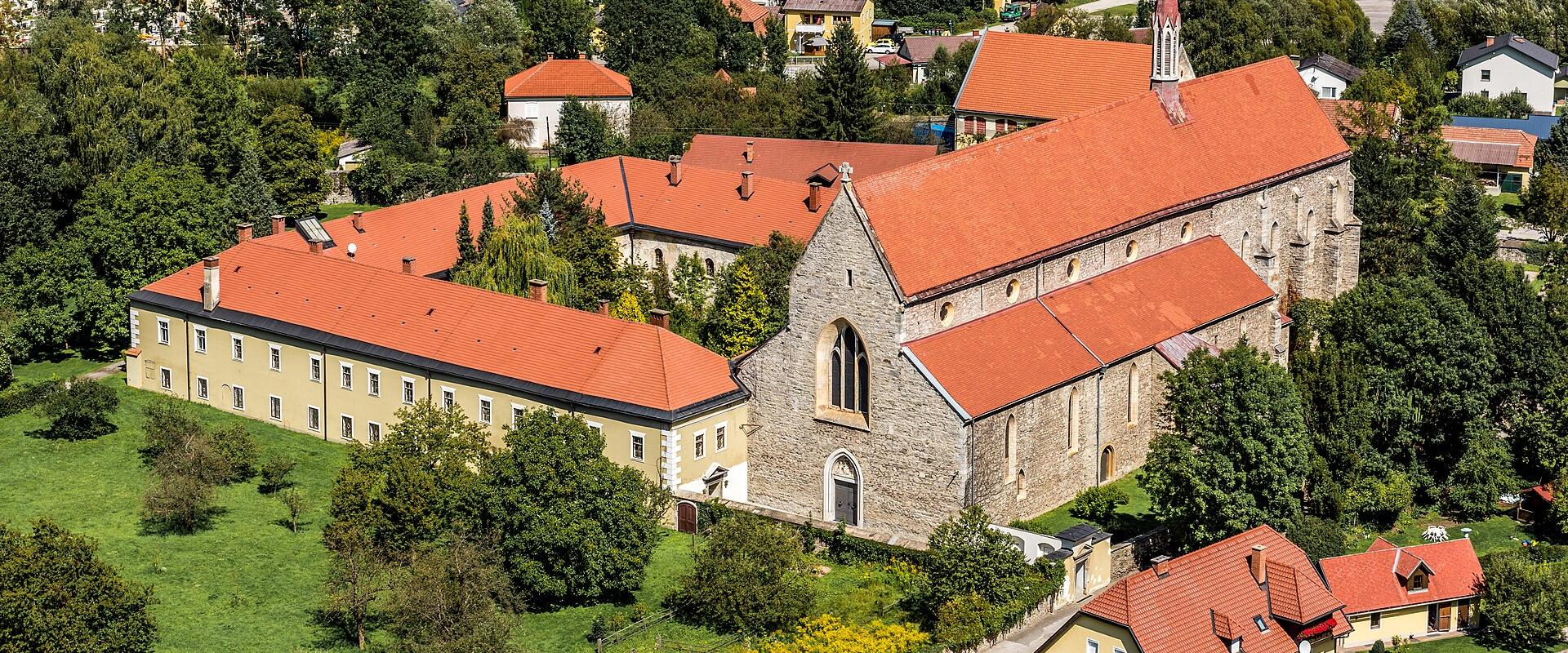
The Dominican Church belongs to a monastery founded in 1217, the first Dominican house in the German-speaking lands. The church is Gothic, with a long, narrow nave, and some wall paintings and altars survive. A little away from it, the Fürstenhof, a late medieval and Renaissance building that once served as the seat of the archbishops' officials, stands on the main square and now houses cultural events. Other churches in town, including St. Bartholomew's and the church on the Petersberg, add to the sense of density.
The Petersberg, a hill above the town, carries a complex of buildings including a church, a keep and the remains of the archbishops' castle. A short walk leads up, and the viewpoint overlooks the roofs and the valley. The Stadtmuseum Friesach, in a former building on the main square, presents archaeology, craft and local history, with finds from the Roman period to the age of the mint. The Landesausstellung Friesach, a Carinthian regional exhibition held in 2000 that focused on the medieval town, helped to restore many of the buildings.
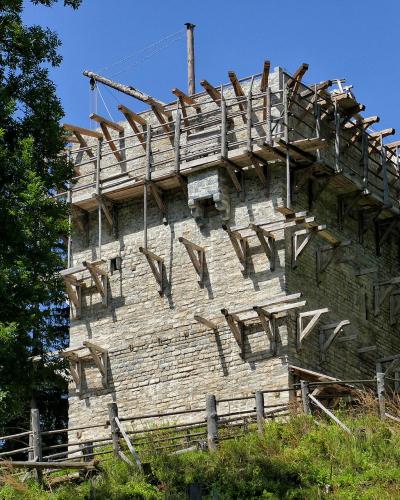
The most unusual attraction is the Burgbau Friesach, a medieval construction site that started in 2009. Here, a castle is being built from scratch using techniques and materials known in the thirteenth century, including hand-hewn stone, timber cranes, forges and traditional tools. Masons, carpenters and smiths work in the open, and visitors can watch, ask questions and sometimes try crafts themselves. Workshops for families run in season. It is a good way to understand how castles were really built, and why they took generations. The site is south of the historic centre on a hillside; check opening times in advance.
The town hosts events throughout the summer. A Castle Festival and a Medieval Market bring reenactors, musicians and traders in costume to the main square, and the Christmas market in Advent has a medieval flavour. Dates change each year, so consult the tourist office.
Outdoors, the valley is quiet. Walking and cycling routes lead through woods and meadows to small villages and castles. The route over the mountains toward Styria and Slovenia, and the high plateau of the Metnitz valley, provide longer excursions. In winter, small ski slopes operate nearby.
The best time to visit is from May to September, with mild weather and events. June and July are the warmest, and spring and autumn are cooler and less crowded. In winter, the walls and towers look attractive under snow, and the Christmas market adds colour.
Getting to Friesach is straightforward. The nearest main railway station is Sankt Veit an der Glan, where buses continue to the town, and a regional train also stops at Friesach itself on the line toward Graz. By car, the A2 motorway leads to Klagenfurt, and Friesach lies along the route to Graz and Vienna, so the town is a handy stop on the way. Salzburg is about two hours away, Graz about two hours, Vienna about four hours and Slovenia about an hour and a half.
Best Time to Visit
Visit from May to September for mild weather ideal for hiking and exploring the medieval old town.
Plan Your Visit to Friesach
Essential travel tips and information for your trip to Friesach.
Suggested Itineraries
Travel Tips
Currency
EUR • Cards widely accepted
Language
German • English in tourist areas
WiFi
Free WiFi in cafes and hotels
Explore Friesach by Interest
Discover attractions and experiences in Friesach organized by your interests and travel preferences.
All attractions in Friesach
Sorted by our recommendation score
Quick Facts
Book your stay
Frequently Asked Questions
More destinations in Carinthia
Explore other amazing places in the Carinthia region